



Tinder showed the typical scammer’s profile about eight times as often in December 2025 as in May 2024, even as internal company documents warned that most of its scam-detection artificial intelligence models had not been updated in years, according to a new report.
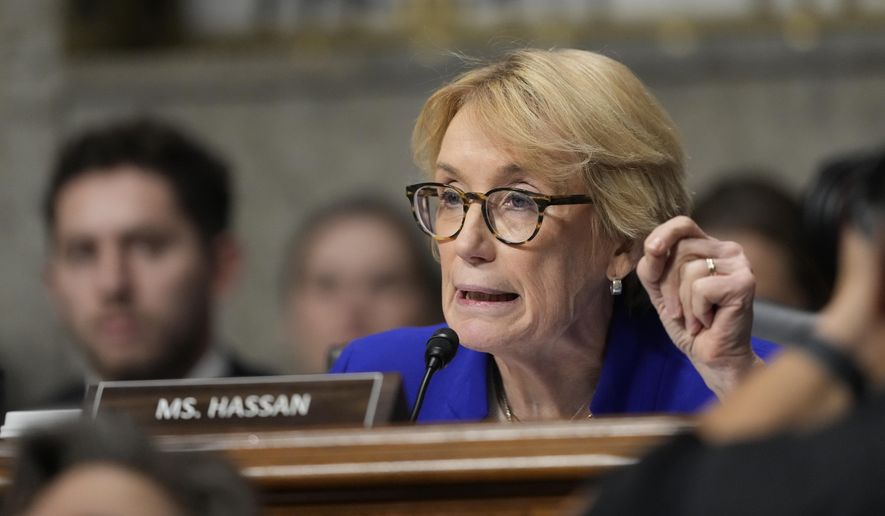
Sen. Maggie Hassan of New Hampshire, the top Democrat on the Joint Economic Committee, began an investigation last fall into romance scams. The cons typically involve fake profiles to form online relationships and extract money or gifts from victims.
The probe’s findings, released Tuesday, focused on Match Group, the parent of several popular online dating services, including Tinder, Hinge and Match.
People were interested in these podcasts
In online dating schemes through Match Group, one widow lost more than $700,000, including to a fake recovery scheme after the first scam, according to the report.

Another woman sent nearly $100,000 in cryptocurrency over two months.
A third was pressured for $90,000 and bought a plane ticket and gift cards for the scammer, who had her home address.
The growing cost of romance scams has “raised serious questions about Match Group’s efforts to identify and stop scammers before they can harm Americans,” Ms. Hassan said in a call with reporters.
Match Group’s data given to the committee show the median scammer received 67 impressions globally in May 2024 before being banned versus 542 in December 2025.
An internal document said abuse accounts “usually have a higher exposure/impression rate” than regular accounts. Match Group said it removes risky accounts from the recommendation system but does not adjust the recommender to reduce its reach.
Through the third quarter of 2025 in the U.S., roughly 1.5 million spam and inauthentic accounts matched with at least one other user on Tinder or Hinge. Nearly 500,000 exchanged contact information, which moves the relationship off the app.
A September 2025 Tinder planning document said most of its machine learning models had not been updated for years. A separate document, from August 2025, said several models had not been refreshed with the latest data or techniques, which degraded their performance.
Meanwhile, Match Group told the senators in an October 2025 letter that it uses “cutting-edge AI and machine learning” to identify scammers.
Tinder deployed mandatory video-selfie verification for new U.S. users nationwide last December. Match Group told the committee it cut interactions with bad actors by more than 70% within a month and that the drop has held for at least seven months.
The figure covers spam, bots and scammers combined, but Match Group did not provide scam-only data, according to the report.
“Those are very good steps, but it shouldn’t have taken Match Group such a long time to step up its efforts,” Ms. Hassan said. “And there’s still more work that the company needs to do as criminals use AI to make their scams more and more believable. Dating apps and all companies that scammers exploit need to ensure that their own scam defenses quickly and proactively evolve to meet these new threats.”
Changes since the investigation began include new AI models and, in the first half of 2026, 169 new detection rules and 108 improved ones, Match Group told the committee, according to the report.
Contact the author


Please read our comment policy before commenting.