



Obamacare is costing consumers a fortune, so Democrats running in some of the most competitive congressional races have reignited calls to expand it to a government-run system that has long been the goal of America’s socialists and the far left.
Government-run healthcare for all Americans could cost as much as $50 trillion over the next decade, according to an analysis by the conservative Manhattan Institute. Yet Democrats are not talking to voters about the jaw-dropping price tag of “Medicare for All,” or that it would likely eliminate private health insurance and significantly increase taxes.
They are selling single-payer healthcare to voters fuming over the skyrocketing cost of healthcare, especially the premiums and deductibles that come with the Affordable Care Act, known as Obamacare.
People were interested in these podcasts
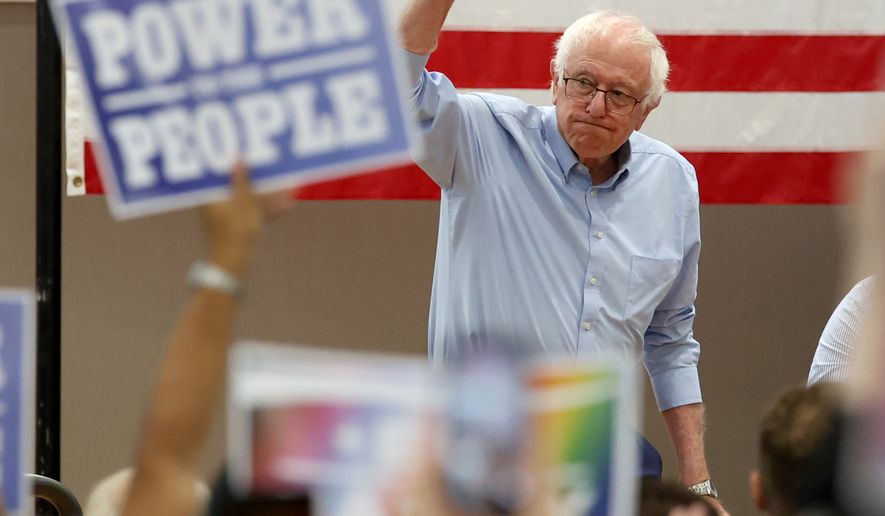
“How many people in this room have deductibles?” Sen. Bernard Sanders, Vermont independent, asked at a rally for Democratic Senate nominee Troy Jackson in Maine.
People angrily called out their annual Obamacare deductibles. One person hollered, “$5,000.” Another shouted that their deductible is $10,000 a year.
“How insane is that?” Mr. Sanders said. “If you have a $10,000 deductible, you still can’t afford to go to the doctor. Troy believes, and I believe, not only that healthcare is a human right, but we have to move toward a ’Medicare for All’ system.”
Mr. Jackson is among several high-profile Democratic candidates in battleground states who have made “Medicare for All” a major selling point to bring down the high cost of health insurance and healthcare.
In addition to high deductibles, health insurance premiums are rising, with average proposed increases reaching 26% nationwide, according to healthcare marketplace rate filings compiled by health policy researchers. It has made a government-run system far more attractive.
“I actually see a scenario where this is going to be great coverage,” Mr. Jackson said Sunday on CNN’s “State of the Union,” promoting the idea of a single-payer system. “You know, you’ll have eye, ear, dental. You won’t have to pay the obscene co-pays and things like that.”
The race between Mr. Jackson and five-term Sen. Susan M. Collins, Maine Republican, is a dead heat. Affordability, especially healthcare costs, is a top concern for voters in Maine. The winner of the state’s Senate battle will help determine which party controls Congress.
The Senate race is also neck-and-neck in Michigan, where Michigan Democratic Senate nominee Abdul El-Sayed said that if elected, he would fight to extend Medicare “to every single American from cradle to grave without premiums, copays or deductibles.”
He said the program, which is now limited to people 65 and older, should automatically enroll everyone and be accepted everywhere.
Mr. El-Sayed, who is running against former Rep. Mike Rogers, the Republican nominee, said he would also expand care to include vision, dental and hearing, which are not covered under Medicare.
A single-payer program, he argued earlier this month, would provide universal healthcare coverage and keep Michigan’s diminishing number of rural hospitals and healthcare centers from shuttering.
“Imagine every single resident, every single one, had full reimbursement for Medicare,” Mr. El-Sayed said at a recent press conference. “Imagine what that would mean for the reimbursement rural hospitals could get. They could stay profitable. They could stay open.”
A government-run healthcare system for all is more popular than ever, according to polling.
The latest KFF poll, taken in late September, “marks a new high” in approval for such a plan, the nonprofit health policy research organization said.
Two-thirds of adults said they favored a “Medicare for All” system, while opposition dropped to about one-third.
In October 2020, the share who favored such a program hovered around 53%, while 42% opposed it.
Democratic candidates are seizing on the surge in popularity for a single-payer healthcare system.
Florida Democratic Senate nominee Angie Nixon framed her “Medicare for All” plan as one of common sense and basic human decency.
“If believing that a child with cancer should get the treatment they need, whether their parents can afford it or not, is radical, then call me radical,” Ms. Nixon said during a rally Saturday in Tampa.
Her platform calls for “Medicare for All,” free childcare, free paid family and sick leave, a national rent freeze and eviction moratorium and a universal jobs program with wages tied to inflation.
Ms. Nixon said the programs would be funded by taxing billionaires, diverting money from “war and violence overseas” and taking money out of politics.
A mid-October YouGov poll sponsored by Univision shows Sen. Ashley Moody, a Republican who opposes “Medicare for All,” is up 9 percentage points over Ms. Nixon.
Yet more Republican voters now back a government-run healthcare system proposed by her opponent. The KFF survey found that 34% of Republican voters favor it, up from 21% six years ago.
Plans to pay for what would become the world’s largest government-run healthcare system remain murky among Democrats proposing it.
Mr. Jackson could not explain how he would pay for “Medicare for All” when asked during his Sunday appearance on CNN.
“Greed is running this healthcare system, and when we cut the administrative burden, get the greed out of it, I’m sure that we can afford to pay for it,” he said.
Contact the author


Please read our comment policy before commenting.