


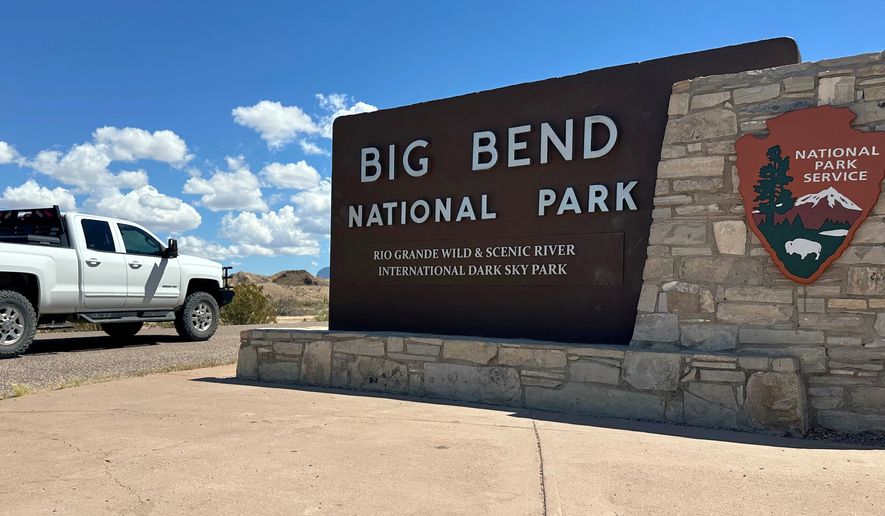

A federal judge issued an emergency injunction Friday blocking border wall construction in Big Bend National Park and surrounding areas in Texas, saying the government is cutting too many corners.
Judge Kathleen Cardone, a George W. Bush appointee to the court in western Texas, said all work must halt until the government complies “with all applicable laws.” She said the Trump administration’s attempt to “waive” some of those laws cannot stand.
Her injunction will remain in place while the case develops.
People were interested in these podcasts
“This is a historic victory for Big Bend and everyone who loves this wild corner of Texas,” said Laiken Jordahl at the Center for Biological Diversity, which was part of a coalition challenging the wall construction.
Wall opponents said work began in August with bulldozers plowing through rugged wilderness to create space for barriers.
The plan was to build dozens of miles of fencing, with some of that inside the national park and most of it outside the park boundaries, chiefly on private land.
Construction there would require either landowners’ consent or legal condemnation.
A local outcry sent Customs and Border Protection Commissioner Rodney Scott rushing to get a firsthand look at the situation. He announced a pause while the project was reviewed.
The pause lasted from Aug. 31 to Sept. 30, when CBP said it was resuming construction.
An official said CBP used the pause to hold dozens of meetings with local officials, landowners and businesses in the region to get feedback.
At the end of that process, CBP said it was still committed to 61 miles of wall in Presidio County, mostly on private land, but was rethinking 17 miles of vehicle barriers in and near the national park.
To facilitate construction, Homeland Security Secretary Markwayne Mullin issued waivers of a number of environmental protection laws — a process that has been common for administrations of both parties during wall construction.
Judge Cardone promised a full opinion explaining her reasoning for her injunction, but in a brief order she said the opponents were likely to prevail in their legal argument that some of the waivers were invalid.
“The court finds that Plaintiffs are likely to succeed on the merits of at least one of the claims in suit, that there is a likelihood that they will suffer serious, irreparable harm without an injunction, and that the balance of the equities and the public interest weigh in their favor,” the judge wrote, citing the criteria needed to issue a preliminary injunction.
Contact the author


Please read our comment policy before commenting.