


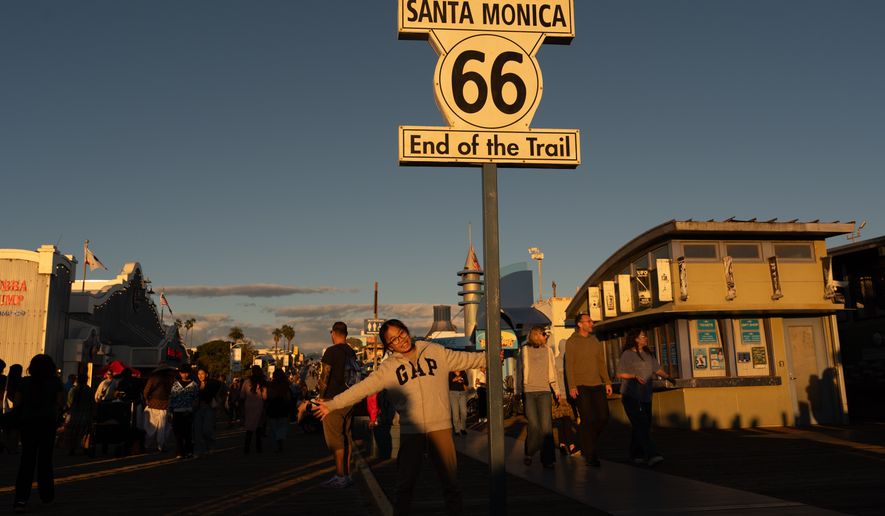

Route 66 got an obituary in 1985. On June 27 that year, a national group of state highway officials removed U.S. 66 from the numbered highway system, and its press release declared the road had “met its final demise today, wiped off official U.S. road maps.”
Forty-one years later, the road is marking its 100th birthday, and you can still drive parts of it. So what keeps Route 66 alive without a federal number? Federal highway records, National Park Service programs, state grant rules and Rutgers University research point to the same answer: a patchwork of local owners, volunteers, modest grants and tourist spending, with no single entity in charge and no guaranteed money.
That patchwork took shape once the U.S. 66 signs came down.
People were interested in these podcasts
What happened to Route 66 after it was decommissioned?
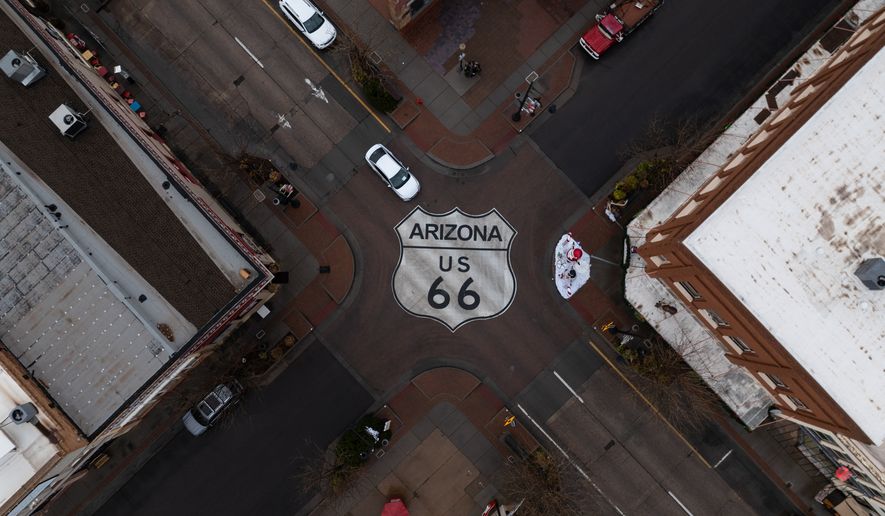
Much of the old road is still there, but it broke into separately managed pieces, some still drivable and some abandoned.
Route 66 was never a federally owned road from Chicago to Los Angeles. The U.S. numbered highway system started as a way to label the country’s main interstate routes. Because the states owned those roads, the numbering plan needed approval from the American Association of State Highway Officials, which signed off on the first routes on Nov. 11, 1926, according to the Federal Highway Administration.
The end came in stages. That group’s successor, the American Association of State Highway and Transportation Officials, first approved requests from California and Illinois to drop the designation on their bypassed sections. In 1984, Interstate 40 bypassed the last stretch near Williams, Arizona. The final vote the next year came at the request of highway officials in the six remaining Route 66 states, the FHWA history says. Afterward, some states renamed what was left “Historic Route 66” or something similar, and boosters organized state groups to protect the old highway and draw drivers back to it.
A July 1995 National Park Service study described how that work happened on the ground. Volunteer state associations, usually working with state and local agencies, surveyed roadside buildings, published maps and guides and put up directional signs. In Missouri, the state association’s professionals and volunteers had documented more than half of the roadside structures, not counting bridges and the road itself, the study found.
The study measured Route 66 at 2,400 miles, but counting every realignment over the years, the figure rose to roughly 5,000. Many original segments had been “either abandoned or modified for secondary use.” At the time, old segments near Tucumcari and Santa Rosa, New Mexico, had become “virtual dirt tracks.” Several states had installed Historic Route 66 signs, but the study noted they usually did not appear at interstate exits and “are often stolen for souvenirs.”
Who pays to preserve Route 66?
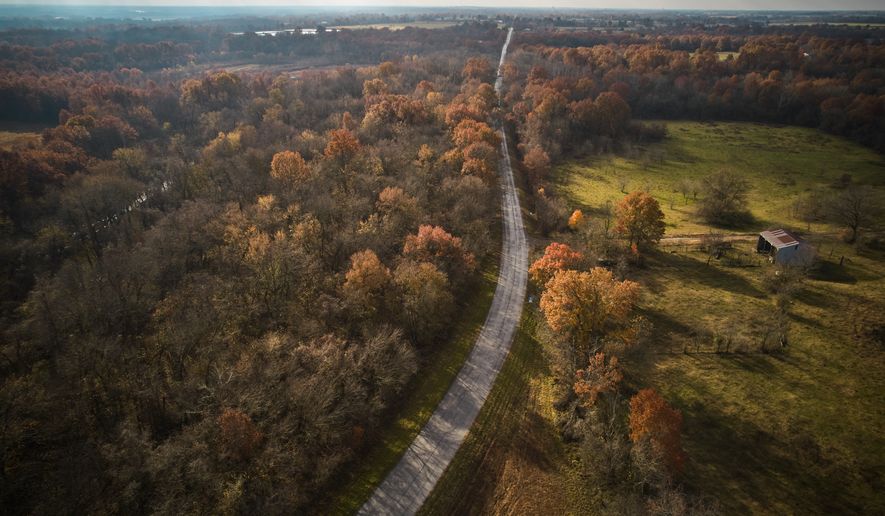
A mix of property owners, tribes, states and nonprofits, with help from a small federal grant program.
Congress created the Route 66 Corridor Preservation Program in 1999. Run by the National Park Service, it works with private, nonprofit and government partners and gives cost-share grants for historic sites tied to the road’s 1926-1985 period of significance.
Since 2001, 179 projects have been awarded $2.72 million in Park Service grants, matched by $4.5 million from other sources, the agency said when it announced its 2024 awards. That is a modest sum for a road that long. Applicants must match at least half the cost, and the money can go to historic preservation, research, oral history, interpretive and educational projects.
The 2024 awards show how the program works. A private owner in Daggett, California, was awarded $20,000 to restore a 1926 California Information Bureau building, a former welcome center for travelers entering the state, which the Park Service said will open as a museum. The Hualapai Indian Tribe was awarded $30,000 to restore the canopy of the Osterman fueling station in Peach Springs, Arizona. Swedish immigrant John Osterman built the station in 1929 from a Sears-Roebuck concrete block kit. The tribe bought it in 2005, and extreme weather later collapsed its roof and a wall. In neither case did the federal government buy the property. It helped the owners preserve it.
The Park Service counts more than 250 Route 66 buildings, bridges, stretches of roadway and other sites on the National Register of Historic Places. Listing brings recognition, not protection. Under federal law, a listing puts no limits on what a nonfederal owner does with the property, “up to and including destruction,” unless federal funding or permits are involved. State or local laws may still apply.
Recent grants also reach beyond buildings. The familiar open-road story was not open to everyone. The FHWA history says Black motorists faced segregated facilities and sundown laws that barred Black people after dark. When the “Green Book” travel guide first appeared in 1936, about half of the 89 counties along Route 66 were sundown counties, historian Candacy Taylor wrote in her 2020 book, “Overground Railroad,” as cited in the FHWA history. The guide pointed Black travelers to restaurants, hotels and other places that would serve them. The Park Service’s 2024 awards included “Route 66: Wartime Women,” a project on women’s roles along the corridor during World War II and the Cold War, and a New Mexico school project built partly on oral history interviews.
Does Route 66 tourism still pay off?
It did when Rutgers researchers measured it in 2011, and the university’s follow-up work says a broader update is still needed.
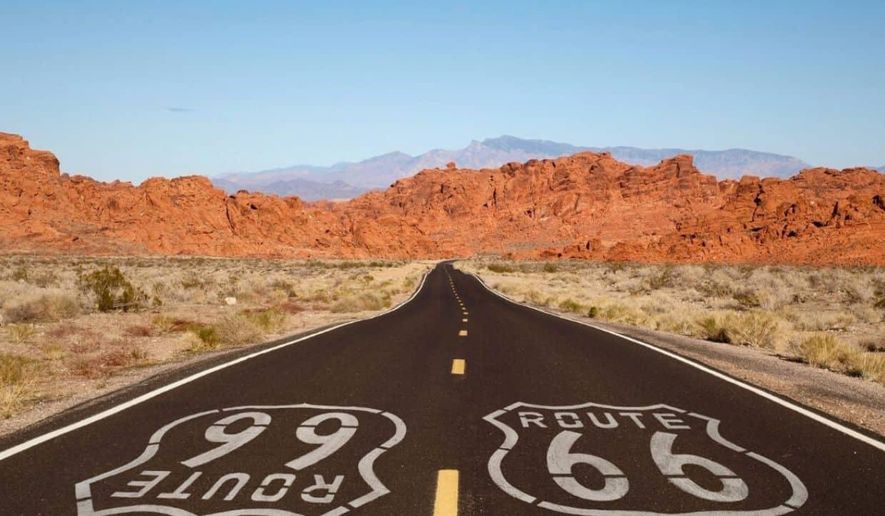
Preservation also depends on visitors buying meals, booking motel rooms and paying museum admission. A Rutgers University study completed in 2011 with the National Park Service and the World Monuments Fund estimated about $132 million a year in direct Route 66-related spending, including traveler spending and museum budgets. Counting ripple effects, the researchers estimated $262 million in economic output and $126 million in wealth creation.
A follow-up, “Route 66, Revisited,” produced with the nonprofit Route 66 Road Ahead Partnership, studied individual communities, surveyed towns on economic development and reviewed programs that could help. The researchers called it “just a start to a continued, needed, much broader-scale analysis.”
States are investing anyway. Oklahoma’s Route 66 Revitalization Grant Program is open to municipalities and counties on Route 66, nonprofits and government entities for historic preservation or economic development projects, with requests from $25,000 to $2 million. A nine-member Oklahoma Route 66 Commission selects the projects. The Park Service’s grant page also points applicants to state programs from Illinois to California and to Route 66 grant funds run by the National Trust for Historic Preservation.
What does the Route 66 centennial change?
Based on the federal record, it brings attention more than money: the commission created for the anniversary gets no federal funding, and the main federal grant program’s website lists no open grant cycle.
Congress created the Route 66 Centennial Commission in a law signed Dec. 23, 2020, giving its 15 presidential appointees the job of studying and recommending ways to honor the anniversary. The law requires that all of the commission’s spending come “solely from donated funds” and states that “no additional funds are authorized to be appropriated.” The commission ends on Dec. 31, 2026.
Federal grant money is also uncertain. The Park Service says its Route 66 cost-share grants depend on congressional appropriations set each fiscal year. As of Oct. 21, the program’s grant page said, “A grant cycle will not currently be offered,” and pointed applicants to other federal, state, local and nonprofit programs.
So Route 66 survives the way it has since its obituary ran: piece by piece. Its future rests on many small decisions: a tribe repairing a gas station, a private owner turning a desert welcome center into a museum, volunteers putting up directional signs and travelers choosing to leave the interstate.
This article was constructed with the assistance of artificial intelligence and published by a member of The Washington Times' AI News Desk team. The contents of this report are based solely on The Washington Times' original reporting, wire services, and/or other sources cited within the report. For more information, please read our AI policy or contact Steve Fink, Director of Artificial Intelligence, at sfink@washingtontimes.com
The Washington Times AI Ethics Newsroom Committee can be reached at aispotlight@washingtontimes.com.

Please read our comment policy before commenting.