



OPINION:
On Oct. 11, President Trump announced an “energy ceasefire” between Russia and Ukraine. It appears to have been for naught, as Russia has continued attacks and the ceasefire has not taken hold.
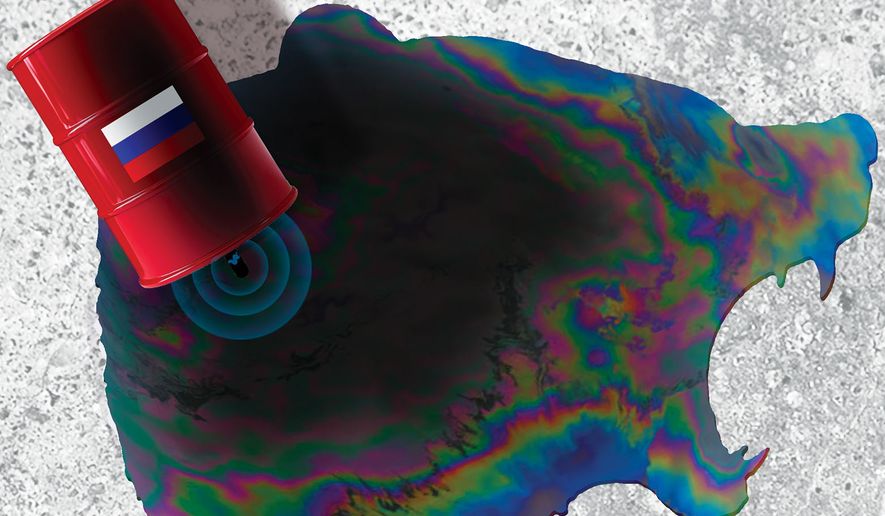
Mr. Trump also announced that we would purchase more than 300,000 tons, or 2.2 million barrels, of diesel from Russia for shipment to the U.S. and global markets, followed by an additional 500,000 tons in November, 1 million tons “immediately thereafter,” and a fourth tranche of 3 million tons.
We should not do this for many reasons.
People were interested in these podcasts
The first is that Russia will almost certainly use the proceeds to finance its war in Ukraine, which is now in its fifth year.
How can we credibly tell the Europeans that they should not buy Russia’s oil and natural gas when we pull something like this? We cannot, so we should not buy it.
The second reason is that the transactions are probably illegal.
Three separate laws affect the question. The first, the Lindsey O. Graham Sanctioning Russia and Iran Act of 2026, holds that the president can waive tariffs and sanctions if he determines that the waiver is in our “national interests,” which he did, in an executive order.
In 2022, Congress passed the Ending Importation of Russian Oil Act, which prohibits U.S. imports of Russian-origin energy products as defined in the Harmonized Tariff Schedule. This includes diesel fuel. Under the law, the president would have to certify to Congress that Russia was withdrawing from Ukraine. That is something he cannot do.
In 2017, Congress enacted, and the president signed, the Countering America’s Adversaries Through Sanctions Act, which severely restricts presidential waivers and requires congressional oversight.
The president has no power to exempt transactions with Russia from CAATSA, so the transactions are clearly illegal. Strangely, no lawsuits have been filed to block the Russian diesel deals, but that is probably because few have standing to sue, a concept that requires an injury to the party bringing the lawsuit.
The third reason is that, contrary to Mr. Trump’s intent, the Russian diesel fuel will not reach American markets in time to affect the Nov. 3 elections. Mr. Trump knows that he and congressional Republicans face the loss of both the House and the Senate, but the Russian shipments would not arrive in time to alleviate the diesel fuel shortage. So higher prices for food and other essentials will persist.
Mr. Trump is apparently caught between the law and his desire to reduce diesel fuel prices.
U.S. refinery capacity will not remedy the situation either. The last major U.S. refinery was built in 1977, and environmental restrictions have killed any attempts to build more.
Meanwhile, Russia is escalating attacks on commercial shipping in and near the waters of NATO members Romania and Bulgaria. On Thursday, four ships — two in Romanian territorial waters of the Black Sea and another just outside those waters — were hit presumably by Russian drones. Russia is testing NATO to see how it will respond, if at all.
Romanian President Nicusor Dan and Bulgarian Prime Minister Rumen Radev met with NATO Secretary-General Mark Rutte on Friday, but no responses to the attacks were announced. The two leaders are reportedly consulting with American officials and other NATO leaders, which likely means that no response will be undertaken.
Mr. Trump is caught between aggressors: Russia, Iran and China. No outlet is available for his frustrations unless he moves against all three. Iran is relatively simple: He can resume the bombing campaign with the Israelis and attempt to destroy the regime in Tehran. The other two are harder.
The president can keep the sanctions against Russia in place, but that would thwart his plan to import Russian diesel fuel. It would be the right thing to do.
In China, Mr. Trump has little choice but to try to reduce tensions over Taiwan through diplomacy. That will not succeed, but it could buy time.
If Mr. Trump is to succeed, he needs to stand up to the threats and meet the challenges we face. The Russian economy must be shut down if Ukraine is to succeed. NATO must be bolstered despite its lack of support in our war against Iran.
America and our commander in chief can continue to win, but not if we buy Russian diesel fuel.
• Jed Babbin is a national security and foreign affairs columnist for The Washington Times and a contributing editor for The American Spectator.
Follow the author


Please read our comment policy before commenting.