



A version of this story appeared in the daily Threat Status newsletter from The Washington Times. Click here to receive Threat Status delivered directly to your inbox each weekday.
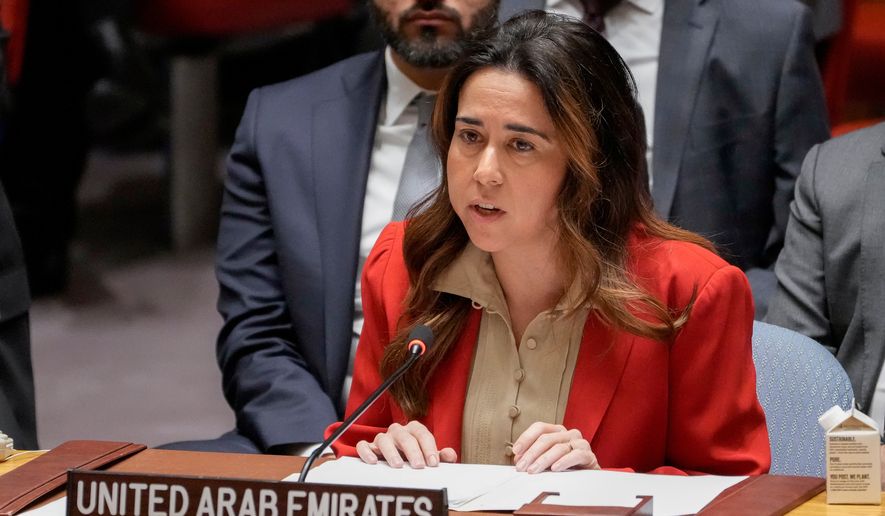
Lana Nusseibeh, the United Arab Emirates’ pick to become the next secretary-general of the United Nations, says the organization is in desperate need of a “mindset shift” as it looks to play a more active role in solving some of the world’s most pressing issues.
Ms. Nusseibeh serves as the assistant minister for political affairs for the UAE’s Foreign Ministry and was the country’s permanent representative at the U.N. from 2013 to 2024. She was the first woman to hold the position and is now officially in the running to be the first woman to hold the top job at the U.N.
UAE President Mohamed bin Zayed Al Nahyan threw Ms. Nusseibeh’s name into the ring last week, and her nomination has received scattered support and criticism from around the diplomatic world.
People were interested in these podcasts
Ms. Nusseibeh told The Washington Times that she is not running because she is a woman, but because she is “stubbornly optimistic” about the U.N.’s future under her potential leadership.
“We need to reboot morale in the United Nations and its ability to deliver. The way we do that is by demonstrating action, by demonstrating delivery, by proving to countries that the U.N. is back at the table on peace and security, on development and on human rights,” Ms. Nusseibeh said.
She added that the organization should focus on where it can “make the greatest difference,” though Ms. Nusseibeh didn’t clarify what areas should be prioritized.
“The second thing is to move closer to impact, to make, again, the business case for why the world is more secure when countries continue to meet their obligations to the United Nations, move leadership decisions and resources closer to the problems that the U.N. exists today to solve, and make the secretariat much faster and more responsive when peace efforts need support,” she said.
Ms. Nusseibeh’s campaign material says her reform initiatives at the U.N. will be focused on three pillars of human rights, peace and security. She also argues that the organization’s credibility on the issue of human rights depends on applying the charter without double standards.
Her material doesn’t single out any programs or departments that would be subjected to budgetary restrictions or any instances where the U.N. charter has been deployed incorrectly.
Ms. Nusseibeh faces a tough road to the job. Before her candidacy could even be considered by the General Assembly, which contains all U.N. member nations, she must receive at least nine affirmative votes from the 15 members of the Security Council, then pass consideration without a single veto from one of the five permanent members of the council.
Still, she has garnered significant public support. Gulf Cooperation Council Secretary-General Jasem Mohamed Albudaiwi said the member nations, including Bahrain, Kuwait, Oman, Qatar and Saudi Arabia, unanimously back her candidacy.
There are also reports that Britain, a permanent member of the Security Council, is leaning toward endorsing Ms. Nusseibeh in an effort to smooth relations between the Burnham government and the UAE.
Ms. Nusseibeh could also preempt criticism from the pro-Israel wing of the U.N. She has been a stalwart defender and advocate for the Abraham Accords, which initiated the normalization of relations among Israel, Bahrain and the UAE.
That support could lead to an official endorsement from President Trump, who has long railed against the U.N. bureaucracy and accused the organization of bias against Israel and the U.S.
The administration has not signaled official support for any single candidate, though a Politico report from this month, before Ms. Nusseibeh announced her candidacy, said the U.S. rejected all of the candidates because they didn’t align with Mr. Trump’s agenda.
Some human rights advocates have publicly opposed Ms. Nusseibeh’s candidacy over the UAE’s alleged support for Rapid Support Forces in Sudan fighting a civil war against the internationally recognized government in the country.
Ms. Nusseibeh has rejected any accusations that her government provides funding to the RSF, dismissing the allegations as “spurious, unfounded and lacking credible evidence.”
“Sudan is the world’s largest humanitarian crisis,” she told Bloomberg this month. “I would put the U.N.’s full political and practical support behind ongoing efforts to reach a ceasefire and a credible and inclusive political process that reflects the democratic aspirations of the Sudanese people.”
U.N. sanction monitors called the allegations of UAE military support to the RSF credible. Ammar Mohammed Mahmoud, Sudan’s permanent representative to the U.N., condemned Ms. Nusseibeh’s nomination on X and repeated accusations that her government supports the militant group.
Contact the author


Please read our comment policy before commenting.