


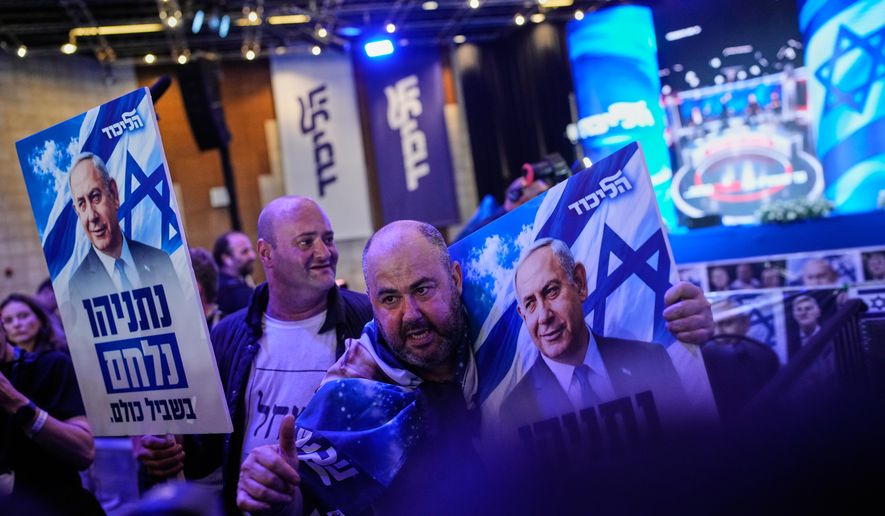

Israeli politics can seem bewildering to Americans because they are based on separate electoral, constitutional, and cultural foundations.
The U.S. system is designed around local districts and two broad “big tent” parties. In almost all cases, it uses a “first-past-the-post” winner-take-all system where voters mark one candidate as their preference.
The candidate with more votes than any other candidate is elected, often even if they do not have more than half of the votes.
People were interested in these podcasts
Israel, on the other hand, follows a parliamentary model in which people vote for parties, and there are many of them, defined across ideological, religious, and ethnic lines.
Unlike countries divided into states, counties, or constituencies, the entire State of Israel functions as a single voting district and seats in the Knesset are given to each party, in proportion to its number of votes nationally.
For the 2026 Israeli legislative election, 34 political party lists were running on the ballot. But only 10 or 11 were expected to cross the 3.25% electoral threshold to take a seat in the Knesset.
SEE ALSO: Netanyahu lost seats in Tuesday’s elections but could finish on top
Because of that, smaller factions frequently combine forces to submit a unified “joint list” to remain on the ballot.
It’s not just the voting either.
The U.S. Constitution strictly separates the Executive, Legislative, and Judicial branches. The president is elected separately from Congress, on a different electoral cycle, and cannot sit in the chamber.
In Israel’s parliamentary system, the executive branch is drawn directly out of the legislature. The prime minister and his Cabinet members are usually sitting members of the Knesset.
In Israel, the executive branch and the parliament are united so long as the coalition — at least 61 members of the 120-seat Knesset — holds together. The Knesset is also a unicameral body and all the members are elected at the same time — like the U.S. House with no Senate.
This all removes the type of legislative-executive checks and balances that Americans take for granted.
When Israeli citizens cast their vote, they choose a political party’s pre-ordered slate of candidates rather than voting directly for an individual politician.
Israel inherited its system of proportional representation from the political system of the Yishuv, the body of Jewish residents living there under British administration before the establishment of Israel as an independent nation in 1948.
“The system was based on the zeal with which the various political parties — in which ideology and personalities played a major role — fought to preserve their independence,” Israeli government officials said in a statement. “It was important to enable maximal representation for various groups and opinions.”
A party that finishes in first place with the most votes won’t necessarily take power either.
A 61-seat governing majority has never been achieved by any single Israeli party, which forces coalition building between the different political parties.
In Israeli politics, small parties with only 4 to 7 seats can hold massive leverage over the bigger parties, demanding Cabinet posts or some benefit or some issue concessions for joining the governing coalition.
This means a governing coalition can be fragile. If a small faction pulls out of a coalition over a disagreement, the government can collapse immediately, triggering a snap election.
And that means starting all over from scratch.
Contact the author


Please read our comment policy before commenting.