


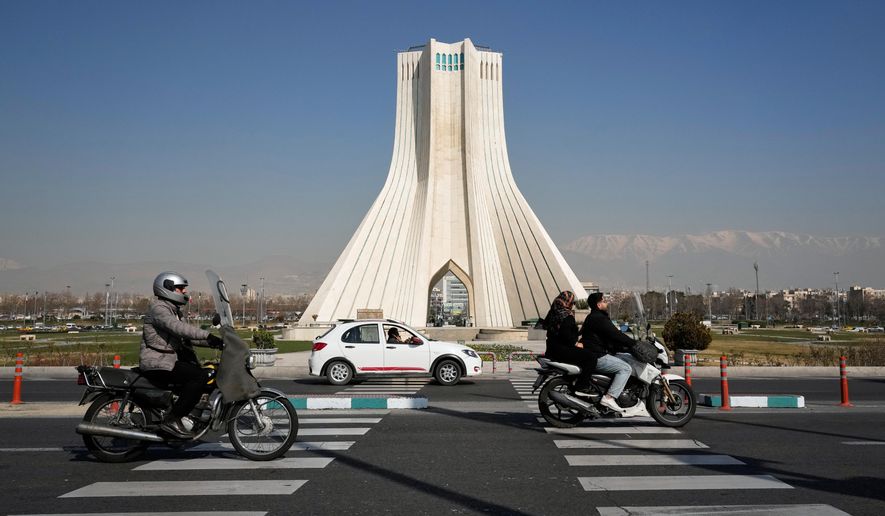

A delegation from Qatar landed in Tehran on Friday for further talks with Iranian leadership, just days after Vice President J.D. Vance sent a letter requesting a resumption of direct negotiations.
An unnamed senior adviser to Qatar’s prime minister and foreign minister led the delegation to the Iranian capital for talks on “issues of mutual interest,” Iran’s IRNA news agency reported.
Qatar has for months coordinated peace efforts with the U.S. and Iran, delivering proposals to the warring nations alongside diplomats from Pakistan. Qatari mediators were last in Tehran on Sunday to deliver the latest de-escalation proposal.
People were interested in these podcasts
Qatar’s prime minister and foreign minister, Mohammed bin Abdulrahman Al Thani, also visited the country in August for talks with top Iranian officials over restoring commercial traffic in the Strait of Hormuz.
The latest diplomatic push follows Mr. Vance’s letter to Supreme National Security Council Secretary Mohsen Rezaei, asking for a return to the negotiating table to immediately discuss nuclear issues.
The letter, which Mr. Vance reportedly sent to Tehran last week, reiterated that Washington’s primary objective is to ensure Iran does not obtain nuclear weapons while acknowledging the Islamic republic’s desire to see sanctions removed.
Iran confirmed on Thursday that it received the letter but had not delivered an official response.
Mr. Rezaei is an influential figure in Iranian politics with ties to the country’s military elite. He has served as a top adviser to Supreme Leader Mojtaba Khamenei, whom he has known for the better part of 40 years.
Mr. Rezaei represents the hard-liners within the Iranian government that have typically met peace offers from the U.S. without major concessions. Earlier this month, he posted on X that no negotiations would take place until Washington fulfills Iran’s demands over the Strait of Hormuz, frozen assets, sanctions relief and a withdrawal of forces from the region.
Washington has been unwilling to meet Iranian demands without an agreement on a total dismantling of the regime’s nuclear infrastructure, which has already been damaged by U.S. and Israeli airstrikes.
Meanwhile, the Trump administration has signaled it will escalate the conflict in the coming days.
Several reports indicate that the Pentagon has outlined strike plans, targeting Iranian energy and civilian infrastructure while resuming attacks on military sites, that could be executed following Tuesday’s midterms.
The Wall Street Journal reported this week that Adm. Brad Cooper, leader of Central Command, briefed President Trump in person about the security situation in Iran and in the Strait of Hormuz.
The new campaign, according to reports, would be an intense operation meant to add further military and economic pressure on Iran to make a deal.
Mr. Trump has also reportedly warned several of America’s Gulf allies to prepare for the short campaign that may, once again, put military bases and oil infrastructure in those countries at risk.
Sen. Chris Murphy, Connecticut Democrat, told the Middle East Institute on Wednesday that he and several other members of Congress were briefed on the Pentagon’s plans for a new escalation. He called the plans “insane” and predicted that they would further damage U.S. standing in the region.
“They’ve been asked by the president to develop a plan. Whether they believe it will work or not, I do not know. But the plan that they have developed will lead, in my view, to a prolongment and an escalation of this war that will be devastating for our security interests,” he said.
Contact the author


Please read our comment policy before commenting.