



U.S.-Iran diplomacy showed signs of continuing at a steady pace Tuesday as mediators in Qatar exchanged proposals with Tehran’s interior minister in Doha, while the wider war rippled across Britain, Saudi Arabia and Yemen.
Ibrahim bin Sultan Ibrahim Al Hashmi, spokesperson for the Foreign Ministry of Qatar, confirmed to reporters that his government is continuing to ferry diplomatic messages between Iran and the U.S.
Iran’s Interior Minister Eskandar Momeni, who met with Qatari Emir Sheikh Tamim bin Hamad Al Thani on Tuesday, said that he communicated a message from Iran’s President Masoud Pezeshkian and that the emir conveyed the most recent proposal. He said the talks were constructive and that he will communicate the latest message to Tehran.
People were interested in these podcasts
He declined to say what was in the latest proposals from Iran or the U.S.
The meeting is the latest by mediators to end the U.S.-Iran war, which is now well into its eighth month.
Over the past few months, Pakistani and Qatari mediators have tried to broker a permanent end to the war that would return the region to relative peace and restart nuclear talks between Washington and Tehran, which were ongoing when Mr. Trump began the war.
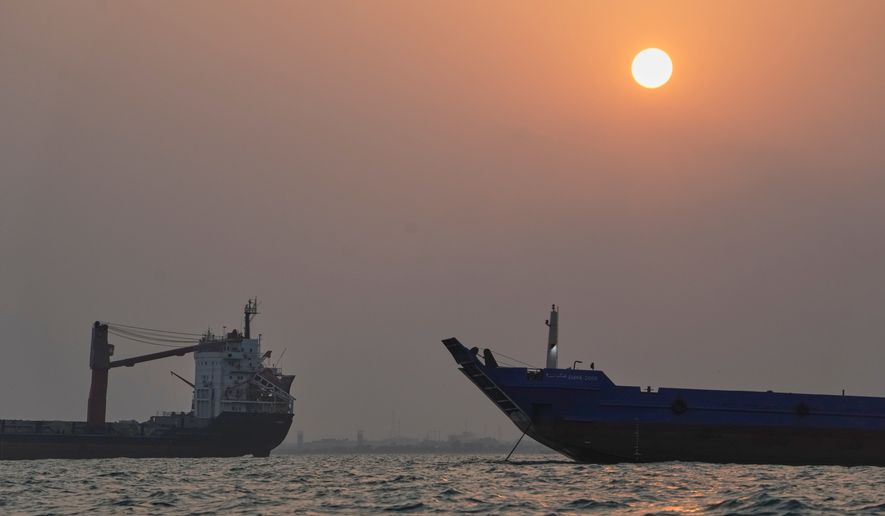
The subject of current diplomatic talks centers mostly around the future of Iran’s nuclear program and control over the Strait of Hormuz, which Tehran has kept effectively closed since March.
Tehran has insisted that it will retain at least some control over traffic in the narrow waterway in perpetuity, while Washington has demanded that the strait return to its status as international waters with no tolls or fees charged on commercial vessels.
In previous negotiations, Iran has signaled that it is willing to end its wide blockade on the strait in exchange for sanctions relief.
Iranian Foreign Minister Abbas Araghchi said last month that he had delivered a peace proposal that would have instituted a ceasefire, reopened the Strait of Hormuz in seven days and paved the way for further technical talks. That proposal was publicly rejected by President Trump.
The U.S. has maintained a comprehensive naval blockade of Iran for months that it says has halted the regime’s ability to export its oil, one of Tehran’s most important revenue sources. The U.S. military has also, in recent weeks, conducted escort missions in the strait to improve traffic flow.
Reports on Tuesday indicated that commercial traffic in the waterway is approaching 80% of pre-war levels as ships move through Omani waters near the south of the strait.
Mr. Trump and other administration officials say the increase in traffic in the strait has eroded Iran’s leverage over the waterway and that Tehran will need to offer up more concessions to finalize a deal.
Still, with Iran’s oil stranded mostly in tankers in the Persian Gulf, international oil prices and domestic gas prices have remained high. Brent crude oil sat at approximately $100 a barrel on Tuesday and the average price for a gallon of gasoline in the U.S. stood at $4.37.
Signs of diplomatic progress come as the war’s impact continues to reverberate far beyond Iran’s borders.
Iran-backed Houthi fighters in Yemen launched airstrikes on airports in Jazan and Najran in southern Saudi Arabia on Tuesday, leading to serious property damage and injuring three, according to Saudi aviation officials.
The attacks were followed by an intense assault on Houthi positions in western Yemen by Saudi-led coalition forces. The assault was intended to push the rebels out of many of the areas they had secured late last month, especially those near the Bab al-Mandeb Strait.
British counterterrorism authorities on Tuesday apprehended a 22-year-old man in London in connection with the suspected terror attack on RAF Fairford last month.
Police said the man, who was not identified, was arrested in Westminster and that officers conducted a search of a nearby property.
The man remains in custody, according to authorities, though it’s unclear if he has been charged.
Police late last month arrested five men near RAF Fairford who were spotted by locals wearing masks and moving in and out of large white vans. Authorities found no explosives in the vans but found gasoline, an accelerant, and all men were released on bail just 24 hours later.
British authorities say the investigation is ongoing and that all of the suspects who have been released are under heavy surveillance and movement restrictions.
The U.S. has used RAF Fairford to stage long-range bombing raids against Iran for months, and Iranian security officials have said that any base used to launch attacks would be considered a legitimate target.
The threat of further attacks at the base was enough for the Pentagon to order the redeployment of its B-1 Air Force bombers over the weekend. All 12 aircraft were recalled to their home bases in the U.S.
Vice President J.D. Vance said Monday that the planes were moved “out of an abundance of caution” to protect U.S. service members.
Contact the author


Please read our comment policy before commenting.