


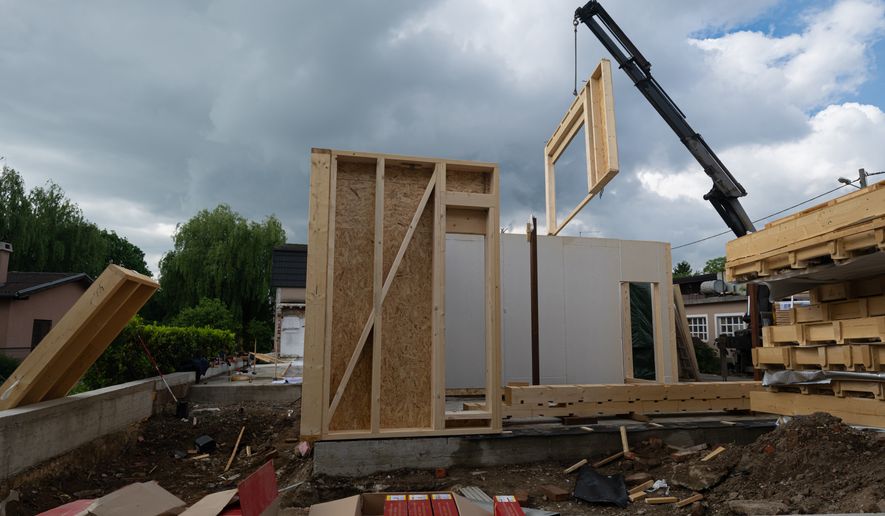

When you picture a manufactured home, you may still see a trailer park. A few dozen suburban subdivisions are now testing something different: factory-built houses designed to look like traditional homes.
Can manufactured homes work in the suburbs? Research from Freddie Mac and Harvard suggests they cost less per square foot to build, but zoning, land costs and financing help determine whether a buyer actually saves. This article draws on government, university and industry sources to show where the savings are most likely.
In Riverside, Calif., Fruition Communities is selling manufactured houses in a 99-house neighborhood with a pool, a community building and a pet park, according to the developer. The company sells the houses but leases the land beneath them, an arrangement The Washington Post said resembles a mobile home park more than a traditional subdivision.
People were interested in these podcasts
In Hagerstown, Md., developers planned a subdivision of about 240 manufactured houses with covered porches, backyards and nature trails, Fast Company reported in 2024. Buyers purchase the land along with the house, allowing the property to qualify for a conventional mortgage.
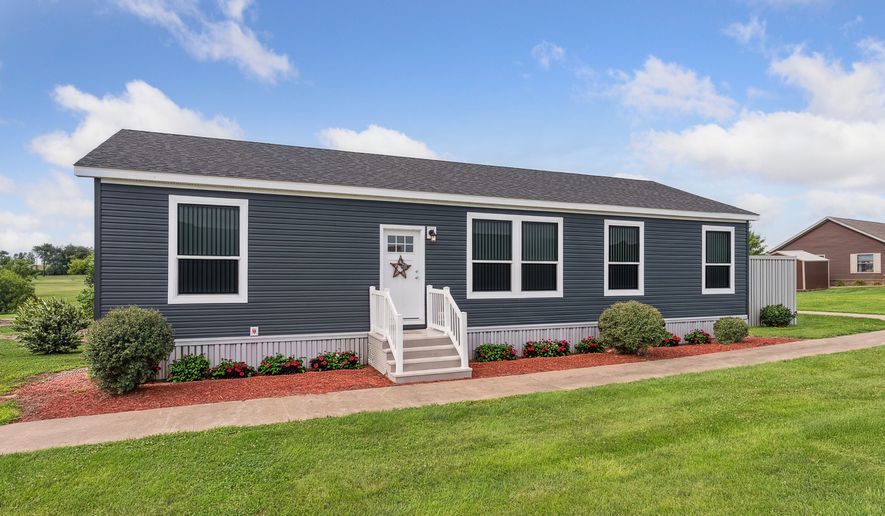
Such projects remain unusual. But they show how manufactured housing, historically pushed onto rural land or into designated parks, is beginning to enter the suburban subdivision market.
Why were manufactured homes kept out of suburbs?
Many local zoning codes treated manufactured homes like mobile homes, and some states are now limiting those rules.
Manufactured homes are built under a national construction code administered by the Department of Housing and Urban Development. Modular homes are also assembled in factories, but they must satisfy the state and local building codes that apply at their final location, as the Bipartisan Policy Center explains.
Local zoning codes have often treated manufactured homes as mobile homes regardless of their design or foundation. A HUD-commissioned study from 2011 found that zoning, subdivision rules, permitting requirements and architectural standards impeded manufactured housing in metropolitan communities.
States are beginning to limit such restrictions. The Pew Charitable Trusts reported that, as of September 2025, nine states had adopted reforms during the previous five years to permit manufactured homes in more neighborhoods.
A Colorado law enacted in 2025 bars local governments from imposing tougher standards on factory-built structures than on site-built homes in the same residential zones. Maine similarly requires manufactured homes to be allowed wherever single-family houses are permitted. In Jackson, Miss., officials revised an ordinance that had effectively prohibited modern manufactured housing, according to the Bipartisan Policy Center.
Do new manufactured homes still look like mobile homes?
Many do not. New manufactured houses can be built to resemble site-built homes, and they cost less per square foot before land.
New manufactured houses can include porches, garages, steep roofs and exterior finishes selected to resemble nearby site-built homes. Multi-section houses are joined at the property and can be set on a permanent foundation.
The price difference can be substantial. Freddie Mac estimates that a new manufactured house costs about $84 per square foot before land, compared with roughly $169 per square foot for site-built construction.
Federal policy has also focused on the product. The 21st Century ROAD to Housing Act, which became law in July, removes the permanent-chassis requirement from the federal definition of a manufactured home.
Before passage, HUD had estimated that requiring steel transportation frames beneath the upper floors of multistory manufactured homes added $4,800 to $6,700 per home to production, shipping and installation costs. The agency’s proposed rule also said the requirement made staircases and multistory designs harder to accommodate.
Removing the chassis requirement will not immediately produce large numbers of two-story manufactured houses. Federal standards, state rules, factory equipment and mortgage practices still must adjust.
Does owning the land change the savings?
Yes. The savings come from the structure, so land costs and how the home is titled and financed can shrink them.
Factory production lowers the cost of the structure, not the price of the land, utility connections, roads or sidewalks. That limits the advantage in expensive urban markets.
A 2024 analysis by Harvard University’s Joint Center for Housing Studies estimates that 3.2 million renters earning between 50% and 100% of their area median income live in counties where a site-built house may be unaffordable but a manufactured house could be within reach.
The ownership arrangement matters as much as the construction price. A manufactured house is generally treated as personal property unless the owner has it retitled as real estate, a step that requires a permanent foundation and varies by state. Only real estate qualifies for a mortgage. Personal property is typically financed with a chattel loan, which carries higher interest rates and shorter terms, according to the Harvard housing center.
Prospective buyers should determine whether the land is included, how the house will be titled and whether the loan is a mortgage or personal-property loan. They should also compare the full monthly cost, including lot rent, property taxes, insurance, utility hookups and homeowners association fees.
A familiar belief is that manufactured houses lose value over time. An Urban Institute analysis of home price data on loans backed by Fannie Mae and Freddie Mac found that manufactured houses sold with land appreciated at nearly the same rate as site-built properties from 2000 to 2024. The finding does not cover every manufactured home, particularly houses on leased lots, which Urban said likely have not performed as well.
Can a town still block a manufactured home?
Sometimes. State laws limit many local rules, but towns can keep others.
State laws do not remove all local authority. Kentucky’s law lets localities set compatibility standards for features such as roof pitch and foundation skirting, and Colorado’s still allows land use rules that apply equally to site-built homes. Pew also notes that large minimum lot sizes and street-setback requirements can erode the cost savings of a manufactured house because land costs are high.
Private deed restrictions can impose additional barriers. Courts in New Mexico and South Carolina have upheld subdivision covenants that kept out manufactured or modular homes, and the South Carolina court held that the state’s factory-built housing law governs local governments, not private covenants.
The number of factories has fallen from more than 300 to about 140, factories need to be within 500 miles of a home site to manage transportation costs, and developers must learn how to win local approvals, site homes and arrange financing, the Harvard housing center reports.
Detached factory-built housing is not the best fit everywhere. Pew housing analyst Rachel Siegel told Fast Company it would not suit Washington, where homes should be built more densely, but could substitute anywhere a single-family home is the right type of housing. That suggests its strongest case is in suburban and exurban communities that already allow detached houses but where conventional new construction has moved beyond the budgets of moderate-income buyers.
This article was constructed with the assistance of artificial intelligence and published by a member of The Washington Times' AI News Desk team. The contents of this report are based solely on The Washington Times' original reporting, wire services, and/or other sources cited within the report. For more information, please read our AI policy or contact Steve Fink, Director of Artificial Intelligence, at sfink@washingtontimes.com
The Washington Times AI Ethics Newsroom Committee can be reached at aispotlight@washingtontimes.com.

Please read our comment policy before commenting.