


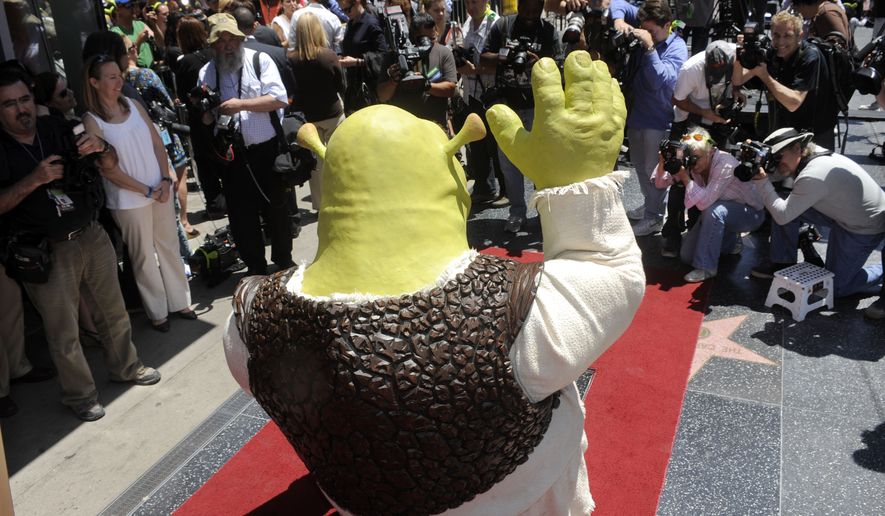

An Ohio political blogger who spent 23 hours in jail after texting a state senator an altered image of the cartoon ogre Shrek is scheduled to stand trial Thursday on a misdemeanor harassment charge.
D.J. Byrnes, who publishes the progressive Substack newsletter The Rooster, faces a jury trial in Willoughby Municipal Court on a charge of telecommunications harassment, the Columbus Dispatch reported. Mr. Byrnes has said he rejected two plea deals that would have required him to admit guilt but avoid jail time.
Signal Ohio reported that Mr. Byrnes sent Sen. Jerry Cirino, a Republican, three texts on May 6. They included political commentary, Byrnes’ derisive nickname for the lawmaker, “Young Mussolini,” and a digitally altered image of Shrek with his penis exposed. An arrest affidavit describes the figure as nude and engaged in a sex act.
People were interested in these podcasts
Two days later, Mr. Cirino emailed the Kirtland police chief to file a complaint and ask for charges. Mr. Cirino wrote that Mr. Byrnes had harassed him before, according to Signal Ohio. Mr. Cirino told the outlet he did not request that Mr. Byrnes be arrested, but he declined to comment further. He has also declined to comment on the case since, the Dispatch reported.
State troopers arrested Mr. Byrnes at the Ohio Statehouse on June 1 on a warrant signed by Willoughby Municipal Court Judge Marisa Cornachio, who has been endorsed by Mr. Cirino, according to the Dispatch. Ohio Supreme Court Chief Justice Sharon Kennedy has since appointed retired Painesville Municipal Court Judge Michael Cicconetti to hear the case.
The charge is a first-degree misdemeanor punishable by up to six months in jail. To convict Mr. Byrnes on this charge, prosecutors must prove he knowingly sent the texts with purpose to harass, intimidate or abuse, according to Signal Ohio.
The Foundation for Individual Rights and Expression, a free-speech group, argued in a June analysis that the exchange was not punishable. It said the texts were “protected political mockery, not obscenity.” The group said obscenity under the Supreme Court’s Miller v. California test requires material that appeals to a prurient interest, is patently offensive as defined by law and lacks serious literary, artistic, political or scientific value. It also said a handful of texts with one image from a single number looks more like protected speech than harassment.
Mr. Byrnes has pleaded not guilty. He filed a motion to dismiss July 29 arguing the messages are protected speech and that Ohio’s harassment law is unconstitutionally broad.
This article was constructed with the assistance of artificial intelligence and published by a member of The Washington Times' AI News Desk team. The contents of this report are based solely on The Washington Times' original reporting, wire services, and/or other sources cited within the report. For more information, please read our AI policy or contact Steve Fink, Director of Artificial Intelligence, at sfink@washingtontimes.com
The Washington Times AI Ethics Newsroom Committee can be reached at aispotlight@washingtontimes.com.

Please read our comment policy before commenting.