



MADRID — María del Carmen Abascal had spent most of her life living quietly in the apartment her family began renting decades ago in downtown Madrid. That was until her fight to avoid eviction transformed the 87-year-old into a symbol for millions of Spaniards who struggle to afford housing.
Abascal, known widely as Maricarmen, died suddenly on Wednesday, two weeks after she was evicted. Her death is reinvigorating housing protests and threatens to further polarize Spain ahead of a national election next month when the housing issue will be central.
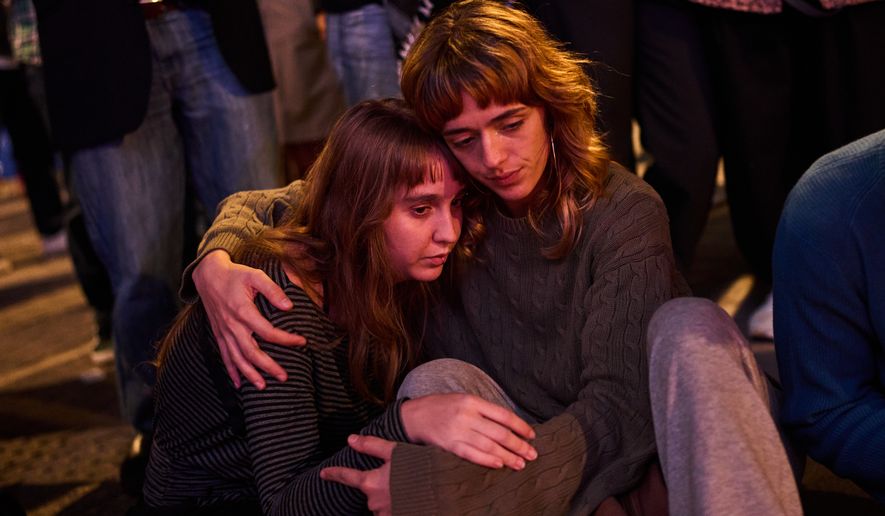
Sympathizers with Maricarmen’s cause left candles, flowers and letters overnight at an impromptu shrine in Madrid’s central Puerta del Sol, where around 1,000 people have camped to protest Spain’s housing affordability crisis since Maricarmen’s eviction on Sept. 23 captured the nation’s attention.
People were interested in these podcasts
On the door of her old home, a sixth-floor apartment near Madrid’s Retiro park, a piece of paper was taped with the handwritten message “Rest in Peace Maricarmen,” accompanied by the drawing of a black heart. Many left messages on the street outside.
“Your death won’t be in vain. We will continue the struggle,” read one of the messages.
In Barcelona, a popular graffiti artist painted Maricarmen in angelic form, complete with halo, wings and a white toga. She is holding a key, apparently the key to the home she didn’t return to, though it recalled traditional images of St. Peter holding the keys to paradise.
But beyond the grief there was also rage, as well as a conviction that this wasn’t over.
Many protesters believe that Maricarmen’s demise was caused by the strain of the eviction. Thousands protested when police carried Maricarmen, who used a wheelchair, on a stretcher from her home of seven decades last month. She died in the hospital, and her lawyer did not disclose a cause of death.
Protesters blame property owners for high rents
One sign in Puerta del Sol read “These are not deaths, they are murders,” echoing chants that rang out during a march toward the Parliament late Wednesday when news of her death spread.
“She was the flame that led us to start this camp-in and protest,” 28-year-old receptionist María Holgado said outside her tent on Thursday. “Her death shocked us and left us all incredibly sad, but I believe it will give us more energy and conviction to keep protesting and demanding our rights so that there is not one more murder.”
“The blame falls on the property owners and vulture funds that are taking advantage of a basic right and making loads of money from it,” she added.
Holgado said she and her partner could only afford a tiny apartment, and are paying dearly for it. Her case is typical. The average rent for Spain has almost doubled in the last 10 years, according to the real estate website Idealista.
Similar protests and camp-ins have stayed active in Barcelona and other major cities. The main organizers of the protests, Madrid’s Tenants Union, have called for another march Thursday. Protesters also plan a show of force Nov. 11, when labor unions have called a general strike two weeks ahead of the election.
Maricarmen’s death will impact a national election
The televised images of Maricarmen being taken from her home last month shook Spanish politics to the core.
Spanish Prime Minister Pedro Sánchez first tried to push through emergency housing measures to stop evictions and curb real estate speculation. When right-wing parties aligned to stop the legislation in Parliament, Sánchez doubled down by calling snap elections. He then reissued similar decrees that are set to be ratified by a small, interim Parliament.
Sánchez, who is hoping to use the housing question to galvanize progressives for the Nov. 29 election, was quick to send his condolences to Maricarmen’s family and friends on social media.
To stay in power, Sánchez will likely need to maintain the current coalition between his Socialists and a smaller party further to the left. They have been trailing the right-wing parties in polls.
Analyst Alejandro Quiroga, a politics professor at Madrid’s Complutense University, said the tragedy of Maricarmen should mobilize progressive voters, especially those supporting Sánchez’s current coalition partner, Sumar. The party, which has long pushed for stronger housing regulations, is changing its name to Frente Amplio, which means Broad Front, an effort to urge all parties to the left of Sánchez’s Socialists to get on one ticket.
“In political terms, this will be remembered as a milestone,” Quiroga told The Associated Press. “Her death completes the narrative that evictions and real estate speculation literally kill.”
On Thursday, members of left-wing parties held a minute of silence outside both the regional parliament and town hall of Madrid. Politicians of the conservative Popular Party and far-right Vox did not participate in either. The right-wing parties have repeatedly called on the government to send in police to break up the camp-in in Puerta del Sol. The government has refused.
The regional and municipal governments held by the Popular Party have for years pushed back against attempts by Sánchez’s government to regulate rental costs. The Popular Party argues that regulation hurts investment when Spain needs hundreds of thousands of new homes.
Madrid’s conservative mayor José Luis Martínez-Almeida accused Sánchez of politicizing Maricarmen’s death.
“My condolences? Yes. Participating in Sánchez’s campaign for Nov. 29? No,” the mayor said.
___ Wilson reported from Barcelona, Spain.

Please read our comment policy before commenting.