


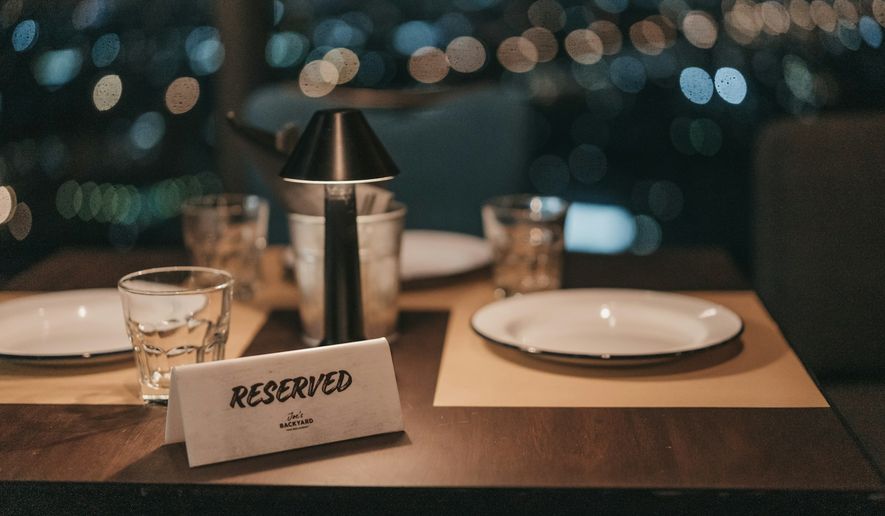

Holding multiple reservations at three different hot spots while deciding where to eat at 7 p.m. has become second nature for modern diners. For the kitchens waiting on those empty tables, however, it is a devastating habit that treats a small business’s livelihood as a free option.
Now, operators are fighting back with credit card holds, prepayment models, and a blunt message for serial no-shows.
The Numbers Do Not Agree, and That Matters
People were interested in these podcasts
Ask three restaurant owners how badly no-shows are hurting their business, and you will likely get three radically different answers. Understanding why the figures diverge so wildly explains more about the economics of a dining room than any single statistic does.
Start with the measured end. The Resos No-Show Index, built from 3,768,761 reservations across 2,417 restaurants between August 2025 and July 2026, puts the recorded no-show rate at 2.33%. That is not a survey. It is 87,953 bookings that staff logged as having failed to arrive.
Now the other end. Thomas Jeanjean, who runs the European reservation platform Zenchef, estimates that around 70% of restaurateurs face no-shows and that roughly 10% of bookings go unhonored, amounting to as much as 15% of revenue in a business where margins are already thin. Those figures describe the French and Northern European market, where his software serves about 25,000 restaurants.
Both can be true. Resos measures what gets formally recorded in a booking system, and busy venues in the 500-to-999 bookings-a-month bracket in that same dataset run at 3.17%, well above the average. Operator estimates capture the nights that hurt: peak Saturdays, large parties, holiday weekends. A restaurant that loses four tables on the busiest service of the year does not remember its annual average.
The gap between the two is the story. The problem is not evenly distributed. It concentrates exactly where a lost table is worth the most.
What One Empty Table Actually Costs
The revenue is only the visible part.
Industry benchmarks put the cost of a single no-show at roughly $35 to $60 for a casual restaurant, $75 to $120 for upscale casual, and $150 to $300 in fine dining, depending on check size and whether the table could have turned again.
But the ingredients were already ordered against a projected cover count. The staffing was set days earlier. In a tasting-menu kitchen, some of the prep for that specific table is already done and cannot be sold to anyone else. The table itself was held, meaning walk-ins were turned away for a party that never came.
Multiply by a handful of tables and the annualized figure gets ugly fast. Which is why restaurants stopped calling it the cost of doing business.
Why It Got Worse
The mechanism is not complicated: booking became frictionless and canceling stayed optional.
Securing a table now takes a few taps, with no phone call and no human on the other end to remember. Jeanjean’s list of causes is short: most no-shows are simple forgetfulness, some are genuine last-minute changes, and a growing share are multi-booking, where a diner reserves at three places and decides that evening which one they feel like.
That last behavior is the one operators find hardest to forgive, because it is not an accident. It treats a reservation as a free option, held at someone else’s expense.
The Deposit Economy Arrives
The industry response has consolidated fast around one tool: a card on file.
The restaurant does not charge anything upfront. It authorizes a card and states a fee, typically $20 to $50 per cover, applied only if the party fails to arrive without canceling. Fine dining increasingly runs higher, and tasting-menu restaurants have moved to full prepayment.
The infrastructure caught up in 2025. OpenTable rolled out an overhaul across most U.S. restaurants that included a 2% service charge on no-show penalties, deposits and prepaid events, with the remainder joining along in early 2026. Restaurants can absorb that charge or pass it on. Resy, Tock and SevenRooms all handle card holds and disclosure natively.
Operators who have made the switch report the rate falling by roughly half. And there is a secondary effect they mention more often than the money: guests who have a card attached actually call to cancel. That call is worth more than the fee, because a table released at 4 p.m. can be resold by 7.
Softer tools help too. Automated SMS and email reminders with one-tap cancellation are credited by TheFork with cutting no-shows by around 30%, and a properly worked waitlist fills what does open up.
The Objection, and the Answer
Diners push back on deposits, and the complaint is understandable. Nobody enjoys handing over a card to eat a burger.
The operator answer is blunt and hard to argue with. The guest who refuses a $20 hold on a Saturday night is, statistically, the guest most likely not to turn up. Filtering them out is not a loss of business. It is the policy doing precisely what it was designed to do.
This article was constructed with the assistance of artificial intelligence and published by a member of The Washington Times' AI News Desk team. The contents of this report are based solely on The Washington Times' original reporting, wire services, and/or other sources cited within the report. For more information, please read our AI policy or contact Steve Fink, Director of Artificial Intelligence, at sfink@washingtontimes.com
The Washington Times AI Ethics Newsroom Committee can be reached at aispotlight@washingtontimes.com.

Please read our comment policy before commenting.