


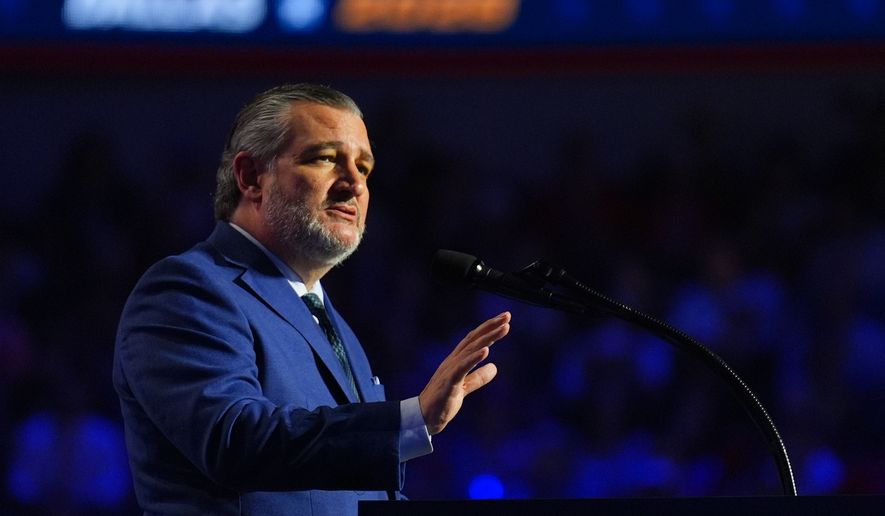

A bill to stabilize intercollegiate athletics by setting national guidelines for the new college sports economy is on the cusp of passing through Congress, Sen. Ted Cruz said Monday.
After a weekend touting his bill, the Protect College Sports Act, at the University of Texas football game in Austin, the Texas Republican took to Capitol Hill to promise his bill will make it to the Senate floor within the next 10 days.
The bill would be Congress’ official intervention in collegiate athletics, establishing federal guardrails for student compensation and requiring universities to comply with standards on scholarships, medical coverage and the transfer portal.
It also would supplant a hodgepodge of state legislation that regulates the name, image and likeness system that allows student-athletes to earn financial compensation.
With college football back in action, the bill is gaining traction.
Mr. Cruz appeared on ESPN’s “College GameDay” at the University of Texas on Saturday morning to promote the measure ahead of the Longhorns’ game against Ohio State.
The upper chamber is now planning a vote on the legislation by the end of September, but it would have to clear the House before a five-week October recess.
Senate Majority Leader John Thune, South Dakota Republican, told reporters Monday he does not know yet whether the bill’s supporters have 60 votes to advance it, but he plans to bring it up after addressing a cryptocurrency bill.
Mr. Cruz said his objective and that of co-sponsor Sen. Maria Cantwell, Washington Democrat, is to have a large bipartisan vote incentivize a successful passage in the House.
Alongside college coaches and athletes, Ms. Cantwell said the measure is about “reining in the bad practices that are happening in college sports today.”
An army of schools, states, athletic conferences, pro sports leagues, nonprofits, broadcasters and media giants have all shown a vested interest in the outcome.
“Some have asked, ’Why should Congress get in the middle of this?’ The answer is simple because Congress screwed it up in the first place,” Mr. Cruz said. “It has been the federal antitrust law is applied in litigation after litigation after litigation that have had the effect of tearing down essentially all the rules.”
Contact the author


Please read our comment policy before commenting.