



A federal judge in Alaska has upheld a Clean Water Act permit for a mineral exploration project within the boundaries of Lake Clark National Park, rejecting a legal challenge and granting summary judgment to the United States on every claim, according to a decision from the U.S. District Court for the District of Alaska.
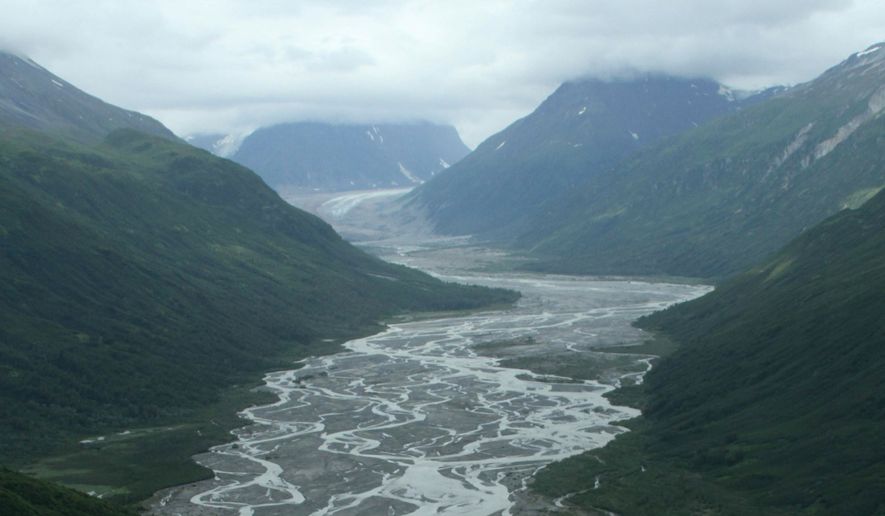
The permit, issued by the U.S. Army Corps of Engineers, allows JT Mining to build an access road and upgrade an existing airstrip serving an exploratory drilling site on the Johnson Tract, a 20,942-acre private inholding the company owns within the park’s boundaries at the headwaters of the Johnson River, court documents state.
“This decision protects responsible mineral exploration on private land,” said Adam Gustafson, principal deputy assistant attorney general for the Justice Department’s Energy and Natural Resources Division. Gustafson said the ruling reaffirms that federal agencies are entitled to deference on scientific and predictive judgments and keeps the Alaska project moving forward.
According to the Justice Department, JT Mining applied for a Section 404 permit in 2023, and the Corps solicited and reviewed public comments, consulted several Alaska Native Tribes, and issued the permit in September 2024. The permit authorizes the discharge of approximately 67,800 cubic yards of general embankment fill and 5,200 cubic yards of surfacing material into 5.14 acres of waters of the United States to build a 2.3-mile access road and realign and expand the existing airstrip to 5,000 feet. The fill will be sourced from upland material sites, avoiding additional wetland and stream fill at those locations.
Plaintiffs argued principally that the Corps violated Section 7 of the Endangered Species Act by defining the project’s action area too narrowly and declining to consult the National Marine Fisheries Service about the endangered Cook Inlet beluga whale, whose designated critical habitat includes Tuxedni Bay, roughly 10 miles east of the project area.
The court disagreed, finding that the Corps reasonably defined the action area to include the project footprint, a 300-foot buffer marking the outer limit of detectable noise disturbance, and three miles of downstream aquatic environment. The court also found that the agency adequately explained those boundaries. The permit authorizes the discharge of fill, not aircraft operations, the court noted, and conveys no right to fly over Tuxedni Bay. The Corps stated that regulation of air traffic in the national park is under the National Park Service’s purview. The court also found that the Corps reasonably treated a potential future mine and any flights associated with mining operations as speculative. Because no listed species or designated critical habitat is present within the action area, the court held that consultation with the National Marine Fisheries Service was not required.
The court also upheld the Corps’ compliance with the National Environmental Policy Act and the Clean Water Act, rejecting claims that the agency failed to verify acid rock drainage and metals-leaching data or resolve uncertainty over jurisdictional waters at the material sites. Citing the Supreme Court’s ruling in Seven County Infrastructure Coalition v. Eagle County, the court reiterated that deference is the “bedrock principle” guiding judicial review in NEPA cases.
Justice Department trial attorneys from three sections of the Environment and Natural Resources Division handled the case, with support from the U.S. Attorney’s Office for the District of Alaska.
This article was constructed with the assistance of artificial intelligence and published by a member of The Washington Times' AI News Desk team. The contents of this report are based solely on The Washington Times' original reporting, wire services, and/or other sources cited within the report. For more information, please read our AI policy or contact Steve Fink, Director of Artificial Intelligence, at sfink@washingtontimes.com
The Washington Times AI Ethics Newsroom Committee can be reached at aispotlight@washingtontimes.com.

Please read our comment policy before commenting.