


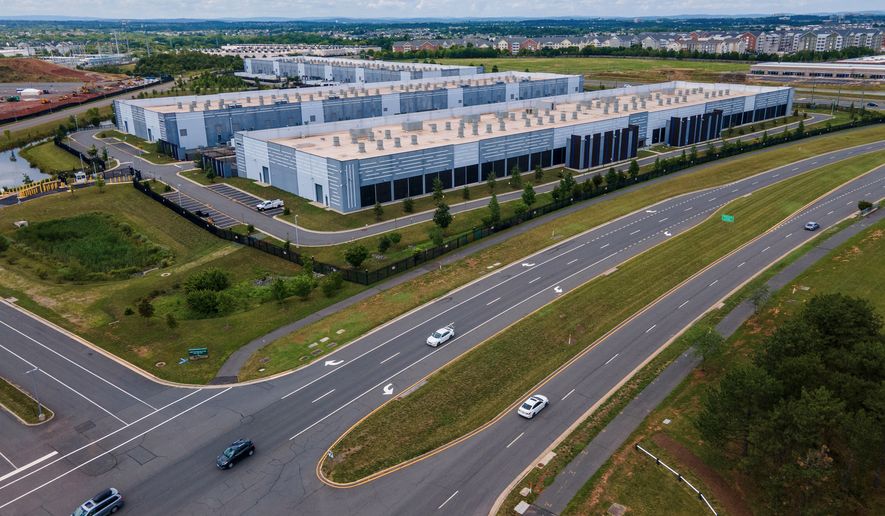

If tech giants built data centers where people actually live, America’s digital backbone would surround major cities like New York and Los Angeles. Instead, the world’s largest cluster sits in Loudoun County, Virginia, and the fastest growth is happening in Pecos, Texas, and rural Indiana.
The site-location logic runs on four variables, and population is not one of them. Instead, it’s power, fiber, water and taxes that lead the way. And in a growing number of states, a fifth variable has appeared: whether the community will let the project in at all. That matters to anyone who pays an electric bill or lives near a proposed site.
Why are data centers built where they are?
People were interested in these podcasts
Power availability is seemingly the biggest factor. A large AI campus can draw as much electricity as a mid-sized city, and it needs that power on a construction schedule of two to three years. Dominion Energy, Northern Virginia’s utility, has said major transmission upgrades take three to seven years, a mismatch the industry itself identifies as the biggest factor pushing new investment toward Indiana, Ohio and Georgia.
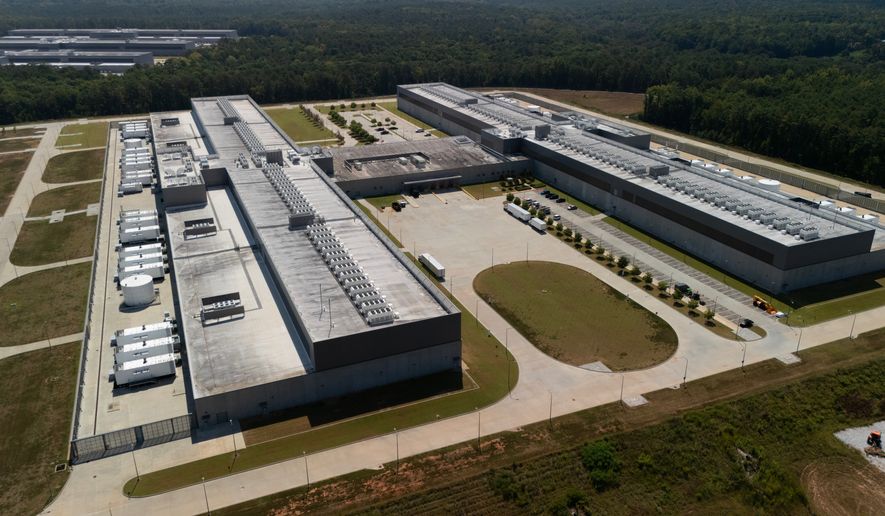
So the buildout migrates to grids with spare capacity and shorter queues. Georgia Power’s faster interconnection timelines have become a sales pitch, Texas offers the lightly regulated ERCOT market, and Pennsylvania is marketing its nuclear plants and old industrial sites that come with existing hookups.
Cushman & Wakefield found that new large power requests now wait an average of five years in the Americas. Alex Cordovil, research director at Dell’Oro Group, told Data Center Knowledge that with new campuses running from 500 megawatts to multiple gigawatts, power becomes “the gating factor.”
Northern Virginia shows both sides. Its edge began with fiber: MAE-East, one of the first internet exchanges, took root there in the early 1990s. Dominion Energy told utilities in 2024 to expect waits of four to seven years to connect data centers needing more than 100 megawatts, up from three to four years.
Land is pulling projects outward. Cushman & Wakefield ranks West Texas first in the world for land availability and says large land purchases increasingly happen in unincorporated, rural parts of smaller markets, where zoning is by right and community opposition is low.
Some developers are supplying their own power. Microsoft’s Pecos campus is paired with a 20-year agreement under which a Chevron subsidiary would supply up to 2.67 gigawatts from an on-site gas plant. Announced in late June, Microsoft says the campus will use closed-loop cooling that needs no additional water in steady operation. The complex is expected to be built over five to seven years.
Where are the most data centers being built?

Northern Virginia has 11.3 gigawatts of operating capacity, more than any other market in the world, Cushman & Wakefield reported in its 2026 global comparison. JLL’s year-end 2025 report put Texas at about 4 gigawatts with 6.5 gigawatts under construction, Bisnow reported.
The firms count differently: Cushman puts Virginia’s construction pipeline at 6.4 gigawatts and tracks Dallas, Austin and West Texas as separate markets, while JLL treats Texas as one.
Both see Texas gaining. JLL said the state could pass Northern Virginia by 2030, and Cushman said its growth could soon bring installed capacity in line with, or beyond, Virginia’s. Cushman ranks Dallas first among primary markets, ahead of Atlanta and Virginia, on a 24-variable score.
JLL’s midyear 2026 report counts more than 66 gigawatts under construction in North America, 77 percent of it in what JLL calls frontier markets. West Texas has been the largest beneficiary, JLL said, with Ohio, Louisiana, Indiana and the Carolinas also gaining significantly.
Meta’s Temple data center, its first AI-optimized facility, began serving traffic July 22. Its El Paso campus, designed for 1 gigawatt, is under construction, with operations expected in 2028. Google announced a $40 billion Texas investment in November 2025 that includes campuses in Armstrong and Haskell counties.
Pew Research Center found more than 3,000 operating data centers and more than 1,500 in development as of Feb. 19. About 67 percent of planned sites are in rural areas, compared with 13 percent of operating ones. By total count, Virginia (685), Texas (466), California (331), Illinois (262) and Georgia (235) lead. Georgia has more planned sites (141) than operating ones (94).
Are data centers raising electricity bills?
They are pushing up wholesale power and grid costs in some regions, and the effect on household bills is smaller than some widely shared figures suggest.
PJM Interconnection, the grid operator for 13 Mid-Atlantic and Midwest states and the District of Columbia, set a record price at its December 2025 capacity auction. The Union of Concerned Scientists estimated that utility customers in seven PJM states are paying for about $4.3 billion in local transmission projects approved in 2024 solely to connect data centers.
A Bloomberg News analysis found wholesale electricity prices in some areas near data centers were as much as 267 percent higher in a single month than five years earlier. PolitiFact reported that the figure reflects wholesale prices, not residential bills. Kenneth Gillingham, an economist at the Yale School of the Environment, told PolitiFact that the supply component makes up about 30 percent to 50 percent of a consumer’s bill.
A Reuters/Ipsos poll released June 11 found that 14 percent of Americans said they were okay with a data center being built in their community. Fifty-seven percent said they would oppose one.
Which states are saying no to data centers?
Texas and New York have each paused state permits for data centers by executive action, while legislative moratoriums have stalled in Maine and Oklahoma.
Texas Gov. Greg Abbott ordered the Texas Commission on Environmental Quality on Sept. 21 to halt all permits sought by data center projects until audits by the state’s grid operator and water agency are complete. It followed an Aug. 3 directive to audit data centers in the grid’s interconnection process and a June 10 letter in which Abbott said he would ask lawmakers next session to repeal sales tax exemptions for data centers. Law firms say the freeze also reaches projects that plan to generate their own power.
New York’s Legislature passed a one-year pause on state permits for projects of 20 megawatts or more on June 4. As of mid-August, Gov. Kathy Hochul had not signed that bill. Instead, on July 14 she signed Executive Order 62, which pauses discretionary state environmental permits for data centers of 50 megawatts or more for up to one year.
Maine’s Legislature passed a bill pausing projects of 20 megawatts or more until November 2027. Gov. Janet Mills vetoed it April 24, saying she supported a pause but wanted an exemption for a project in Jay. In Oklahoma, Senate Bill 1488 would have paused projects of 100 megawatts or more until Nov. 1, 2029, pending studies of water, rates and property values. It died when the session ended in May.
Cushman & Wakefield calls moratoriums the primary regulatory method used to curtail development and says many are indefinite in practice.
About 38 states offer data centers tax incentives, according to the National Conference of State Legislatures, but that consensus is cracking. Ohio Gov. Mike DeWine paused new sales tax exemptions for data centers in late May. Illinois Gov. JB Pritzker directed his state to stop processing new agreements under its Data Center Investment Program starting July 1. Arizona enacted a three-year pause, also starting July 1, on new applications for its exemption, according to the policy tracker MultiState.
Local action moves faster. Denver’s City Council voted unanimously in May for a one-year pause on new data center permits, through May 21, 2027. Ohio towns from Lordstown to Lima adopted their own moratoriums. On Sept. 22, Prince William County supervisors in Virginia voted 8-0 to end by-right approval of new data centers, which had let qualifying projects proceed without a special use permit, with a 90-day grace period for developers. The Cherokee Nation banned hyperscale data centers on tribally owned and trust land in August, after a task force survey of 1,593 citizens found 64 percent opposed such projects within the reservation.
MultiState counted more than 300 data center bills filed in more than 30 states in the first six weeks of 2026 alone.
Data centers mostly do not follow people. But more and more, they have to win them over: the next siting variable is political consent.
This article was constructed with the assistance of artificial intelligence and published by a member of The Washington Times' AI News Desk team. The contents of this report are based solely on The Washington Times' original reporting, wire services, and/or other sources cited within the report. For more information, please read our AI policy or contact Steve Fink, Director of Artificial Intelligence, at sfink@washingtontimes.com
The Washington Times AI Ethics Newsroom Committee can be reached at aispotlight@washingtontimes.com.

Please read our comment policy before commenting.