



OPINION:
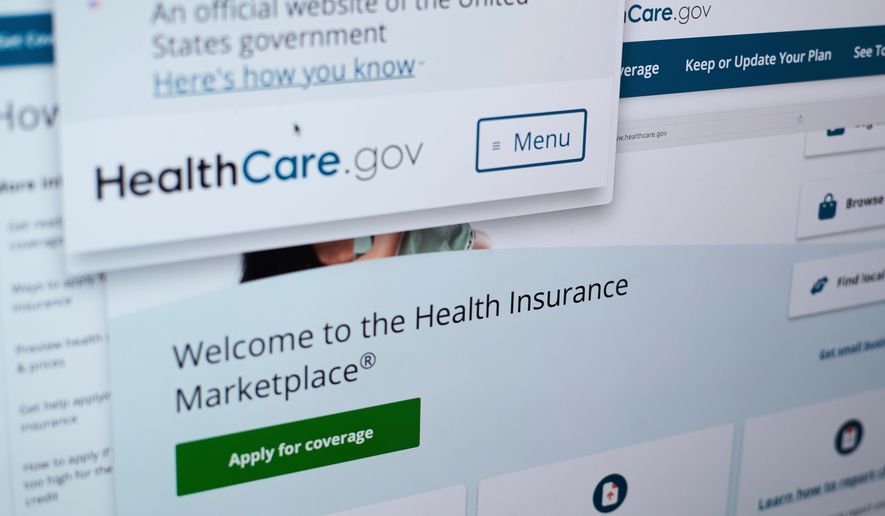
The Trump administration’s Task Force to Eliminate Fraud has claimed another victory. It recently announced that it’s removing more than 760,000 unverified “phantom” enrollees from the rolls of the Affordable Care Act (ACA), resulting in $2.2 billion in savings.
This Task Force was established in March to weed out fraud across various departments and agencies. Its Fraud Ledger tracks and tallies fraud across several measures, including fraud uncovered, fraud stopped, and fraud enforced (recovered). The Department of Health and Human Services is leading the way with $96.1 billion in uncovered fraud; $46.2 billion in stopped fraud; and $32.9 billion in fraud enforcement and recovery.
The latest action by Centers for Medicare and Medicaid Services (CMS) centers on the ACA and a three-prong strategy to “prevent fraudulent and improper enrollments, remove existing unauthorized enrollments, and strengthen oversight and enforcement of agents and brokers participating in Exchanges.”
People were interested in these podcasts
Such a crackdown is long overdue. Because the Biden administration expanded and increased the ACA subsidies during COVID, enrollment — especially in plans with no premium requirements — skyrocketed.
The Paragon Institute found that from 2020 to 2025, enrollment in the 100-150% federal poverty level income bracket (which makes them eligible for generous or complete subsidy) surged from 3 million to over 10 million. But their research also showed that since the expiration of the COVID subsidies, there remain irregularities in enrollment.
According to the Centers for Medicare and Medicaid Services, the agency has found “a pattern of unauthorized enrollments and suspicious agent and broker activity in the Federal Marketplace,” and its efforts have focused on working with health insurers to identify suspicious enrollments and those brokers and agents that assist with enrollment. As a result, CMS cancelled “approximately 315,000 enrollments covering over 760,000 individuals after confirming that these enrollments were unauthorized,” and saving federal taxpayers $2.2 billion in ACA subsidy distributions.
This ACA fake enrollment crackdown is just the latest in a larger CMS-wide effort to squeeze out fraud in government health programs. As CMS Administrator Dr. Mehmet Oz and Deputy Administrator Kim Brandt note in a recent op-ed, CMS is taking a new approach to fraud. Instead of chasing criminals, CMS is shifting to stopping fraud before it happens. For fiscal 2025, CMS estimates it saved over $42 billion from preventing fraud, waste and abuse, 70% of which came from “prevention-first actions.”
These savings keep building. Last month, CMS announced $1.6 billion in savings from preventing fraudulent Medicare laboratory payments. In April, CMS launched its Medicaid Fraud War Room to help identify high-risk providers and execute existing enforcement authority to stop fraudulent actions. This summer, CMS announced it stopped more than $203 million in improper Medicaid payments.
Efforts to stop fraud do not end with healthcare. The administration is also tackling fraud in other welfare assistance programs. This includes prosecutions against those who carried out the Minnesota welfare fraud scandals, requiring states to share SNAP (Supplemental Nutrition Assistance Program) data with USDA for fraud detection, and restoring a rule to require federally funded child care programs to tie payments to attendance instead of enrollment.
Some credit should also go to Congress for advancing anti-fraud measures in the One Big Beautiful Act (OBBA). In health care specifically, Congress zeroed in on tightening eligibility rules in Medicaid and other government health programs to ensure that only those who are eligible receive benefits. It focused as well on closing loopholes states use to circumvent Medicaid financing rules. OBBA also requires states to pay a portion of SNAP benefits if their improper payment rate is above 6%, encouraging program integrity by increasing states’ financial accountability.
As these provisions take hold, even more fraud, waste, and abuse will be squeezed out of the system, ensuring that these government programs remain for those who need them, not the scammers and fraudsters stealing from the beneficiaries and taxpayers.
As the size of government grows, so does the challenge to keep programs in check. Many of these programs have been running on autopilot for decades with little oversight or accountability. The commitment by the administration and Congress to restore integrity to these programs is welcome — and should be the norm, not the exception.
• Nina Owcharenko Schaefer is a senior research fellow in Health and Welfare Policy at The Heritage Foundation, where Rachel Sheffield is a research fellow in Welfare and Family Policy.

Please read our comment policy before commenting.