


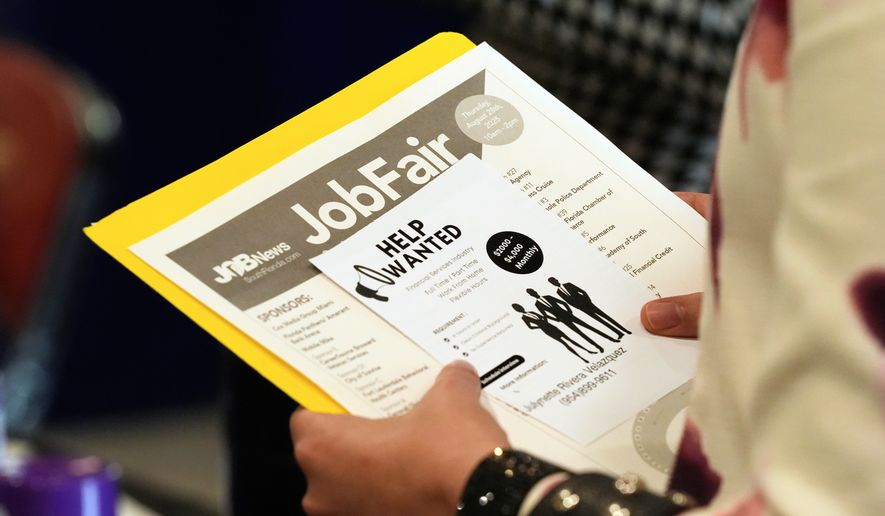

The U.S. added a whopping 162,000 jobs in August after losses earlier in the summer, buoyed by a surge in the hospitality sector and teacher hiring ahead of the new school year.
The Bureau of Labor Statistics said the unemployment rate held steady at 4.1%.
Employment in manufacturing inched up, adding 16,000 jobs, for a net gain of 58,000 since December.
People were interested in these podcasts
Health care continued to add jobs — 13,000 — but at a slower pace than usual, while information services declined by 23,000 jobs.
With midterm elections on the horizon, the stronger-than-expected report will be a relief for the Trump administration, which is battling concerns about stubborn inflation and high gas prices because of the Iran war.
The BLS revised June jobs data up by 11,000, from 20,000 to 31,000, and revised July upward by 44,000 jobs, from 23,000 jobs lost to a gain of 21,000.
Wall Street forecasts had expected a gain of around 53,000 jobs for August, so the report blew away expectations.
The Trump administration is optimistic about the months ahead, citing the construction of new factories and foreign investment in U.S. manufacturing.
President Trump said it was a “great” jobs number that blew away all estimates, “except mine.”
“And you haven’t seen anything yet!” Mr. Trump said on Truth Social.
House Ways and Means Committee Chairman Jason Smith, Missouri Republican, said GOP policies are working, so the robust numbers were “no accident.”
“Instead of sending investment overseas, businesses have greater certainty to build, invest and hire right here at home because of permanent tax policies that reward growth and hiring, including permanent expensing, which means every dollar they invest here goes further,” he said.
Job gains were lackluster in 2025, as employers eased off a post-pandemic hiring frenzy and worried about factors such as new tariffs.
There had been signs of a jobs rebound earlier this year, turning the focus to high prices.
The average U.S. gas price is $4.15 per gallon, nearly a dollar higher than this time last year, and diesel prices hit a record high on Friday, at $5.85 per gallon. Higher freight and transportation costs could trickle through supply chains, resulting in higher prices for everyday goods.
“Donald Trump has made life harder for everyday Americans, as his reckless tariffs and deadly and costly war with Iran push up prices even higher and cause the job market to spiral,” Democratic National Committee spokeswoman Kendall Witmer said Friday. “Working families deserve to enjoy their hard-earned holiday weekends, but Trump and Republicans’ agenda has made everything from gas to groceries more expensive and left families with no breathing room.”
Central bankers cut interest rates last year because they were worried about sluggish job growth, but the focus right now is squarely on inflation. Some Fed members want to raise rates.
A rate increase would defy Mr. Trump’s wishes. He wants the Fed to cut rates.
On Friday, Mr. Trump said the jobs number means the U.S. is a strong country that should have favorable borrowing terms.
“The Fed Board, with its great new leader, must get smart — BE PATRIOTS for a change,” he said on social media. “High interest rates put the U.S.A. at a very unfair disadvantage, and I won’t allow that to happen!”
Contact the author


Please read our comment policy before commenting.