



OPINION:
South Korea’s competition regulator is preparing to decide a potentially significant case against one of America’s largest technology companies.
On July 1, the Korea Fair Trade Commission accused Google of abusing its position in the Android app market and recommended corrective measures and a financial penalty.
With Google’s eight-week response period now closed, the case provides an important test of whether KFTC Chairman Ju Biung-ghi intends to provide American companies with fair treatment and meaningful due process.
People were interested in these podcasts
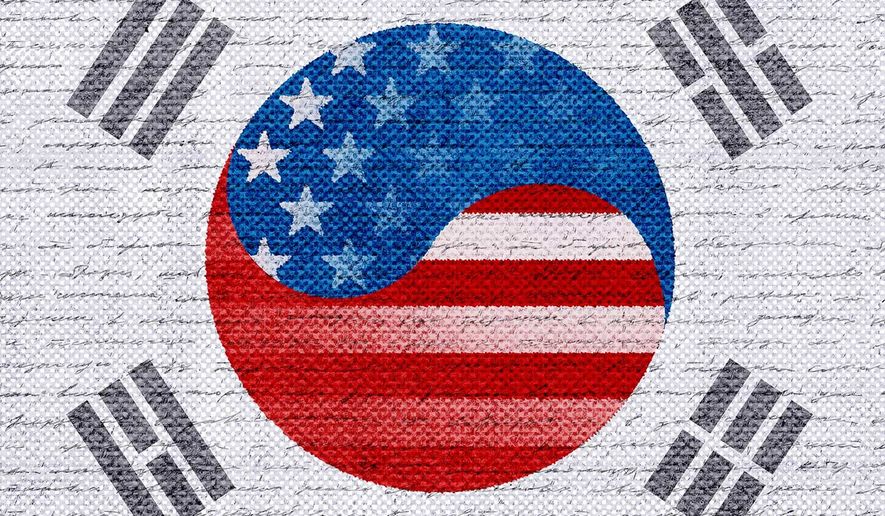
South Korea pledged in a 2025 trade framework not to discriminate against U.S. businesses or impose unnecessary barriers through digital regulation. Yet Mr. Ju’s rhetoric, policy agenda and expansion of the KFTC raise serious questions about whether Seoul intends to keep that promise.
Appearing before South Korea’s National Assembly on July 28, Mr. Ju declared that the KFTC would crack down on “various unfair practices by domestic and foreign online platforms with monopolistic power.” Although his language appears neutral, his regulatory agenda is increasingly focused on U.S. companies.
That same month, the House Judiciary Committee released an interim staff report concluding that South Korea has subjected American-owned businesses to discriminatory investigations and enforcement. It found that the KFTC had been particularly aggressive in using competition policy against U.S. firms, often without the transparency and due process protections we should expect from a close trading partner.
Although the KFTC’s pattern of discrimination started before Mr. Ju’s tenure, his own record and rhetoric make the agency’s direction even more concerning. In 2025, Mr. Ju described American complaints about unfair foreign trade practices as a “dangerous deception.”
In the same article, he argued that the economic struggles of American workers were a result of America’s own failures, not the conduct of its trading partners. He has also warned that dominant U.S. technology companies “will keep abusing their monopolistic position” and has called on international coalitions to regulate them.
Mr. Ju’s comments about America have gotten the attention of U.S. politicians. At a December 2025 House Judiciary subcommittee hearing, Rep. Darrell Issa, California Republican, said that Mr. Ju’s writings “disparage America” and should be considered when evaluating KFTC discrimination against American businesses.
Although Mr. Ju is certainly permitted his own political and economic views, those views matter when he is given power over an agency with the authority to decide who can compete in an important digital market.
Mr. Ju strongly backs the Online Platform Fairness Act, a proposal that would impose new obligations on American firms operating in Korea. The legislation is partly modeled on the European Union’s Digital Markets Act and focuses on a sector where American firms are market leaders.
If enacted, the measure would impose heavy penalties, strict operational mandates and banking-style requirements on technology platforms, including a mandate that some companies hold 50% of transaction proceeds in escrow. The National Bureau of Asian Research warned that the proposal would stall innovation and create another digital non-tariff barrier between the U.S. and South Korea.
Beyond the legislation, Mr. Ju has made clear that he wants to expand the KFTC’s power. In his 2026 New Year’s address, he promised higher penalty surcharges, increased caps and stronger investigative authority, including new consequences for companies deemed uncooperative.
The KFTC has also announced plans to add more than 400 employees. That is not inherently concerning. What matters is how that expanded authority is used — particularly by an agency with a well-documented pattern of discrimination against American companies.
Mr. Ju insists that the KFTC is “not about targeting U.S. companies,” but Washington should judge that claim by the agency’s actions, not its assurances.
Chief trade envoy Yeo Han-koo, who handled U.S. negotiations, was dismissed on Aug. 15. As South Korea restructures its trade and regulatory agencies and expands those ranks, it should ensure that new leadership strengthens — not strains — the U.S.-South Korea alliance and economic partnership.
The Trump administration and Congress should hold Seoul to its commitments. Future trade discussions should include measurable protections against discriminatory digital regulation, meaningful due process for American companies and consequences when Korean agencies violate their government’s promises.
• Matt Mowers is a former senior White House adviser at the State Department and the executive director of the US-Asia Fair Market Alliance.

Please read our comment policy before commenting.