


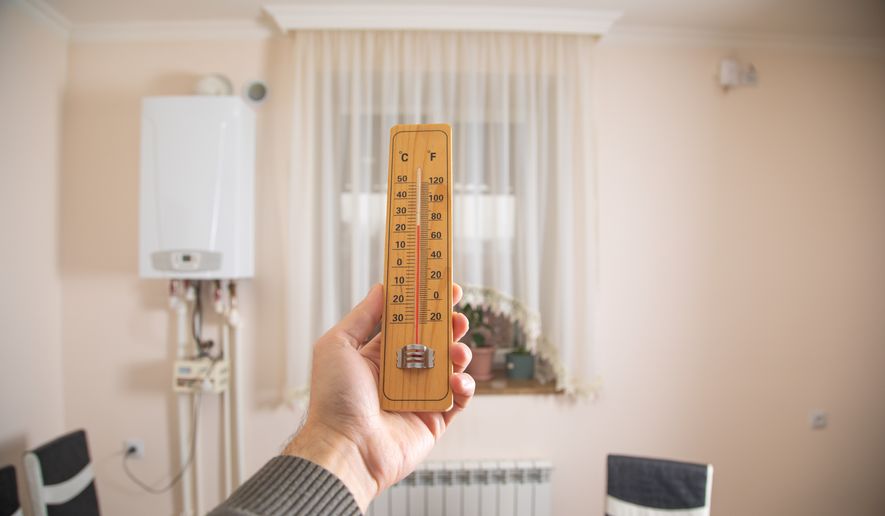

Most American homes are heated by one number. Ideally, you pick something in the high sixties, you leave it, and the furnace spends the winter trying to hold every room at that temperature, whether anyone is in it or not.
That number itself is not the problem. The Department of Energy has long put 68°F at the center of its winter guidance, and it remains a reasonable daytime setting for occupied living space. What has changed is the assumption underneath it: that a house should sit at one temperature all day, in every room.
Why one number is the wrong approach
People were interested in these podcasts
Two things broke the single-setting model.
The first is the house. A home built or retrofitted in the last twenty years holds heat far longer than one built in the 1970s, which means the penalty for letting the temperature drift down while you are out has shrunk considerably. The Energy Department addresses the most persistent myth about this directly: a furnace does not work harder making up for a setback. Once a house falls below its usual temperature, it loses heat to the outside more slowly, and that is where the savings come from.
The second is that we now know how the rooms are used. Smart and programmable thermostats track occupancy and schedule, and zoned systems can heat parts of a house independently. The information exists to stop heating an empty guest room to the same temperature as an occupied living room.
Brad Roberson, president of the HVAC franchise Aire Serv, makes the same argument about set-it-and-forget-it thermostats: the value comes from programming heating around a daily routine, so the house is warm when someone is in it and coasting when nobody is.
The numbers, room by room
Living areas, occupied and awake: 68 to 70°F. The lower end saves more, the upper end is more comfortable. This is where the standard guidance sits, and there is no reason to go higher if you are moving around, dressed for the season, and not sitting still for hours.
Bedrooms overnight: around 64 to 66°F. Energy Star’s standard adjustment is roughly four degrees below your daytime setting once you go to bed. Cooler sleeping temperatures are also generally better for sleep quality, so this one costs nothing in comfort.
The whole house while you are out: 60 to 62°F. A setback of seven to ten degrees for the working day is the single highest-yield change available to most households.
Rooms nobody uses: lower, but not off. A room allowed to get cold while the rest of the house is warm and humid becomes the place where condensation collects on cold surfaces, which is how mold problems start. Keeping unused rooms mildly heated and ventilated is cheaper than dealing with the consequences.
What the savings actually look like
Here is where a lot of published advice gets muddled, because two different figures circulate and they measure different things.
Raising the temperature you hold your house at is expensive. The Public Utility Commission of Texas estimates that each additional degree of heating increases energy use by six to eight percent in cold weather.
Lowering the temperature part of the time is a smaller but reliable win. The Department of Energy estimates about one percent saved per degree of setback sustained over eight hours a day, and up to roughly ten percent a year from a seven to ten degree setback held consistently through the heating season. Energy Star puts the value of a correctly programmed thermostat at around $180 a year.
Neither number is dramatic on its own. The point is that both come from the same habit: matching heat to occupancy instead of holding a constant.
Temperature is only part of comfort
One last thing worth knowing, because it explains why two houses at the same setting can feel completely different.
How warm a room feels depends on more than the thermostat reading. Humidity changes it, since dry winter air makes a room feel cooler than it is. Drafts change it, and a single leaky window can make a 70-degree room feel like 65 in the chair next to it. Surface temperature changes it too: a poorly insulated exterior wall pulls heat off you even when the air is warm.
There are quick fixes. Sealing a draft, running a humidifier, or adding a rug on a cold floor can buy a degree or two of felt warmth without touching the dial. And a degree you do not have to pay for is the only kind that is genuinely free.
This article was constructed with the assistance of artificial intelligence and published by a member of The Washington Times' AI News Desk team. The contents of this report are based solely on The Washington Times' original reporting, wire services, and/or other sources cited within the report. For more information, please read our AI policy or contact Steve Fink, Director of Artificial Intelligence, at sfink@washingtontimes.com
The Washington Times AI Ethics Newsroom Committee can be reached at aispotlight@washingtontimes.com.

Please read our comment policy before commenting.