


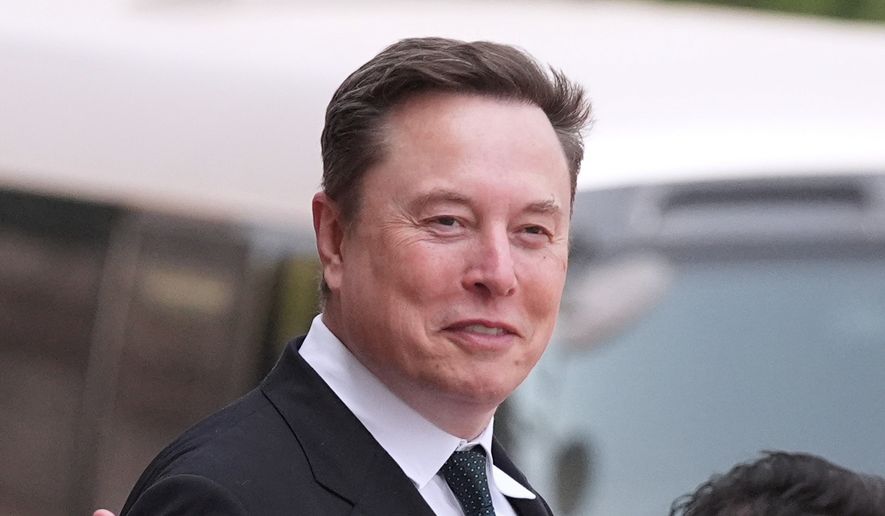

Filmmaker Alex Gibney built his reputation dissecting the powerful — Enron’s executives, Theranos founder Elizabeth Holmes, the Church of Scientology, the U.S. military’s conduct at Bagram and Abu Ghraib. But the scope of power he encountered in his latest subject, Elon Musk, he says, dwarfs all of it.
Mr. Gibney’s nearly four-hour documentary, “Musk,” had its world premiere this week at the 83rd Venice Film Festival, one of the most anticipated titles of the year on the festival circuit. Bleecker Street will bring the film to U.S. theaters in October.
In an interview with The Associated Press, Mr. Gibney said the project began after acquaintances approached him in early 2023 about profiling the Tesla and SpaceX chief as a case study in what he called “21st century power.” What he found, he said, was not the inventor of popular mythology but a man whose real skill lies elsewhere. “He is not an inventor, he’s an investor. His genius is stock pumping,” Mr. Gibney told the AP.
People were interested in these podcasts
The director said Mr. Musk’s pivot toward President Trump was driven less by ideology than by two practical pressures: the flow of federal money toward Mr. Musk’s companies, and a wave of federal investigations — including a criminal probe into Tesla — that Mr. Gibney said could have put Mr. Musk at legal risk under a Kamala Harris administration. Mr. Musk joked about that possibility on Tucker Carlson’s show, Mr. Gibney said, dismissing the popular theory that the billionaire’s rightward shift was purely a reaction to progressive politics in Silicon Valley.
Mr. Gibney also described widespread reluctance among Mr. Musk’s own employees, allies and critics to speak on camera, saying many told him they couldn’t participate without Mr. Musk’s personal sign-off — a dynamic he called striking for someone with that much power.
Because Mr. Musk declined to sit for the film, Mr. Gibney’s team built an AI avatar to simulate an interview using Mr. Musk’s own past public statements, a choice detailed in a companion AP dispatch from the festival. The film also features Ashley St. Clair, who has a child with Mr. Musk and who described being pressed to sign away her right to discuss it publicly: “I was offered the opportunity not to speak for $40 million,” she said.
Mr. Gibney said he considers Mr. Musk’s influence over platforms like X and his access to government data through the Department of Government Efficiency “extremely” dangerous to democracy.
This article was constructed with the assistance of artificial intelligence and published by a member of The Washington Times' AI News Desk team. The contents of this report are based solely on The Washington Times' original reporting, wire services, and/or other sources cited within the report. For more information, please read our AI policy or contact Steve Fink, Director of Artificial Intelligence, at sfink@washingtontimes.com
The Washington Times AI Ethics Newsroom Committee can be reached at aispotlight@washingtontimes.com.

Please read our comment policy before commenting.