



Free healthcare, Free childcare. Free preschool. Free college. Free transportation. Housing for all. And how about months of paid family and sick leave?
Democrats running under the socialist banner are dreaming up a massively expanded welfare state in America aimed at appealing to the working class.
It comes with an equally massive price tag.
“There is no universe in which you could implement the [Democratic Socialists of America] agenda and not raise taxes by a massive amount on most Americans,” Adam N. Michel, director of tax policy studies at the libertarian Cato Institute, told The Washington Times.
Democratic primary voters, oblivious to the cost, are gravitating toward socialist candidates in races across the country who are promising a host of cradle-to-grave freebies.
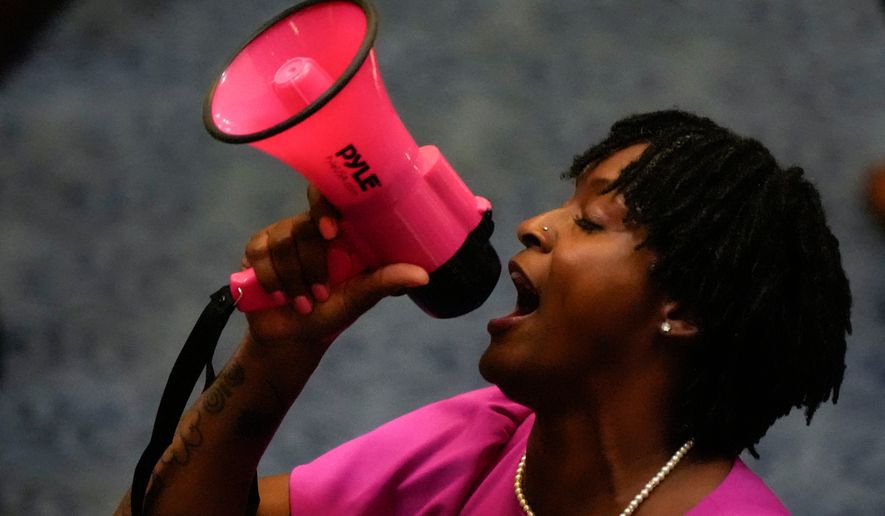
Voters in Florida’s U.S. Senate Democratic special election primary this month picked a socialist candidate for the November ballot, advancing state Rep. Angie Nixon. She promises free healthcare, free childcare, free paid family and sick leave, a national rent freeze, a moratorium on evictions and a universal jobs program with inflation-adjusted wages.
The programs would be funded, she said, by taxing billionaires, slashing military spending and ending “big money” funding of political races.
Economic analysts, however, say that even if a few of those plans become reality, the cost would far exceed revenue from taxing the rich and corporations.
Mr. Michel tallied the costs of nine proposals, including free healthcare and free college, put forth by the DSA, the banner under which many of the candidates are running.
The socialist programs, he estimated, would cost $71 trillion to $211 trillion over a decade and would place U.S. government spending alongside that of Soviet-style communism.
Even if the federal government confiscated every dollar of high-end wealth and corporate profits, it would cover only a small fraction of those costs, Mr. Michel determined.
The numbers showed that a universal healthcare program or “Medicare for All,” which would provide healthcare for everyone without paying premiums or co-pays, would cost $40 trillion to $75 trillion over the next decade.
Despite the promises of Democratic candidates, universal healthcare would hardly be free.
The Committee for a Responsible Federal Budget said policymakers would likely fund the massive costs with an array of new taxes that could include a 32% payroll tax, a 25% income surtax, a 42% value-added tax, a $7,500 per capita mandatory public premium, doubling all income tax rates and reducing non-health spending by 80%.
“Taxes on high earners and corporations alone could not finance Medicare for All,” the CRFB said.
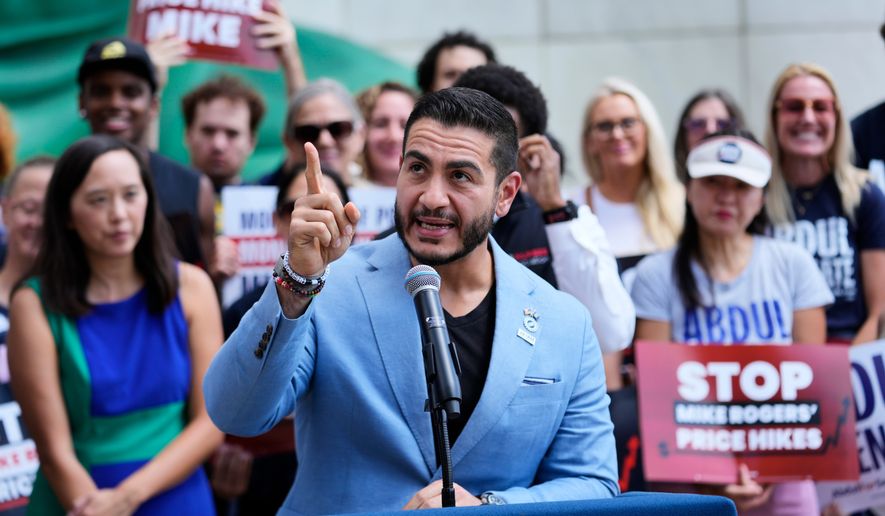
Democratic candidates, among them Abdul El-Sayed, the party’s nominee in Michigan’s U.S. Senate race, are promising free childcare and preschool, tuition-free college and even free graduate school. Mr. El-Sayed is not an official member of the DSA but has adopted some of the movement’s agenda.
“Sadly, too few have access to our colleges and universities,” Mr. El-Sayed, who holds a medical degree but has never held a medical license, lamented on his campaign website’s “priorities” page. “That’s why I believe that every student deserves a debt-free and tuition-free pathway toward the skills they need to thrive, be that a two-year apprenticeship or a four-year college education and beyond.”
The Education Data Initiative, which collects data about the U.S. education system, projected that providing U.S. students with a completely free college education would cost up to $75 billion in the first year and $800 billion over 11 years.
Universal pre-kindergarten would not be cheap, either. The University of Pennsylvania’s Penn Wharton Budget Model projected in 2022 that nationwide universal preschool education for 3- and 4-year-olds would cost $351 billion over the following decade. The model calculated that the program would raise the debt, but that it would be offset by “improved productivity from additional education and additional caregiving entering the labor market.”
No national estimates are available for providing free transportation. In New York City, where Mayor Zohran Mamdani, a democratic socialist, promised “fast and free” bus service, city officials say such a program would cost more than $1 billion annually.
A “green” infrastructure and transportation bill introduced in 2021 by Sen. Edward J. Markey, a Massachusetts Democrat who pitches socialist policies, called for spending $1 trillion annually from 2022 through 2031.
Democrats running in November under the socialist banner are also promising a “housing for all” initiative aimed at lowering costs and getting the homeless off the streets.
The price tag varies wildly depending on the plan.
Housing for All legislation, introduced in 2020 by Sen. Bernard Sanders, an independent from Vermont who caucuses with Democrats, called for a $2.5 trillion, 10-year plan to build more housing.
The high price has not stopped 2026 candidates from introducing similar proposals. Janeese Lewis George, the democratic socialist who won the D.C. Democratic mayoral primary in June and is heavily favored in the District’s November general election, said she plans to launch a “Housing for All” program that would expand rent control, build 72,000 public and private housing units over five years, and provide money for down payments and foreclosure prevention. Ms. Lewis George said she would tap federal funding and take billions of dollars from the city’s pension funds to pay for the program.
Mr. Michel estimated the 10-year cost of a nationwide Housing for All program, including rent payments and mortgage interest, would top $16 trillion.
Candidates running under the DSA banner want to force companies to provide generous paid sick leave, parental leave and vacation.
The federal government recently expanded tax incentives for companies to provide paid family and sick leave, but socialist candidates want much more.
Claire Valdez, the Democratic nominee for New York’s 7th Congressional District and “proud democratic socialist,” said she would push for a four-day, 32-hour workweek without a change in pay, and guaranteed universal paid family leave of “at least” three months. Her paid leave agenda includes five days of bereavement leave, up to 20 days of paid vacation and paid sick leave “as needed.”
Ms. Valdez does not provide cost estimates.
The Congressional Budget Office has estimated, according to the bill’s sponsors, that the Family Act, which was reintroduced in September by Rep. Rosa DeLauro, Connecticut Democrat, would cost nearly $600 billion over 10 years. It would impose a 0.4% federal payroll tax, paid by workers and their employers, to cover the cost of up to 12 weeks of paid leave.
The measure is backed by nearly every House and Senate Democrat and is likely to land atop the agenda next year if the party wins the majority in Congress in November.
“Our country is forcing workers to make impossible choices between caring for their families and keeping a paycheck,” said Sen. Ron Wyden, Oregon Democrat and ranking member of the Senate Finance Committee, who is not seeking reelection and whose term expires in January. “Instead of investing in resources like paid leave to help new moms and working parents, Republicans gave another round of tax breaks to their billionaire buddies at the expense of working families.”
Contact the author


Please read our comment policy before commenting.