


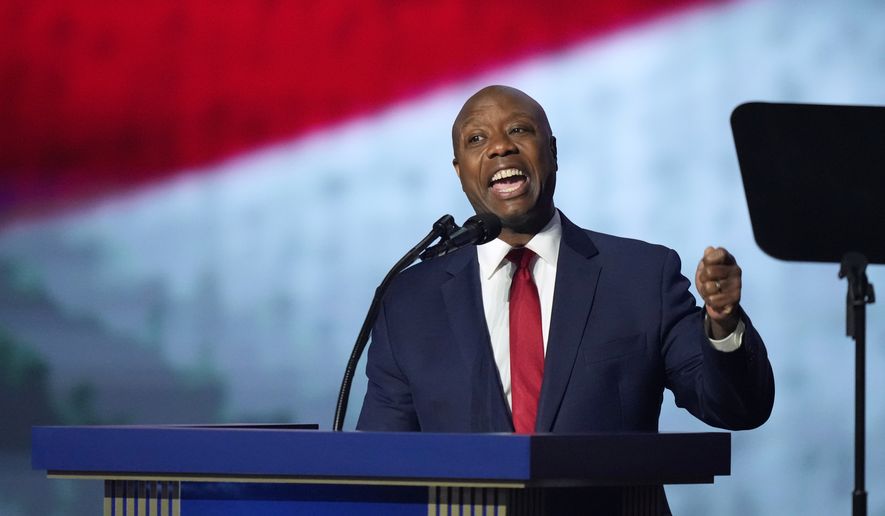

Sen. Tim Scott said he’s aiming to pass his federal film tax incentive this Congress — a tall order for a lame-duck session with a growing priority list.
The Motion Picture, Television and Entertainment Revitalization Act would establish a 20% base tax credit for qualifying film, TV and visual effects projects produced in the U.S., incentivizing them to keep production at home.
To qualify for the 20% credit, a film or TV project must cost more than $1 million and film at least 75% of its principal photography days in the U.S.
People were interested in these podcasts
Visual effects, called VFX, and post-production work must incur at least 75% of their costs domestically.
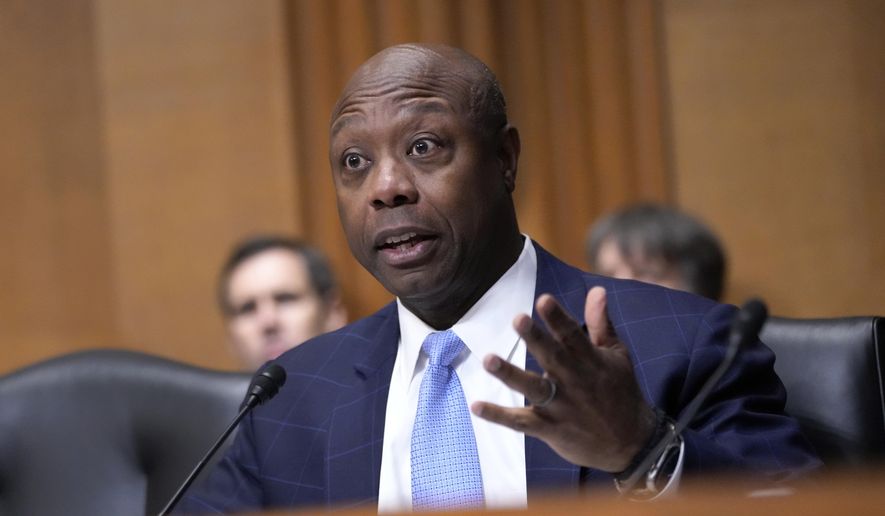
Several optional 5% bonus credits can be stacked on top, up to a 30% total, for productions in rural opportunity zones or disaster areas, independent productions, multistate producers and companies that increase domestic productions.
The South Carolina Republican said he’s pushing to get the bill passed this Congress, meaning when both chambers are back in session.
“We’re going to work really hard to get this the airtime it needs, the floor time it needs, and that’s going to take a very strong bipartisan coalition to make that even a reality,” Mr. Scott said. “Because the truth of the matter is, unless we have strong numbers, bicameral numbers, bipartisan numbers, this will not hit the level of prioritization that’s necessary for it to get floor time.”
Many stakeholders have endorsed the bill, including the Motion Picture Association, Paramount, the Screen Actors Guild-American Federation of Television and Radio Artists, and the Writers Guild of America West.
Mr. Scott emphasized the importance of preserving American-based blue-collar jobs.
“Actors are going to get paid whether it’s done in America or in Japan or China or in the U.K. The people who will not get paid are the camera operators, the makeup artists, the construction workers, costume designers, the caterers and the small businesses,” he said. “That’s why keeping film production in America is so important not for the actors, but for the blue-collar workers.”
Rep. Nathaniel Moran, Texas Republican, introduced companion legislation in the House.
In early September, President Trump endorsed a federal production incentive to keep Hollywood showbiz from moving overseas.
The proposal — long sought by film and production unions and studios — immediately garnered bipartisan support.
Stakeholders have advocated for an incentive that would compete with other countries’ tax credits, including Canadian, British and Australian film and TV production incentive programs, to attract global entertainment spending.
While the U.S. has no federal incentive yet, dozens of states offer film and TV tax incentives, varying widely by state and program type.
Contact the author


Please read our comment policy before commenting.