


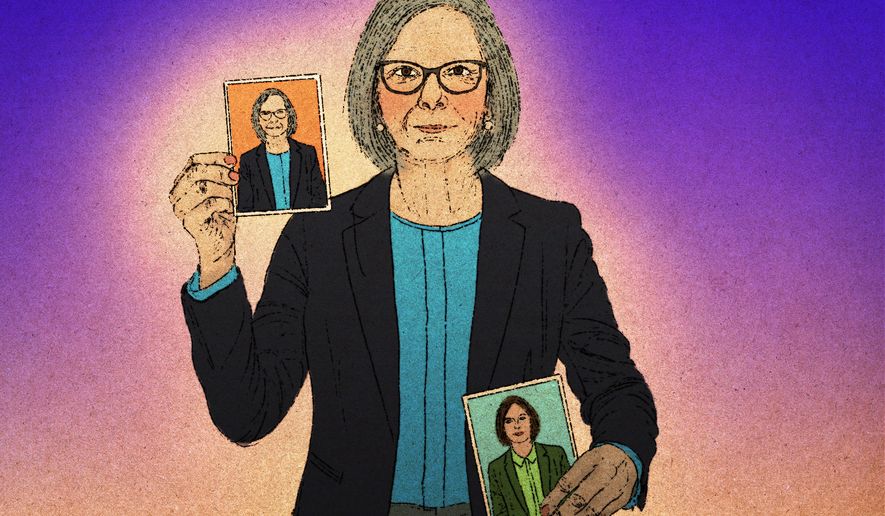

Getting author photos made to promote his first book was a meaningful experience for freelance journalist Philip Eil.
The professional photographer he hired was friendly and supportive, he said, and he liked watching her work during the several hours they spent together. She shot some close-ups in her studio and then took outdoor images of Eil near the Seekonk River, one of his favorite spots in Providence, Rhode Island.
“There was so much emotion wrapped up in publishing this book, which I had worked on for over a decade,” Eil said of the 2024 shoot that helped launch his true-crime book about a doctor who prescribed massive amounts of opioid painkillers. “By the time I took these photos, it was near the end of that process. It was a moment to put my face on the book, and I liked how I looked in a place that I love.”
People were interested in these podcasts
Headshots used on social media profiles, business websites and in other career contexts are like virtual handshakes, often introducing people to potential employers, collaborators or audiences long before an in-person meeting.
It’s natural to want to feel good about your appearance in those pictures, but conveying the image you want to project is even more important, said Chris Gillett, a Houston-based photographer who specializes in headshots.
“It’s going to be a first impression, and the research on first impressions shows that they’re formed instantly and are sticky,” Gillett, a former attorney, said.
Even a millimeter shift in a smile or an eyebrow can change someone’s expression, he said. A smile should look authentic, while confidence is communicated through the eyes. The face should always be the focus; that’s why Gillett prefers classic headshots - which show the head and shoulders - over portraits that feature folded arms or waistlines.
“It’s the simplest form of people photography, but it’s endlessly fascinating,” he said.
Here are some things to keep in mind when it comes to creating and using headshots:
Make sure you’re recognizable
There’s no rule of thumb for how often to update your headshots, Gillett said. Just make sure they still look like you. A noticeable difference between a headshot and how you look in person can erode trust.
Heavily edited photos present the same hazard, said Emily Lauro, an area director for Goodwin Recruiting, a New Hampshire-based company that matches job seekers and employers.
“Look like you on your best professional day and not a completely different person,” Lauro said. “They’re not meant to be how photogenic you are. They’re meant to be your real likeness and image.”
Figure out what you’re trying to communicate
Gillett once did headshots for two young lawyers. One wanted to convey that she was tired of being underestimated. The other liked being underestimated because it could throw her opponents off guard.
“There’s no right answer to how you want to be perceived,” Gillett said. “The only wrong answer is leaving it up to chance.”
Your headshot should also align with your profession. A startup founder may want a photo that emphasizes innovation and energy, while a financial adviser may want to convey trustworthiness and reliability.
Know when and where to share headshots
It’s generally not a good idea to put a headshot on your resume, said Jenny Battershell, the director of marketing for Goodwin Recruiting.
Resume designs should be simple and straightforward, she said. Photos can confuse automated resume-tracking systems, which are designed to scan text.
Including a photo on a resume could also have unintended consequences. Battershell said Goodwin Recruiting works with employers to get them to recognize and overcome biases, but they can exist. She remembers one client who had a successful first interview by phone but was rejected when the employer saw the client’s unusual hair color during a second-round video interview.
Lauro said the absence of a photo or a less-than-stellar one on a LinkedIn page wouldn’t deter her from working with a qualified job candidate.
“If someone is open to work and they don’t have a photo and their qualifications line up with the job, I’m reaching out to them anyway,” she said. “Some people are more social media savvy than others.”
Consider the pros and cons of AI-generated headshots
Artificial intelligence has made it easier and cheaper to obtain a headshot. ChatGPT can turn a selfie into a headshot with a few prompts. The website HeadshotPro uses AI to turn a few selfies into 30 headshots for $29. By comparison, Gillett charges $290 per sitting plus $295 for each headshot you pick.
AI-generated headshots may suffice for people who are short on time or money, but Gillett thinks the confidence that comes from learning to hold yourself in front of a camera is invaluable.
“I can make you look like the best version of yourself possible, but only you can make you better,” he said.
Headshots created with the help of AI may raise other issues. They can look heavily edited and unrealistic, Lauro said. You want a potential employer to focus on your experience and qualifications, not on whether your photo is authentic.
Eil said using an AI headshot would have robbed him of the experience of working with the local photographer who knew how to bring out his personality in her work. If cost is an issue, he suggested looking for a photography student or even a friend who might be willing to shoot some headshots. Professional headshots are also sometimes offered as a free perk at conferences.
“The AI thing just bums me out,” Eil said. “AI headshots tend to look uncanny and unnatural. Even if it was photorealistic, I wouldn’t have those warm memories of that day and this thing we produced together.”
___
Share your stories and questions about workplace wellness at cbussewitz@ap.org. Follow AP’s Be Well coverage, focusing on wellness, fitness, diet and mental health at https://apnews.com/hub/be-well

Please read our comment policy before commenting.