By Rand Paul
Obama acts as though we no longer have a Constitution

Democrats rallied behind President Barack Obama in the long-running, bitter dispute over the administration's handling of the Benghazi attack, arguing that the White House's latest email disclosure undermines Republican claims of a cover-up.

When the U.S. government fails to protect its citizens, we must determine why. Such failures can erode public faith in the government's abilities and diminish public trust in its leaders.

House Speaker John A. Boehner called on President Obama to release unclassified emails that apparently show the State Department knew more than it let on following the Sept. 11 attacks on the U.S. Consulate in Benghazi that left four Americans dead.

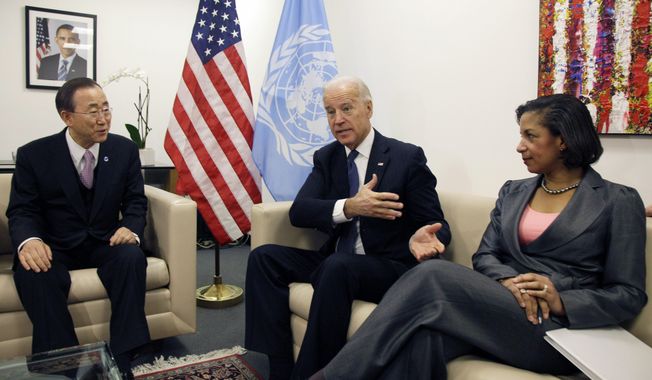
Vice President Joseph R. Biden confirmed on Tuesday that the president stands by one of the key players in the Benghazi, Libya, diplomatic war — just a day before Congress and the nation is due to hear explosive witness testimony that hints the White House mantra was a coverup.
Silent for months, the former top deputy to slain Ambassador Chris Stevens has told congressional investigators that U.S. and Libyan officials on the ground believed immediately that the attack on the American mission in Benghazi was terrorism and not a protest gone awry as administration officials initially suggested.

The U.N. Security Council on Thursday unanimously approved new sanctions on North Korea to punish it for its Feb. 12 nuclear test, hours after Pyongyang threatened a "pre-emptive" nuclear strike against the United States.

One of the hopeful outcomes of the Senate confirmation hearings for John Brennan to be director of the Central Intelligence Agency and Chuck Hagel to be the secretary of Defense was to gain some concrete answers to the Benghazi tragedy. So far, though, no additional useful information has been released. Further, the testimony of former Secretary of Defense Leon E. Panetta and Chairman of the Joint Chiefs of Staff General Martin Dempsey on Feb. 7 before the Senate Armed Services Committee only raised more questions. The cloud of a cover-up continues.

The Senate overwhelmingly confirmed President Barack Obama's choice of five-term Sen. John Kerry to be secretary of state, with Republicans and Democrats praising him as the ideal successor to Hillary Rodham Clinton.

The Senate confirmed the nomination of John F. Kerry to be secretary of state by a near-unanimous vote on Tuesday, with just three Republicans refusing to join an otherwise bipartisan chorus of support for the five-term Democratic senator from Massachusetts.

President Obama on Monday will nominate Chuck Hagel as his next defense secretary and counterterrorism adviser John Brennan to lead the Central Intelligence Agency, two potentially controversial picks for his second-term national security team.
Geithner declares Monopoly money legal tender
Prior to announcing his nomination of Sen. John F. Kerry, Massachusetts Democrat, for secretary of state (as a payback for launching his presidential career as the keynote speaker during Mr. Kerry's 2004 presidential bid, no doubt), President Obama put further wear on his shoulder rotator cuff patting himself on the back for his foreign policy and national security accomplishments ("Obama nominates Kerry for secretary of state," Web, Friday).

One day after Senate Republicans held a press conference to question this week's State Department report on the Sept. 11 terrorist attack in Libya that left four Americans dead, Oklahoma Sen. James Inhofe said the scandal is bigger than Watergate and Iran-Contra.

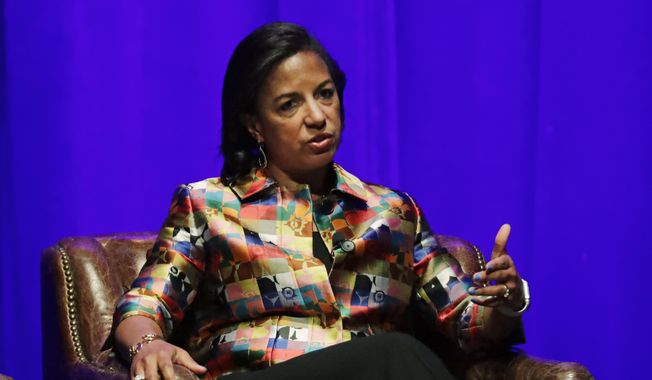
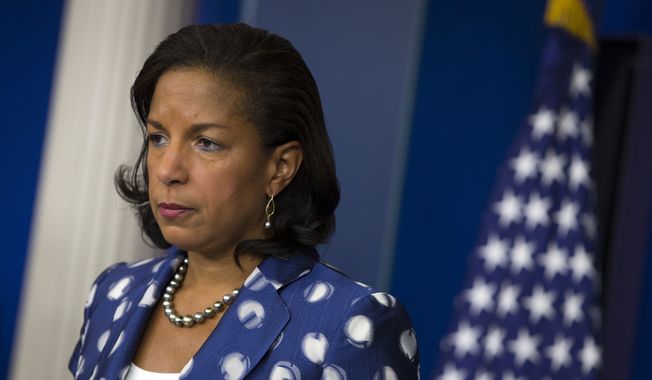
With U.N. Ambassador Susan Rice's withdrawal from consideration for the position of secretary of state, some have assumed that Congress will now be less insistent on a full accounting of the facts surrounding the Sept. 11, 2012, terrorist attack in Benghazi that resulted in the murder of four Americans, including Ambassador Chris Stevens.

President Obama on Friday nominated Sen. John Kerry of Massachusetts to be secretary of state, succeeding Hillary Rodham Clinton and filling the first key post of the president's second-term national security team.