



Campaign finance reform crusaders on Wednesday lauded a D.C. Council measure that would forbid political action committees from raising unlimited funds in nonelection years and ban businesses from donating to candidates who could influence their contracts with the city.
The “Campaign Finance Transparency and Accountability Amendment Act of 2016” is part of a bevy of bills aimed at increasing the political distance between candidates and businesses in the District.
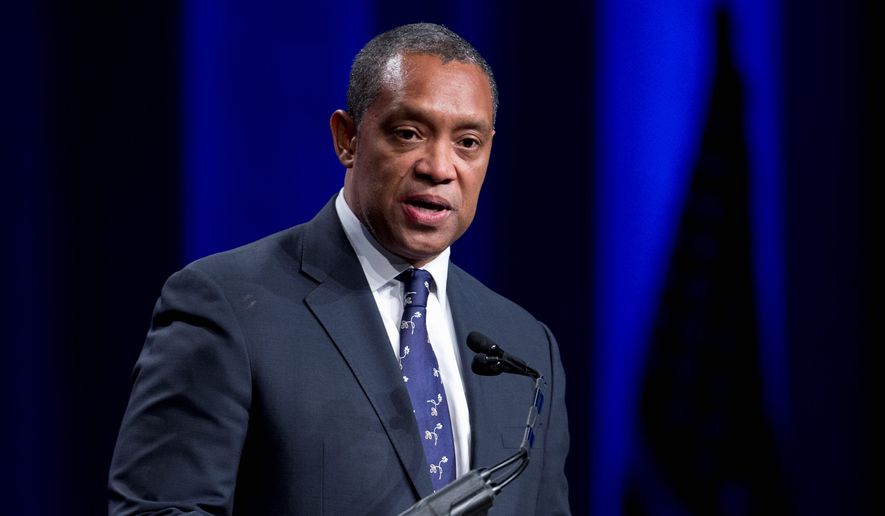
It was introduced at the behest of D.C. Attorney General Karl Racine and is making its way through the council’s Judiciary Committee.
At a public hearing Wednesday, D.C. for Democracy chief Keshini Ladduwahetty called on lawmakers to make it easier for ordinary residents to have as loud a voice as businesses in the political process. To emphasize her point, she referred to disgraced businessman Jeffrey Thompson, who was sentenced in August to three months in prison for operating a slush fund in a mayoral “shadow” campaign in 2010.
“To the public at large, it looks like legalized bribery,” Ms. Ladduwahetty said of businesses’ political influence. “The problem is more than Thompson-style shadow campaigns. When business owners speak, they are granted much more deference than workers. We must create a space where money power is constrained. [And] curb the money power that drives D.C. politics.”
The Judiciary Committee is considering five bills that address reforming how elections are financed. Issues include public financing and restricting big money donations. The Racine bill is the most comprehensive of the bunch, mirroring aspects of other bills to create an omnibus reform package.
SEE ALSO: Trump-supporting teen beaten at high-school protest in suburban Maryland: Report
The bill includes provisions that would require PACs to certify that received donations are not coordinated with a particular candidate. It also would prohibit unlimited contributions to PACs during nonelection years.
In addition, it would bar businesses and individuals who have made financial campaign contributions from entering into certain business relationships with the District for two years.
Emmanuel Caicedo, a senior campaign strategist at the public policy think tank Demos, said that D.C. elections overwhelmingly are decided by wealthy white residents.
“This big-money campaign finance system fails to address needs of people of color,” Mr. Caicedo said. “D.C.’s campaign finance system is currently dominated by a small number of wealthy white donors who don’t represent the city’s racial and economic makeup. What we have here is a system that represents vast inequality on race and class.”
Council member Robert White, who signaled support for the measure, said he knows what it’s like to campaign against a well-funded opponent. He surprised the political establishment in June, when he defeated former at-large council member Vincent Orange in the Democratic primary.
Some potential donors said they could not contribute to his campaign for fear of retribution, Mr. White said.
SEE ALSO: Saqib Ali, former Maryland delegate, cancels anti-Trump protest due to lack of interest
“This is not democracy nor is it uncommon,” he said Wednesday.
Mr. Orange had led the council’s Business and Regulatory Affairs Committee, and now is president of the D.C. Chamber of Commerce. He did not return an email seeking comment.
Mr. White said the reform bill contains”great ideas that merit discussion” but conceded that money is needed to run a successful campaign.
“It’s difficult for non-incumbents to build name recognition without money,” he said. “We need a balanced approach, not merely legislation that makes us feel good.”
Council member Elissa Silverman was less diplomatic, saying voters perceive the government as being run via campaign contributions from those who want to do business with the city.
“We have to make sure that the voice that speaks loudest in election is that of the people who can make small contributions instead of the voices of PACs and large donors,” Ms. Silverman said.
The bill’s prohibition on donations to PACs in nonelection years could face a challenge under the U.S. Supreme Court’s 2010 Citizens United ruling, which reaffirmed political donations as protected free speech.
Mr. Racine has said the provision would not violate the ruling.
Under a ruling by the D.C. Circuit Court, city lawmakers can limit a PAC’s donations for campaign contributions but not its independent expenditures. The bill would require PACs to create separate accounts for campaign contributions and for independent expenditures to allow the council to identify what money it can and can’t regulate, according to Mr. Racine.
Mayor Muriel Bowser’s office did not return emails for comment on the legislation. When it was introduced earlier this year, the mayor’s communications director and chief of staff both took shots at Mr. Racine.
“His bill fails to close the #paymeback loophole which @AGKarlRacine is currently exploiting,” mayoral Chief of Staff John Falcicchio tweeted in February.
Michael Czin, then the mayor’s communications director, told The Washington Post that Mr. Racine failed to close a loophole that the AG himself was exploiting.
“Does Mr. Racine’s legislation ban the very loophole he is exploiting that allows businesses, corporations and PACs to write large checks for the $500,000 he is trying to pay himself back?” Mr. Czin wrote to The Post in February.
Both were referring to a District provision that allows candidates to continue to collect political donations after elections to help pay off campaign debts.
Mr. Racine said there is a difference between paying back personal loans after a campaign and soliciting unlimited PAC donations, adding that he was following the law in collecting money to retire a campaign debt.

Please read our comment policy before commenting.