


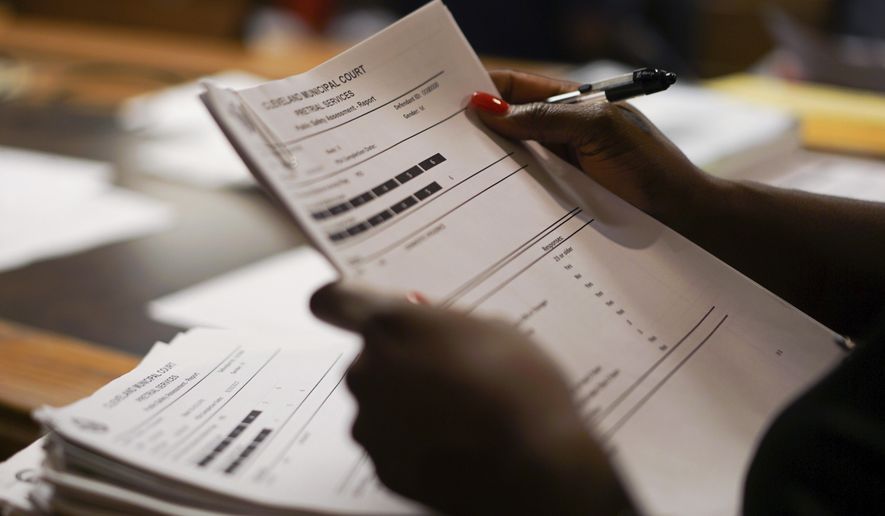

Instead of holding criminal defendants on cash bail, courts around the United States are increasingly using algorithmic risk-assessment tools to help judges decide if a defendant should be jailed or go free while awaiting trial.
One such model now used by New Jersey and other state and regional courts is the Public Safety Assessment, developed by the Houston-based Laura and John Arnold Foundation.
Supporters of such assessments say they limit prejudicial judgments, while critics say they can turn judging into a rote exercise - one that might perpetuate hidden biases within the criminal justice system.
People were interested in these podcasts
The Arnold Foundation’s model uses these nine risk factors to evaluate a defendant, including age and past criminal convictions. (It excludes race, gender, employment history and where a person lives.) These are:
1. Age at current offense
2. Current violent offense
3. Pending charge at the time of the offense
4. Prior misdemeanor conviction
5. Prior felony conviction
6. Prior violent conviction
7. Prior failure to appear to a court hearing in the past two years
8. Prior failure to appear older than two years
9. Prior sentence to incarceration

Please read our comment policy before commenting.