


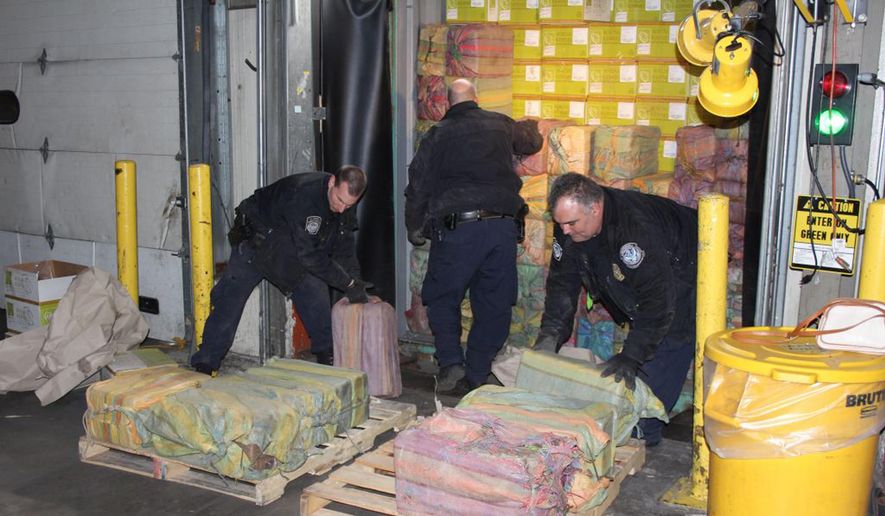

Federal law enforcement officials say cocaine trafficking is surging amid the opioid crisis, citing recent record-setting seizures of the stimulant at sea and U.S. ports.
With so much attention focused on deadly narcotics in recent years, cocaine seemingly waned in the American consciousness despite its high profitability for drug cartels. The Drug Enforcement Administration warns that the Colombian cocaine trade is growing and spreading, with the U.S. serving as a way station for markets abroad.
“Production is through the roof, and so is global demand,” said Ray Donovan, special agent in charge of the DEA’s New York City office. “The Colombian networking is expanding throughout the world to meet growing markets in Europe, Australia, Russia and Asia. It’s on our radar everywhere.”
U.S. officials and drug trafficking analysts say the issue continues to be Colombia’s inability to curb the cultivation of the coca plant, which makes it the world’s leading supplier of cocaine.
The U.N. Office on Drugs and Crime’s most recent report notes a 31 percent increase in cocaine production in Colombia, where more land is being used to grow coca and where coca crops are a third more productive than they were in 2012.
Seizures of the drug have hit a record-setting pace, officials say.
⦁ A Coast Guard cutter late last month in Miami offloaded 27,000 pounds of cocaine that had been confiscated during an 85-day mission that included intercepting a dozen vessels near Mexico, Central America and South America.
⦁ Last month, U.S. authorities at the Port of Philadelphia seized 450 bricks of cocaine from a cargo ship en route from Colombia to Europe — the “largest seizure in Philadelphia in 21 years,” said Joseph V. Martella, Customs and Border Protection area port director of Philadelphia.
⦁ In February, federal authorities at the Port of New York and New Jersey confiscated 3,200 pounds of the drug from a cargo ship bound for Belgium. Officials said it was the port’s biggest cocaine raid in 25 years.
“The United States can expect continuing increases in domestic supply levels and cocaine abuse, through at least 2019,” the DEA stated in its 2018 National Drug Threat Assessment, released in November. “With surging coca cultivation and cocaine production in Colombia, northbound cocaine flows are expected to continue at current levels, although new trafficking patterns may develop due to law enforcement activities in the Eastern Pacific. …
“Due to the ongoing proliferation of fentanyl and other synthetic opioids into the expanded domestic cocaine supply, cocaine-related deaths will continue to rise through 2018, potentially reaching epidemic levels in the next few years,” the most recent DEA assessment states.
Drug policy analysts in Washington say the surge in coca production also poses a challenge to the 2016 peace deal between Colombia’s government and the country’s leftist rebels, the Revolutionary Armed Forces of Colombia (FARC). The pact ended more than five decades of civil war that left 260,000 people dead and displaced more than 7 million.
A key element of the peace deal provides government help for peasant farmers who lived under FARC rule. The farmers are to switch from growing coca to cultivating alternatives such as coffee and cacao.
Vanda Felbab-Brown, a senior fellow at the Brookings Institution’s Center for 21st Century Security and Intelligence, said Colombian President Ivan Duque has accelerated military efforts to eradicate coca before giving farmers a realistic chance to switch crops. Farmers also are not voluntarily destroying their coca, as mandated.
“Add to this the surge in global demand and [Colombian drug traffickers] eager to buy and transport it, and what is a poor farmer going to do — not grow it?” Ms. Felbab-Brown said.

Please read our comment policy before commenting.