



OPINION:
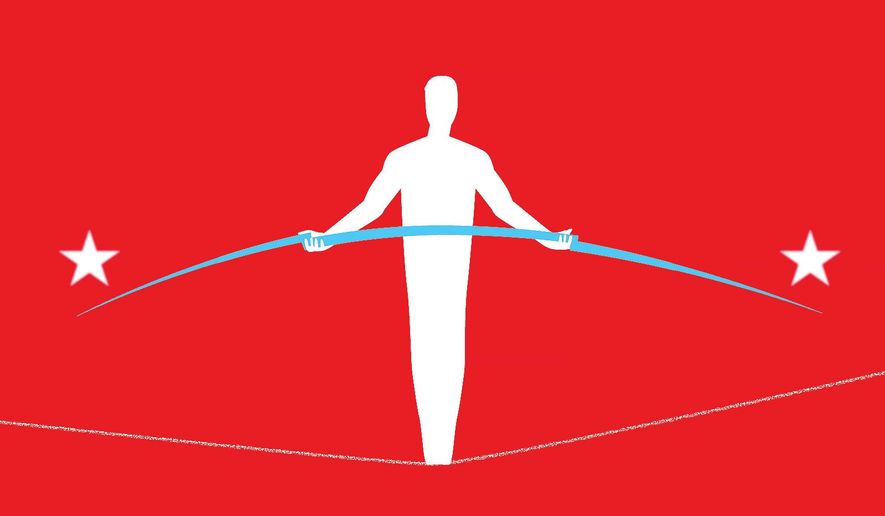
There is a buffet of U.S. government offices producing conflict assessments on failing states challenged by instability. These assessments use an analytical lens to uncover key actors and drivers of events. They help the government identify the best tools to assist in complicated environments. One such framework is the Conflict Assessment Framework, published by the U.S. Agency for International Development. USAID leads our government’s international development and promotes democratic values abroad. If its template were placed over America today, what might it foretell?
This framework involves analysis, breaking something down into component parts. The depth of data collected is long and wide and includes national history, socioeconomic and demographic statistics, social and institutional resilience, and key mobilizers. This process unpacks factors that could walk a nation back from or push it over the precipice.
Data collected on the U.S. using this lens shows a nation in turmoil. Some of the glaring indicators are the crumbling of cultural and civic institutions, a toxically divided populace, an economy vitiated by COVID-19 and a significant loss of international prestige. Across the spectrum, Americans are distrustful and disdainful and appear to coalesce around two camps: the aggrieved and the resilient.
People were interested in these podcasts
Data gleaned from the analysis shows America’s aggrieved is a cabal committed to radically transforming society into a liberal dystopia. They see America through a lens of oppression and victimhood, and if you disagree, you are an existential threat.
This is no proletarian movement. They use identity politics, institutional racism and COVID-19 as cudgels to purposefully badger everyday Americans into compliance. They are oblivious to context and nuance and rarely consider second- or third-order consequences.
The aggrieved control the universities and have increasingly pushed their indoctrination into secondary education. They exert considerable control over legacy and social media, corporate America, sports figures and celebrities. They understand the power of networks and astutely recognize them as more important than hierarchical bureaucracies.
The assessment shows the resilient represent traditional societal and institutional norms. Things like freedom of speech, law and order, and our history … warts and all. They are not as organized, nor have they been as committed to defending their values in the public square. The resilient are repelled by the brazen hypocrisy of the aggrieved and have suffered years of gratuitous insults. They finally recognize tolerance has only emboldened the aggrieved.
The resilient have not been well-served by a phalanx of ineffectual politicians that have permitted this disorder to take root and fester. While they have shown a unique ability to withstand the cultural and political shocks, they are more fearful than hopeful about the future.
Data collected and considered during the analysis is synthesized, reconstituting a whole from its parts. The result is a narrative merging dispersant data points to diagnose a society under stress. The synthesis enables trajectories to be revealed, foretelling trends and triggers that could push things one way or the other. A key risk judgment is frequently rendered based on the power and organization of the aggrieved against the resilient and balanced against institutional stability.
Applying this framework to the U.S., the most troubling trajectory points to the November 2022 election as the driver of America toward the precipice. Charges of election fraud and gamesmanship have been growing for years. If the public trust diminishes further, a hostage negotiator would be needed for America to retreat from the precipice.
Once key actors, causes and drivers are extrapolated from the data, it is clear if the aggrieved keep at least one house of Congress, it will be seen as a mandate. They will push for more totalitarian control.
The aggrieved view the Senate as critical since they are frustrated with the courts, which have emerged as a balance against their totalitarian impulses. They will go “all in” to maintain this advantage and work tirelessly to game the system. Money will not be an issue.
If the Republicans win both houses, the trajectory identifies two options for the aggrieved: political bargaining from a weakened hand or a return to active resistance.
Some aggrieved are likely to take their trillions, retreat to gated communities and bide their time. Others, however, are likely to push their agenda along a wide front. “Mostly peacefully” demonstrations return. Progressive political islands fight efforts to moderate totalitarian mandates. And the shadowy power of the bureaucracy reemerges as a force for the resistance.
Censoring of the resilient on social media increases exponentially. Every incident is framed by a compliant media willing to spread a narrative regardless of how untethered from the facts … until someone somewhere overreacts. While there are biased media within the resilient, the difference is the aggrieved spew toxic narratives from a fire hose, whereas the resilient are confined to a garden hose.
It is difficult to precisely determine if America walks back from or falls off the precipice. However, it is with a high degree of confidence that the key judgment finds America perilously hanging over that precipice.
Precipitate talk of “showing Pelosi the door” and putting the squad “in timeout” next November will not suffice if the resilient fail to cauterize our societal wound. The trajectory leading back from the precipice begins with a recognition that activism as exemplified by the school board parents is needed across the spectrum. If not, our way of life will be taken, replaced by a totalitarian regime that despises the resilient.
• Ron MacCammon is a retired U.S. Army Special Forces colonel. He has worked in more than a dozen countries, including El Salvador, Somalia, Afghanistan and Venezuela.

Please read our comment policy before commenting.