



OPINION:
In these turbulent times, a heavy sense of foreboding weighs on my heart and soul, reminiscent of the anguish that engulfed our nation on September 11. Like many of you, I harbor deep concerns about our world’s future and humanity’s very essence.
Subscribe to have The Washington Times’ Higher Ground delivered to your inbox every Sunday.
When I reflect on September 11, two memories surface. The first is my grief for the heart-wrenching choice of individuals who leaped from the World Trade Center Towers rather than perishing in the smoke and flames. The second is the radio hosts’ haunting daily recitation of names of those who died and the playback of last-minute phone calls – a stark reminder of our greatest fears.
People were interested in these podcasts
Today, I am taken aback by the reactions of many friends and colleagues to the horrors of current wars. Some choose to shield themselves from the harsh realities, isolating themselves in a self-imposed bubble. Others approach these atrocities through a political lens, making it seemingly impossible to empathize with those suffering because of political disagreements.
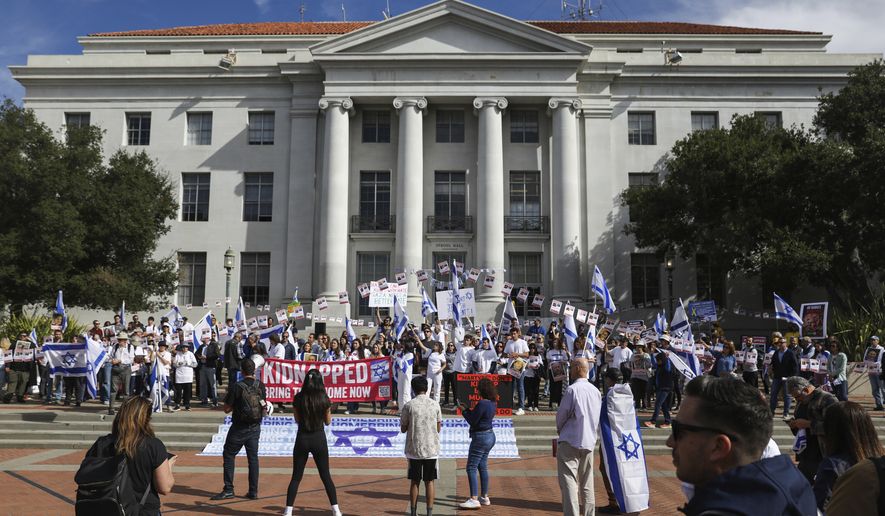
I recently led a discussion on the Israeli terror attack, where diverse perspectives on the Israel-Palestine conflict were present. I asked two straightforward questions: “Despite our differences in geopolitics, can’t we unite in recognizing the overwhelming grief of our Jewish colleagues who’ve lost loved ones or have personal connections to those kidnapped? Can’t we also acknowledge the fear their children experience on college campuses?”
I questioned the purpose of Holocaust Museums and memorials if we readily dismiss evil through moral relativism.
To my dismay, side conversations after the discussion were a chorus of “yes, but” responses.
“Yes, but Netanyahu is to blame.” “Yes, but Israel’s policies are at fault.”
These “yes, but” responses are now commonplace in our discourse, from the left, the right, and the center. We too often undermine the pain of others by asserting “they are just as bad,” perpetuating this attitude at dining tables and through the endless echo chamber of social media.
Sen. Lindsey Graham, returning from a Senate delegation to Israel, described the horrifying murders of innocent babies, families, and grandmothers. He emphasized the inhumanity, depravity, and unimaginable horror that unfolded on October 7. Yet despite validation of the atrocities, I have been approached by people eager to offer their “yes, but” rebuttals.
I have witnessed similar sentiments when discussing the situation in Ukraine.
Soon after the Russian invasion, I collaborated with former special operators and a pastor who leads a network of ministers in Ukraine to identify resources and escape options for those in Mariupol. During our calls, the pastor shared heartbreaking stories of church families torn apart by Russian invaders and the brutal separation of young girls from their families.
We now know that 19,000 children were deported to Russia. The grim fate of these children includes indoctrination and likely even sex trafficking. In Bucha, civilians were mercilessly murdered, and women and children endured heinous atrocities, marking war crimes committed by Russian forces.
Once again, though, we hear the “yes but” comments like “Yes, but Ukraine is corrupt” or “Yes, but I don’t trust Zelensky.”
Many Higher Ground readers may not support additional defense spending in other areas of the world. However, Christians must extend empathy and acknowledge fear before endorsing any foreign policy stance. And we must adamantly state that depravity and terror are never justifiable.
In these cases, we may harbor differing political opinions and vehemently disagree on the best approach to address these conflicts as a nation. However, I implore each of us to recognize and acknowledge the grief and fear experienced by the democratic people impacted by these horrific events. These issues aren’t abstract; they are harsh realities for numerous American families, some of whom have friends and loved ones in areas impacted.
Remember the grief and fear you felt on September 11 and recognize it in others. While we may have differing political opinions and solutions to these conflicts, let us start by acknowledging our shared humanity. Let us refuse to justify depravity and terror. As a nation, let us remember the pain of others, particularly women and children.
For those working on Capitol Hill, I urge you to acknowledge the horrors endured by these families before articulating your stance on aid to Ukraine and Israel. You may continue to debate funding levels. However, I ask that you tap into the emotion and recognize it in others as you make these important decisions.
If we aim to restore the dream of America as a beacon of hope, we must first confront the grim realities of our world, where freedom and democracy are under siege, and human beings grapple with the most sinister forms of evil. We must extend our compassion to those in need, regardless of our political differences, and work together to make the world better for all.
–
Lisa Gable is a CEO, former US Ambassador, UN Delegate, and author of Wall Street Journal and USA Today Bestseller “Turnaround – How to Change Course When Things Are Going South.” Lisa is recognized worldwide as a turnaround mastermind and innovative businesswoman and started her career in the Reagan administration.

Please read our comment policy before commenting.