



This is the second of two podcast episodes recorded at the George Washington Presidential Library at Mount Vernon. Part one was published on Tuesday.
What can be said about George Washington that hasn’t been said already? He set the standard for all his successors, establishing the contours and authority of the presidency before giving up power after two terms. His exemplary leadership was credited for holding the young republic together.
People were interested in these podcasts
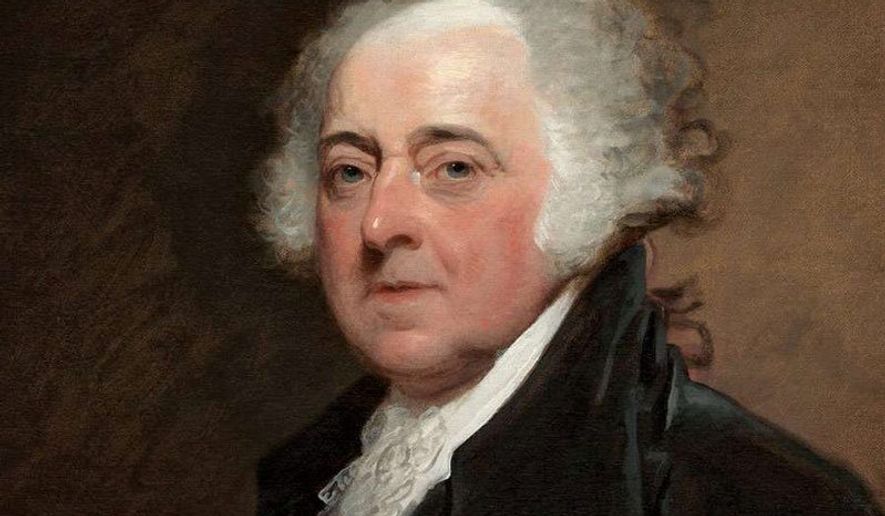
What about his successor, a man of much different temperament and stature? John Adams served one crisis-packed term, lost his reelection bid in 1800 to another towering figure, Thomas Jefferson, and was the last Federalist president. He signed the infamous Alien and Sedition Acts in 1798, criminalizing criticism of his administration. Yet historian Lindsay Chervinsky says Adams left a positive legacy, too — one that has been overlooked by historians who may consider his one-term presidency a failure.
In this episode of History As It Happens, Ms. Chervinsky discusses her new book “Making the Presidency: John Adams and the Precedents That Forged the Republic.” Among the reasons she took on the project was to convey the importance of the peaceful transfer of power to the health of American democracy.
“Washington established all these precedents on how to create the presidency, but then he left. He was such an unusual character in history. His stature was unprecedented and unparalleled … that there were real questions at the time, and long-term historical questions, about whether this institution would work for anyone else,” said Ms. Chervinsky, the new executive director of the George Washington Presidential Library at Mount Vernon. She was curious as to how Adams, who inherited Washington’s second cabinet, managed to put his own imprint on the office.
“I found myself drawn into the challenge of coming second, what it means to come after someone who was the most popular president we ever had and will ever have, and to know that you are going to fall short by comparison. John Adams knew exactly what he was walking into and he did it anyway,” Ms. Chervinsky said.
“And then Jan. 6 happened, and I realized how much I was taking for granted the peaceful transfer of power and the elements of our political system, the norms and precedents that serve as a scaffolding for our institutions … It’s easy to miss the very small things Adams did to make sure the presidency survived.”
Rumors of violence hung over the new capital of Washington in March 1801 after a bitterly contested race was decided in favor of Jefferson in the House of Representatives. Adams quietly went home rather than stoke further anger, Ms. Chervinksy says.
History As It Happens is available at washingtontimes.com or wherever you find your podcasts.

