



OPINION:
President Trump has done more to reorder the Western Hemisphere in 18 months than his predecessors managed in 20 years.
The Shield of the Americas coalition, launched in March, turned a decade of hollow summit language into real intelligence sharing and joint operations against the cartels. And the June ambassadorial slate was a statement of seriousness, sending Daniel Perez to Brazil, Mark Abreu to El Salvador, Peter Snyder to Ecuador, Nate Morris to Colombia and Paul Kalmbach to Paraguay.
These are consequential posts filled with people who carry weight. The results include an election that almost no one in Washington expected to break the right way.
People were interested in these podcasts
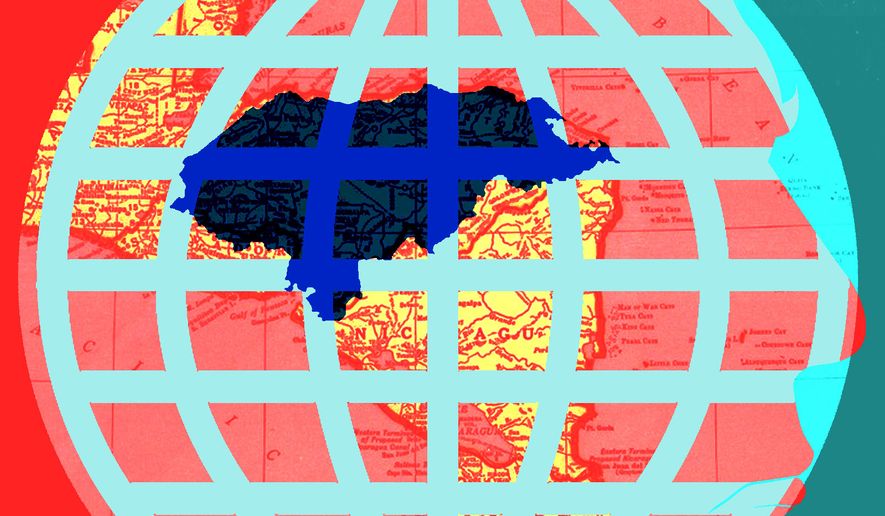
With polling tight and the outcome genuinely uncertain, Mr. Trump endorsed Nasry Asfura in the final stretch. Mr. Asfura won by a razor-thin margin and took office in January. In just six months, Mr. Asfura has preserved the extradition treaty that his predecessor had moved to terminate, one that has delivered more than 50 Hondurans into American custody.
He suspended roughly 20 cooperation agreements signed with Beijing under the previous government, including a free trade deal two years into negotiation. And he has left open since January the Honduran ambassadorship in Beijing. Mr. Asfura even visited Mar-a-Lago in February to talk migration, tariffs and security.
No other government in Central America has moved so far so fast on Washington’s agenda.
I have a personal stake in getting this right. I grew up in Tegucigalpa and went to school there. My family’s ties to Honduras go back decades and continue today through missionary work. For most of my life, I have watched Washington discover Honduras in the middle of a crisis, commit loudly and then drift away once the cameras leave. I have watched Honduran leaders learn to plan around that pattern.
The difference now is that the administration in Washington and government in Tegucigalpa want the same things at the same time.
The remaining work is substantial and time-sensitive. On energy, the Honduran congress is in the final stage of negotiating a reform of the state utility, which loses nearly $2 million a day. Mr. Asfura went public this month asking legislators to pass it. Behind that vote sits the largest power procurement in Central American history, a 1,500-megawatt tender running to 2030 under sovereign guarantee.
One of the audiences first briefed on those bid documents was a forum of Chinese investors. The European Union has already put 8 million euros on the table to unlock up to 500 million in European Investment Bank lending. The Development Finance Corporation will move once the legal framework is repaired. The reform text decides whether American capital can participate at all.
On logistics, Puerto Cortes is the only port in the CA-4 that can receive the largest container ships crossing the Atlantic. Its operator is putting $100 million into an expansion that will take capacity to 1.4 million TEUs by early 2027. (Compare that to 816,000 handled last year.) Some 8,000 to 10,000 jobs are projected in the surrounding industrial corridor.
This is nearshoring infrastructure already under construction just a short sail from the American market, leaving one gap in an otherwise commanding record.
Of the seven countries in Central America, six have a confirmed ambassador at post or a name before the Senate. Costa Rica and Panama are filled; Belize received a nominee in April, El Salvador in June; and Nicaragua on Aug. 7. Guatemala’s nominee withdrew in July, but a name went forward.
Nicaragua, run by a regime this administration has rightly treated as hostile, has a nominee pending. Honduras does not.
The U.S. has just finished a $429 million embassy in Tegucigalpa, nine acres and an eight-story chancery, opened last year. A country does not build that for a relationship it intends to manage at arm’s length. That building needs a chief of mission who carries Mr. Trump’s personal confidence.
Rank and proximity are operational variables, not formalities, in Honduran politics. They determine whether the Honduran across the table believes that he is hearing the words of the president or a readout.
My parents still live in Tegucigalpa. I grew up assuming that American interest in Honduras was weather rather than climate, and I was usually right. This is the first time in my life I would bet the other way, and the window for it is measured in months.
Honduras voted the way this president asked it to vote, has governed the way he hoped it would and is making decisions that will bind for a decade. It deserves a U.S. ambassador.
• Nick Raineri is a partner at TSG Advocates in Washington.

Please read our comment policy before commenting.