



The Senate is set to take a test vote Monday on a stopgap appropriations bill that will keep the government open through Dec. 11.
The measure, released Sunday evening, has bipartisan support and is expected to earn more than the 60 votes needed to overcome any filibuster.
Current government funding does not expire until Sept. 30, but lawmakers are eager to act early to avoid a shutdown ahead of the midterm elections this fall.
The stopgap, known as a continuing resolution or CR, extends fiscal 2026 funding levels 10 weeks into fiscal 2027, with some adjustments for programs that require more flexibility.
Appropriators are hoping the new Dec. 11 deadline will provide enough extra time for them to negotiate and pass full-year appropriations bills for the remainder of the fiscal year.
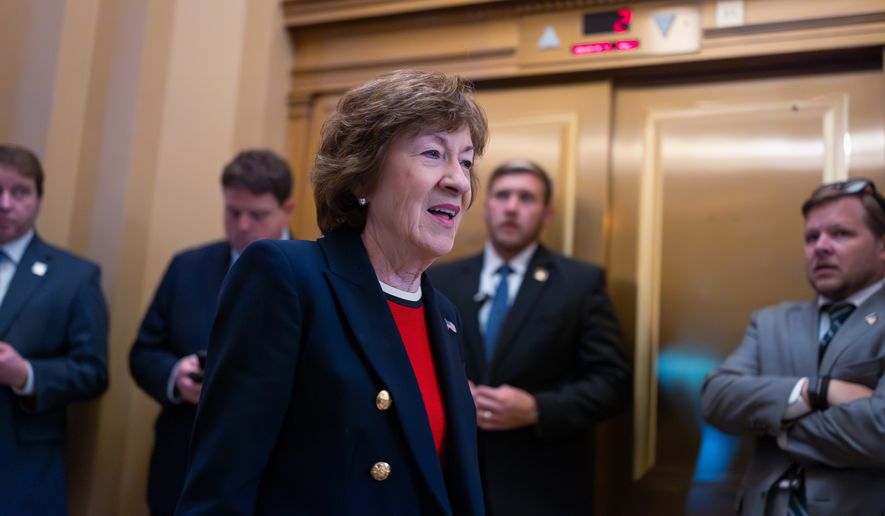
“This CR is a major step toward averting a damaging shutdown that only harms vital programs and federal workers,” said Senate Appropriations Chair Susan Collins, Maine Republican. “I look forward to our continued work on appropriations legislation and to bringing them to the Senate floor as soon as possible.”
She highlighted adjustments to current funding levels that will ensure vital national security programs, including construction of Navy ships, and key benefit programs, such as the Special Supplemental Nutrition Program for Women, Infants, and Children, continue without disruptions.
The bill also replenishes the Federal Emergency Management Agency’s Disaster Relief Fund.
Ms. Collins and Sen. Patty Murray of Washington, the top Democratic appropriator, both touted a provision that blocks a proposed White House Office of Management and Budget rule regarding federal grants through the duration of the CR.
“The proposed rule would systematically politicize federal funding and allow Trump officials to cancel grants at any time for any reason,” Ms. Murray said. “Enabling this rule would only give Trump the greenlight to take even more federal funding hostage.”
Ms. Collins’ also raised concerns about the proposed rule’s “potential to politicize grants and harm small, rural communities, families, and biomedical research.”
Ms. Murray said Republicans objected to killing the rule outright, but she will continue to fight for that as negotiations on the full-year appropriations bills continue.
She also said Republicans would not agree to a provision she proposed to prevent OMB from “attempting another end-run around Congress with illegal ‘pocket rescissions’” – a spending pause issued so late in the fiscal year that lawmakers do not have enough time to force the White House to spend the funds.
Ms. Murray also unsuccessfully fought to extend infrastructure funding from a bipartisan 2021 law that expires at the end of the current fiscal year. But she said the measure “includes important extensions and language” that were omitted from a stopgap bill House Republicans passed last month.
“Importantly, we closed the loophole in House Republicans’ CR that would have allowed the Trump administration to transfer funding provided for other programs to Border Patrol, which desperately needs reform, not more money,” she said.
Senate Minority Leader Charles E. Schumer offered his support for the measure, an important signal for his caucus that all but ensures the bill will have enough Democratic support to pass.
“The CR released today is a responsible path forward that allows continued bipartisan negotiations on a budget that delivers for American families,” the New York Democrat said.
Contact the author


Please read our comment policy before commenting.