



OPINION:
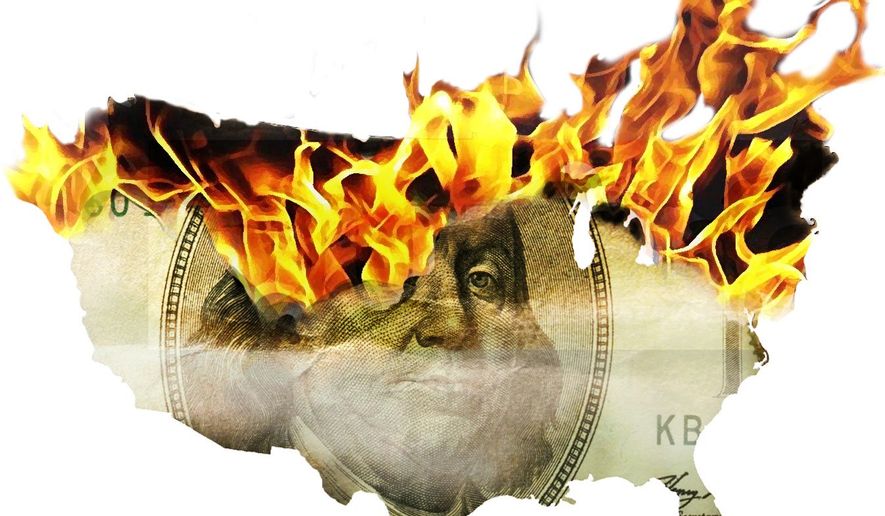
Last week, the national debt topped $40 trillion for the first time in our history. Of that amount, almost half was added since 2019.
We are now spending more to service the debt than we spend on national defense. The national debt was 54.6% of gross domestic product — the total value of goods and services produced — in 2001. Today, it is approximately 124% of GDP and rising.
Much of the debt stems from mandatory spending, including Medicaid, Medicare, Social Security, veterans’ benefits and Obamacare subsidies.
Still, Congress cannot resist piling on more spending.
Democrats went on a spending spree during the COVID-19 emergency. The 2021 infrastructure bonanza was bipartisan. Then there were pork-laden computer chip subsidies and bills to combat nonexistent climate change.
When the president is a Democrat, the media ignore the national debt. When a Republican is in office, they suddenly become deficit hawks. Then the blame falls on tax cuts, not on the spending increases made by previous Democratic administrations.
Waiting in the wings are the Democratic Socialists of America with “Medicare for All” (costing $30 trillion to $40 trillion over 10 years), free college tuition ($28 billion to $75 billion in the first year), free childcare, reparations for slavery, large-scale public investments tied to the Green New Deal and so on.
Whenever there is a serious discussion of the national debt, some liberal Pollyanna will pop up to tell us not to worry because we owe it to ourselves.
However, part of the debt is owned by foreign governments. Japan is the largest outside holder of our debt, holding about $1.2 trillion. Tokyo is currently selling U.S. bonds to shore up its currency.
While it is true that much of the debt is owned by U.S. investors, what happens when they stop buying, say, during a serious economic downturn?
Politicians such as Rep. Alexandria Ocasio-Cortez, New York Democrat, want the Treasury to inflate the currency. However, that hurts savers, particularly retirees, whose money will buy less and less.
There is also the crowding-out effect. The greater the portion of the national debt spent on interest, the less there is available for the necessary functions of government.
Nothing can be done before the midterm elections. Then, if Republicans have the strength in Congress, perhaps we can find ways to begin defusing the debt bomb.

Please read our comment policy before commenting.