



Threat Status at The Washington Times selected Obviant, a leading artificial intelligence data analytics firm based in Virginia, as the lead data partner for a June 2026 conference with U.S. military, defense industry, congressional and Trump administration leaders on the future of American shipbuilding, autonomy and command and control in the Pacific.
Obviant specializes in AI examinations of how actual Pentagon spending intersects with congressionally-passed National Defense Authorization Act (NDAA) budgets. The Obviant team created eye-popping visual depictions of critical U.S. Navy projects, including 21st Century shipbuilding at a moment when American dominance is increasingly threatened by such authoritarian adversaries as China.
People were interested in these podcasts
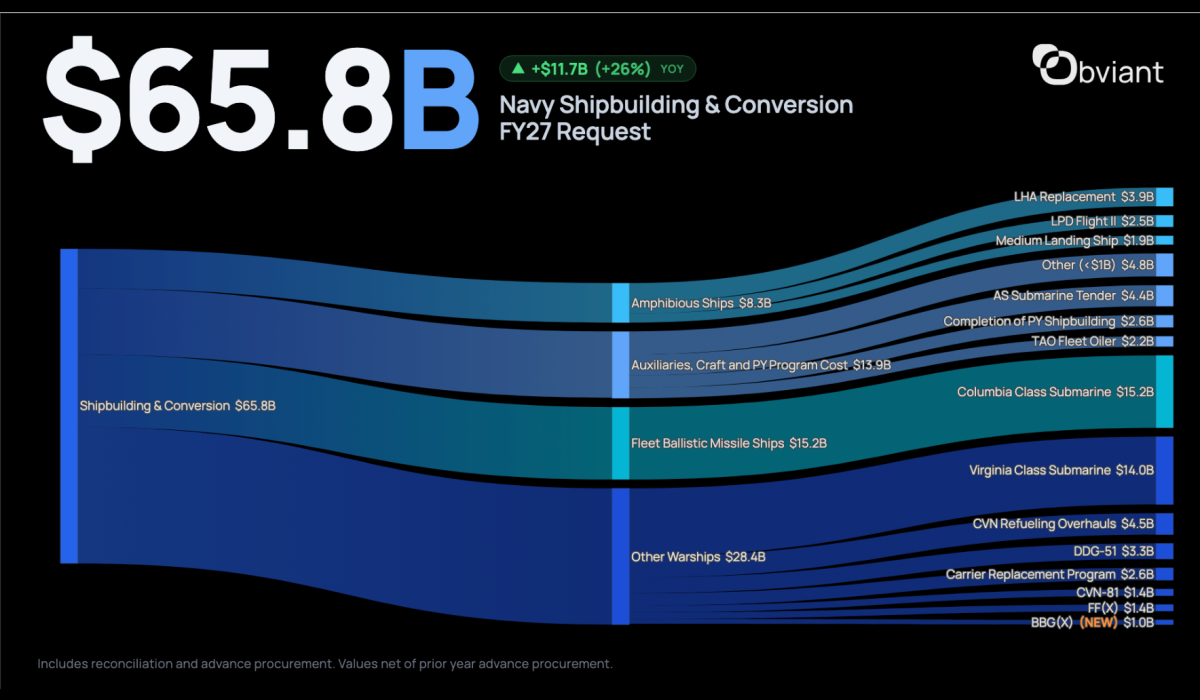
The Trump administration’s Maritime Dominance objective is clearly stated in the 2027 request for funding, with a 25% increase from 2026, with the largest line item being the Columbia Class nuclear submarine at $15 billion.
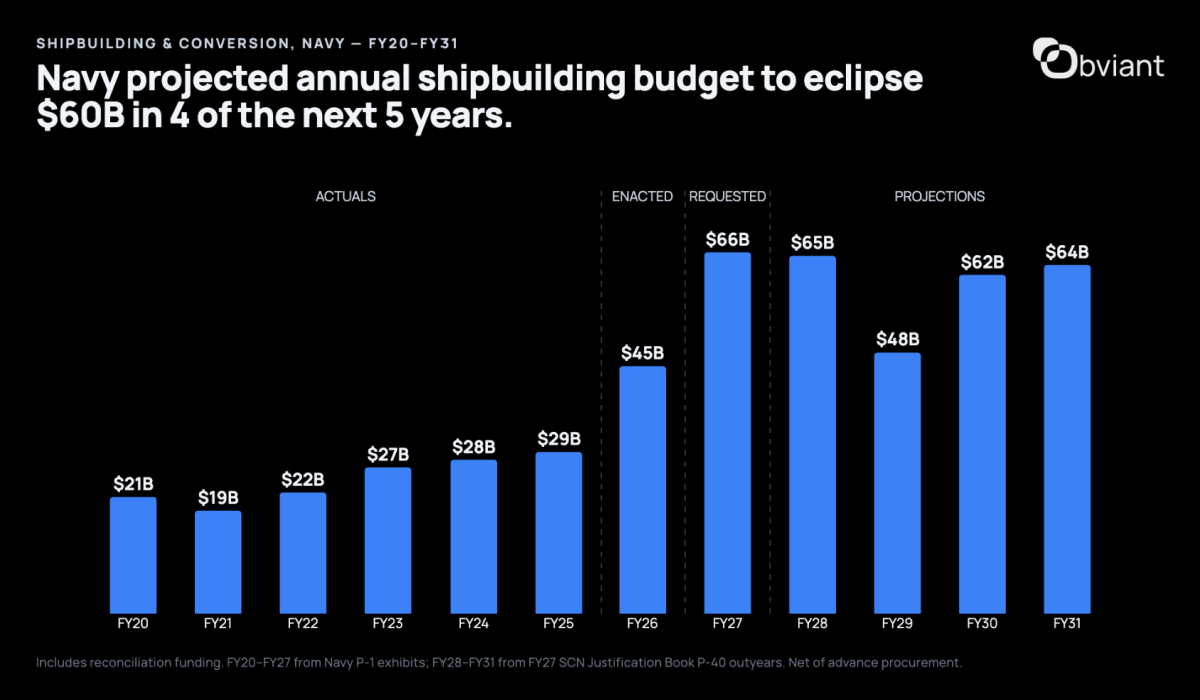
The Trump administration aims to make shipbuilding a top priority for the U.S. Navy over the next 5 years.
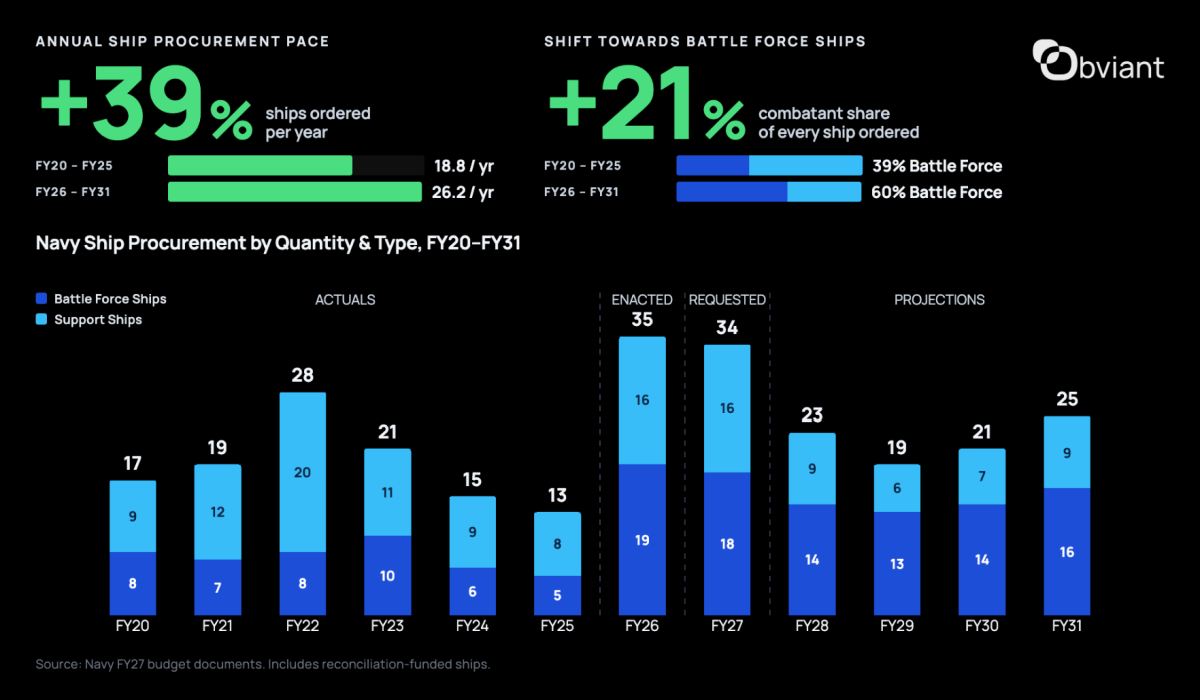
The five-year trend from 2020-2025 has been an investment in so-called “support ships.” The administration is seeking a dramatic expansion of that trend.
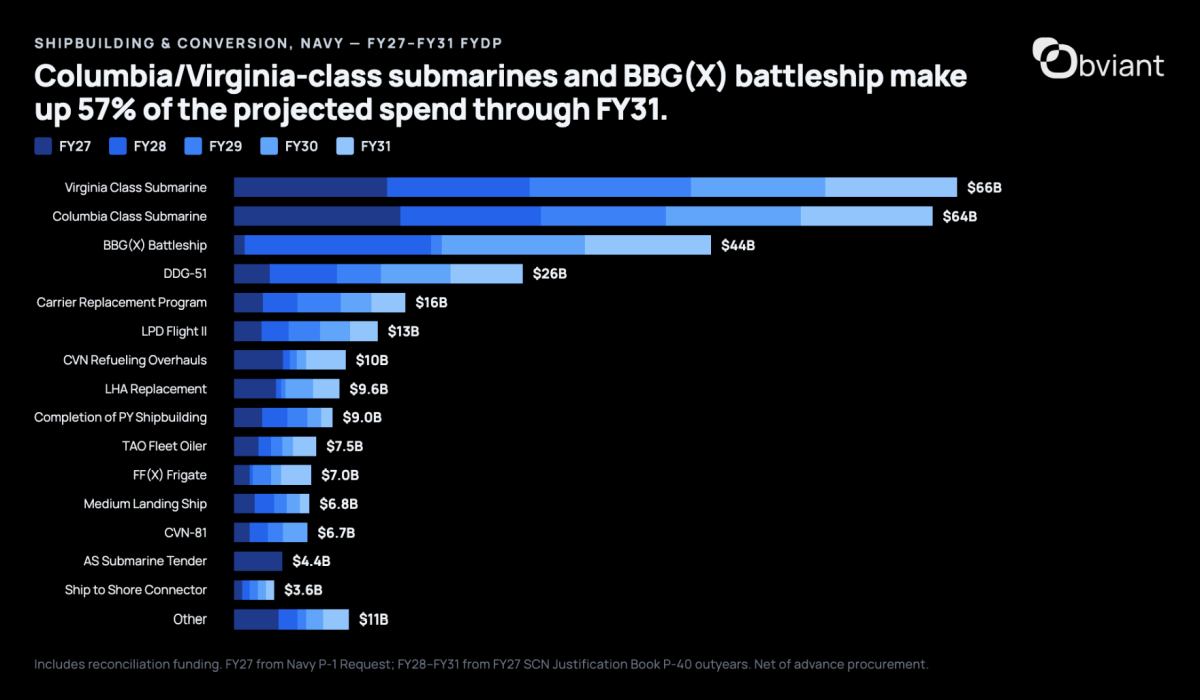
The 2027-2031 NDAA budget projections have the Columbia Class, Virginia Class and the Trump Class accounting for 57% of the overall shipbuilding budget.
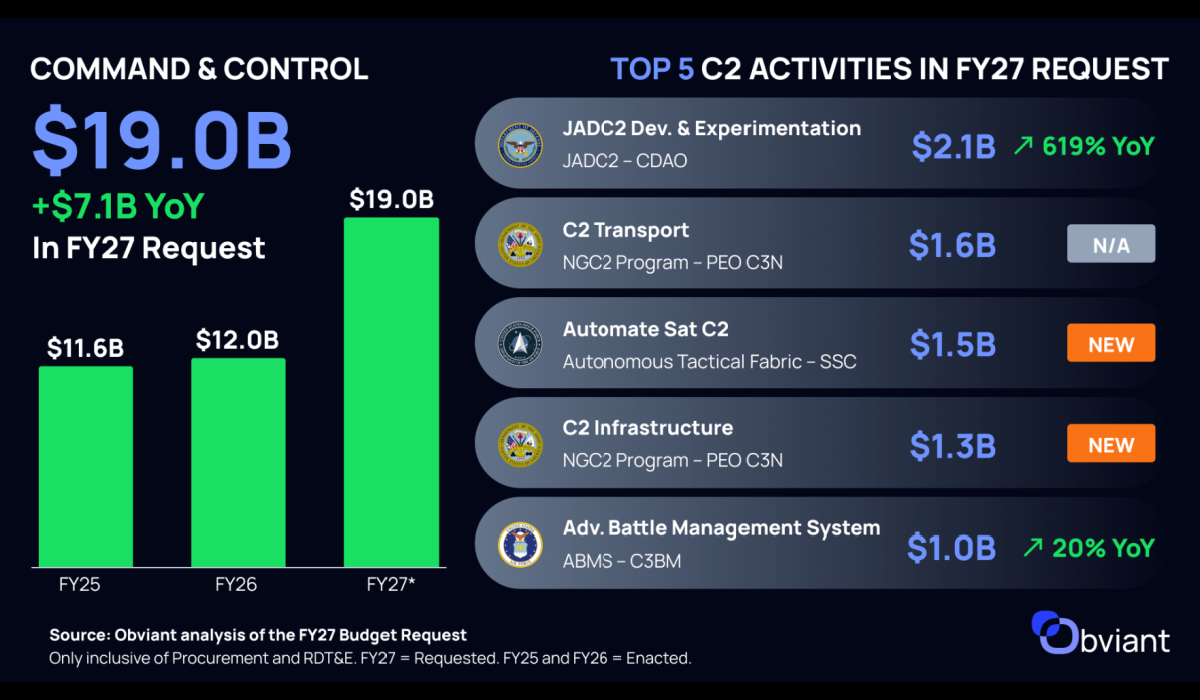
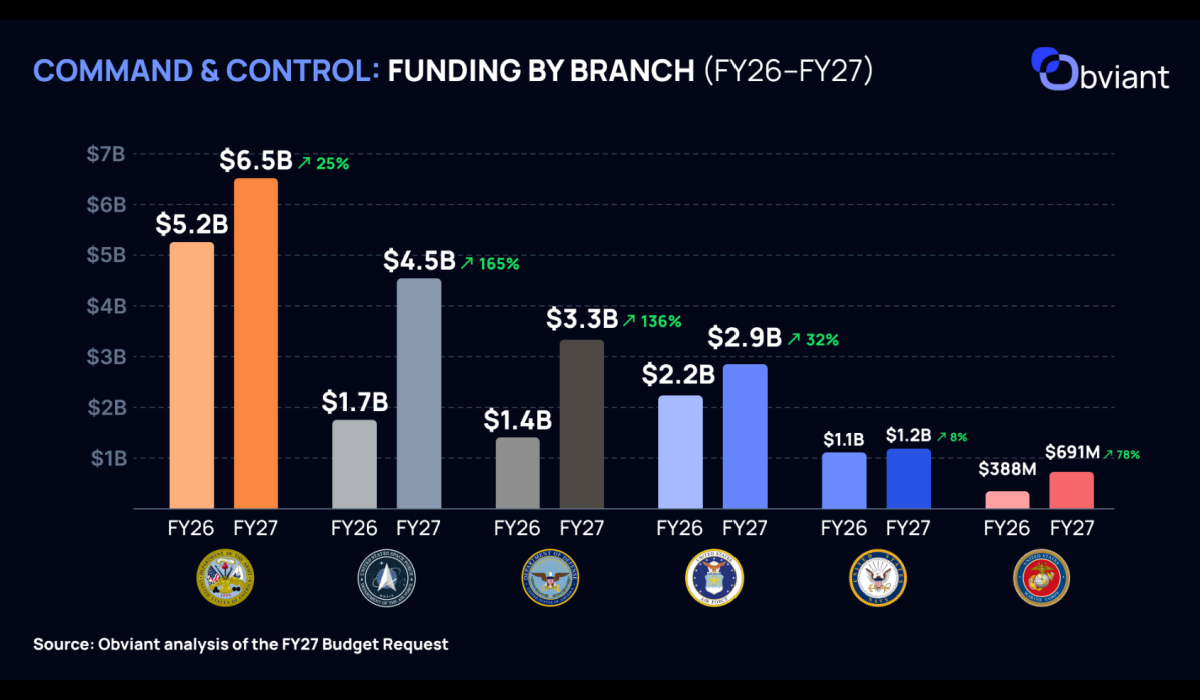
Command and Control, often referred to by U.S. military leaders as “NGC2,” is another funding priority in the Trump administration’s FY27 request, which calls for a $7.1 billion increase from 2026, with the U.S. Army and the U.S. Space Force — the newest branch of the American military — expected to receive the largest spending increases.
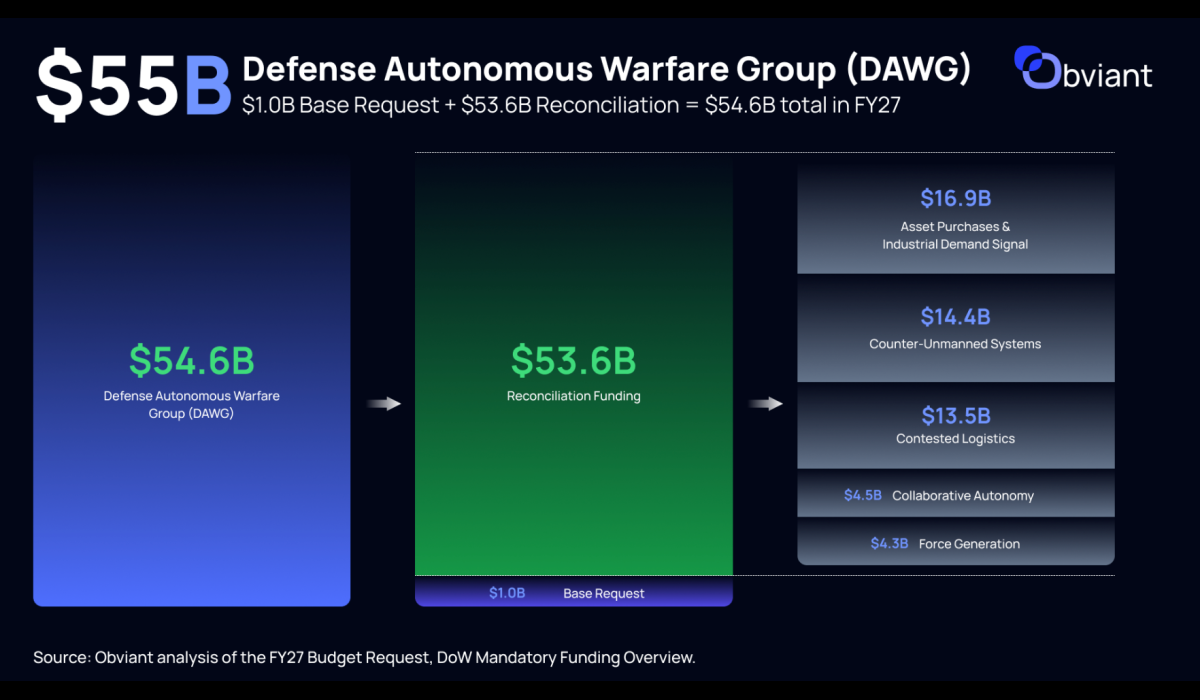
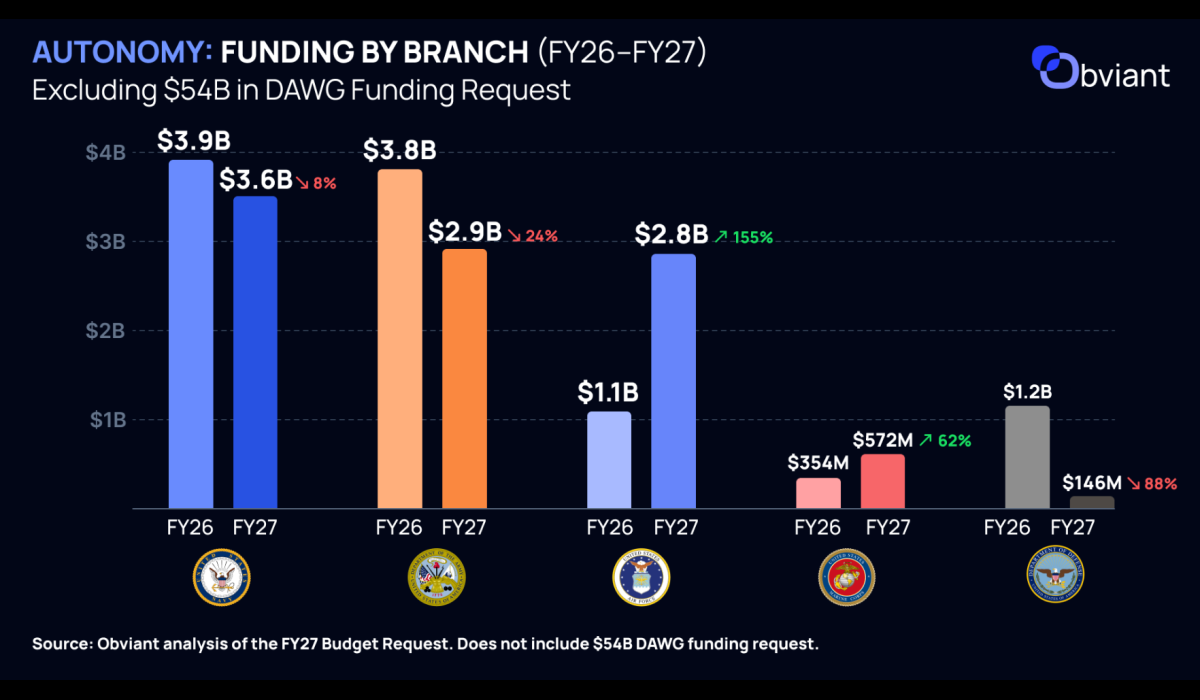
Spending on autonomous systems is increasing, and a new Pentagon organization called the Defense Autonomous Working Group (DAWG) is overseeing a $53.6 billion pool of funds. The purchase of new autonomous systems is the largest percentage of the Trump administration’s proposed 2027 defense budget, with “counter-UAS” or counter-Unmanned Aerial Systems, coming in a close second.
The administration also has requested funding in the 2027 budget for autonomous systems outside the DAWG program, and the U.S. Air Force is leading the way with such initiatives as the pilotless fighter jet program, known as the Collaborative Combat Aircraft (CCA) at $7.4 billion.
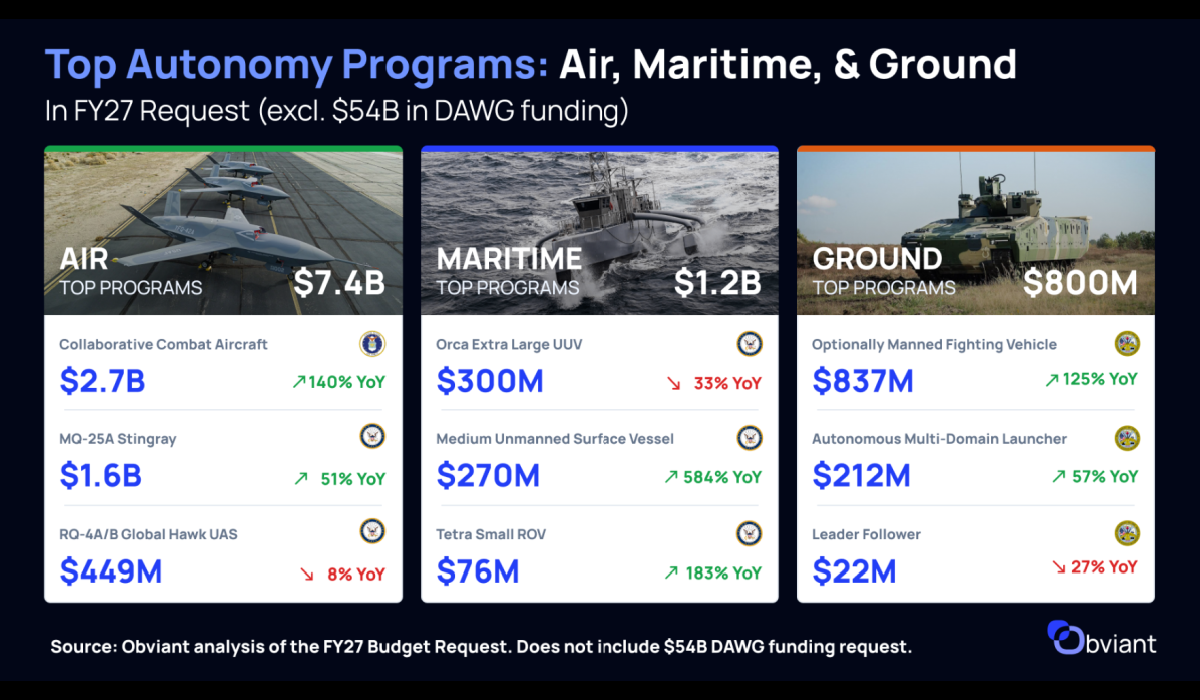
While it appears that line items for “autonomy” decreased for the U.S. Navy and the Army, there is still a major source of funding for unmanned systems at the Pentagon, particularly within the DAWG budget. Threat Status is closely following how those funds are spent.
See more on IndoPac 2026 | Naval Dominance: Shipbuilding, Autonomy & C2
Click here to receive the daily Threat Status newsletter delivered directly to your inbox.


Please read our comment policy before commenting.