


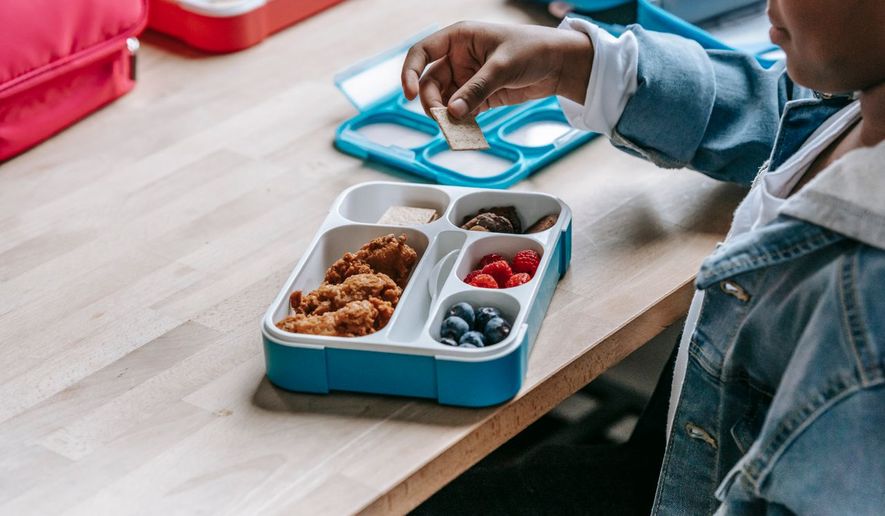

During a school year, parents spend a grand total of 432 hours on meal planning and preparation.
That’s according to a recent survey of 2,000 parents with school-aged kids (5-17), in which respondents said they spend 12 hours on food prep and cooking each week.
In the study, parents said they’ll devote three hours to meal planning and another three hours grocery shopping every week, on average. They’ll also spend another two hours packing school lunches and four hours cooking during a typical school week, on average.
Simply from a time perspective, keeping a family fed is no easy task. Adding to the difficulty, most parents polled (71%) said their kids are picky eaters.
In time for the back-to-school season, the study was conducted by Talker Research on behalf of izzio Artisan Bakery to examine parents’ pain points and hacks for keeping their kids - and the entire family - well-fed, while managing picky palates and the need for high-quality food.
In the study, parents admitted that they typically modify the meals they cook (swapping out sides, leaving certain ingredients out) more than half the time (56%) to make them appealing to their kids. It’s no surprise, then, that most respondents (58%) said it’s difficult to find foods that their entire family enjoys eating.
Along with finding foods that please the whole household, the quality of food is also top of mind for parents when grocery shopping these days. Three-quarters (74%) said they’re more ingredient-conscious than ever when grocery shopping for their families.
In light of this, sourdough bread appeared in the survey findings as a satisfying family favorite. When asked about favorite bread types in general, many respondents said that sourdough is their child’s favorite bread (44%), as well as their entire family’s favorite bread (46%). Additionally, more than half of parents (56%) also said sourdough is their own favorite bread to enjoy.
“As any parent knows, keeping a family well-fed can feel like a job in itself. Between balancing picky eaters and high-quality food choices, it’s not easy,” said Sara Kafadar, chief commercial officer at izzio artisan bakery. In this study, we wanted to see what parents’ biggest food pain points are and how they navigate them to keep school lunches healthy and interesting, as well as how bread, and sourdough specifically, plays a role in keeping families nourished and satisfied.”
Looking at the challenges when it comes to school lunches, parents said their biggest hurdles are finding foods their kids will actually eat (34%), keeping lunches interesting (34%) and avoiding food waste (30%).
Respondents estimated that 68% of the lunches they pack are eaten on a typical school day, while the remaining 32% is wasted.
So what are the homerun lunches that parents rely on most? According to the findings, sandwiches are the big winner.
In the survey, 80% of parents went so far as to call sandwiches a “lunchbox hero,” because they’re something their children are generally happy to eat.
When it comes to the perfect sandwich for kids, ham and turkey tied as winners (both 47%), followed by chicken (40%). And toppings-wise, cheese (60%), mayonnaise (51%) and lettuce (45%) were most favored.
The school experience is ever-changing, but one thing has stayed the same, and that’s the popularity of sandwiches as the perfect school lunch,” said Kafadar. “In the results, we’re happy to see that sourdough was ranked among respondents’ favorite breads and that it meets the whole family’s food needs for clean, high-quality ingredients, as real sourdough uses long fermentation, living sourdough cultures, and starts with just three ingredients: flour, water, and salt.”
Research methodology: Talker Research surveyed 2,000 parents of school-aged children (5 - 17) who have access to the internet; the survey was commissioned by izzio Artisan Bakery and administered and conducted online by Talker Research between June 22 and June 29, 2026. A link to the questionnaire can be found here. To view the complete methodology as part of AAPOR’s Transparency Initiative, please visit the Talker Research Process and Methodology page.

Please read our comment policy before commenting.