



OPINION:
America’s farmers are facing a labor and financial crisis that artificial intelligence could help solve.
For many producers, in addition to challenges like market volatility and weather, securing enough labor at a sustainable cost to keep operations running is a primary issue. Across rural America, roughly 1.9 million farms are confronting rising labor costs and persistent workforce shortages, placing a real strain on livelihoods and raising broader concerns about the resilience of America’s food supply.
As the frontier of artificial intelligence reshapes the American economy, physically demanding and repetitive jobs have become increasingly difficult to fill across nearly every sector. This is exactly why many industries, including healthcare, construction and manufacturing, have increasingly turned to AI-driven systems to streamline operations and augment human labor, shifting their workforce toward more high-value, skilled and sustainable roles.
People were interested in these podcasts
The reality is, we are living through another technological revolution. The Industrial Revolution mechanized production. The Internet revolutionized communication and commerce. In each case, new technologies disrupted existing systems before businesses adapted, evolved and ultimately became more productive.
Rural America, however, has too often been left behind. Not because of a lack of willingness to innovate, but because they often lack the capital and technical resources needed to adopt new technologies at scale.
That innovation gap carries real consequences.
When technological progress outpaces access, rural America is left to pay the price. Right now, farmers and ranchers are facing persistent labor shortages, rising input costs and shrinking margins while being asked to produce more with fewer workers. In one of the more labor-intensive industries in the country, especially for specialty crop farmers, this is simply not a sustainable model.
Artificial intelligence offers an opportunity to change course. The question is no longer whether AI belongs in agriculture, but whether we will equip American farmers to use it before they fall even further behind.
To remain competitive, we must reduce the barriers to entry that prevent agricultural producers from accessing the tools they need to close labor gaps and improve productivity. That means expanding access to infrastructure, strengthening workforce development in rural areas and ensuring that producers have the capital and technical support needed to adopt new systems at scale.
Given that agriculture is North Carolina’s largest industry, this issue hits close to home. I have had countless conversations with farmers across the state, and one theme has emerged consistently: our agricultural industry is eager to innovate but too often lacks the tools and resources to do so. That is why I am proud to be championing provisions from my FARM AI Act in this year’s Farm Bill, which will designate artificial intelligence workforce training and precision agriculture as priority research areas under the USDA’s Agriculture and Food Research Initiative. By expanding research into implementing artificial intelligence and driving workforce development, we can help ensure farmers have access to the new technologies and skills they need to remain productive, competitive and resilient.
To be clear, the role of implementing these technologies is not to replace farmers or our rural workforce, but to extend their capacity and increase their production.
Already, AI-powered agricultural technologies are demonstrating what the future of farming can look like. Precision agriculture systems can optimize irrigation, using real-time weather and soil data, reducing waste and improving yields. Machine learning models can detect crop diseases earlier than the human eye, enabling faster intervention and reduced losses. Automation and robotics can assist with repetitive, labor-intensive tasks such as planting, harvesting and sorting, allowing farmers and laborers to focus their time on the work that adds the greatest value.
While many large-scale operations have begun adopting these technologies, it is important that smaller family farms are not left behind. They are the backbone of rural communities and the foundation of our agricultural economy, yet they often face the greatest challenges to adopting new technologies. If we want family farms to remain viable for generations to come, we must ensure they have the tools, training and resources to embrace the next generation of agricultural innovation before they are competed out of the market.
The fact is, AI is actively reshaping how American industries operate. The choice ahead is whether we will ensure that America’s agricultural producers have access to AI tools that enable them to evolve with modern technology and remain competitive in the global marketplace.
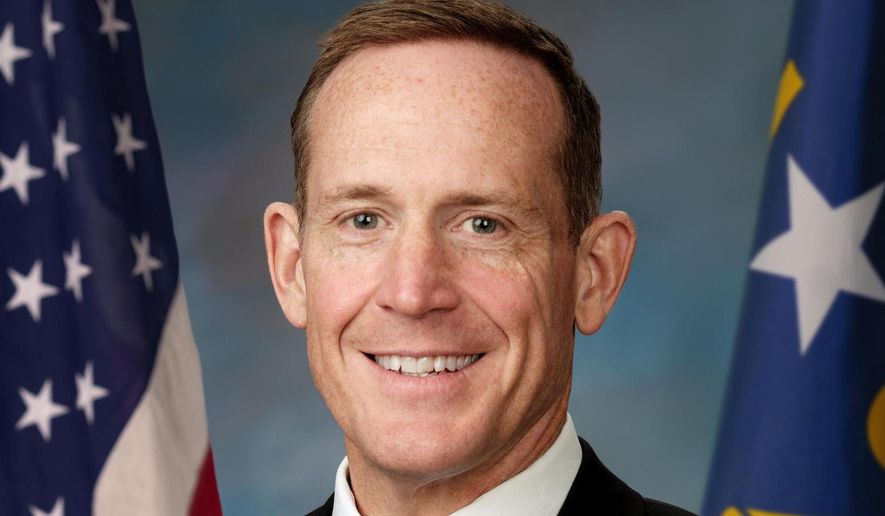
• Sen. Ted Budd represents North Carolina in the U.S. Senate, elected in 2022 after serving three terms in the U.S. House of Representatives. A small-business owner and entrepreneur by trade, Budd brings private-sector experience to his work in Congress. He serves on the Senate Armed Services Committee; the Senate Select Committee on Intelligence; the Senate Commerce, Science, and Transportation Committee; the Senate Small Business and Entrepreneurship Committee; and the Joint Economic Committee, focusing on national security, economic growth, and support for American industry.

Please read our comment policy before commenting.