



OPINION:
This year, Americans commemorate two anniversaries: the 250th anniversary of the Declaration of Independence and the 50th anniversary of the founding of the Moscow Helsinki Group. They are united by two powerful words: human rights.
Human rights became the foundation of the freest and most prosperous nation in history. They also became the most powerful political weapon ever used against totalitarianism.
Thomas Jefferson placed them at the foundation of the American republic. Half a world away, two centuries later, the Moscow Helsinki Group became the leading organization of the Soviet human rights movement, a major factor in undermining the Soviet communist regime.
Together, these anniversaries remind us that human rights are the greatest moral and political discoveries of modern history.
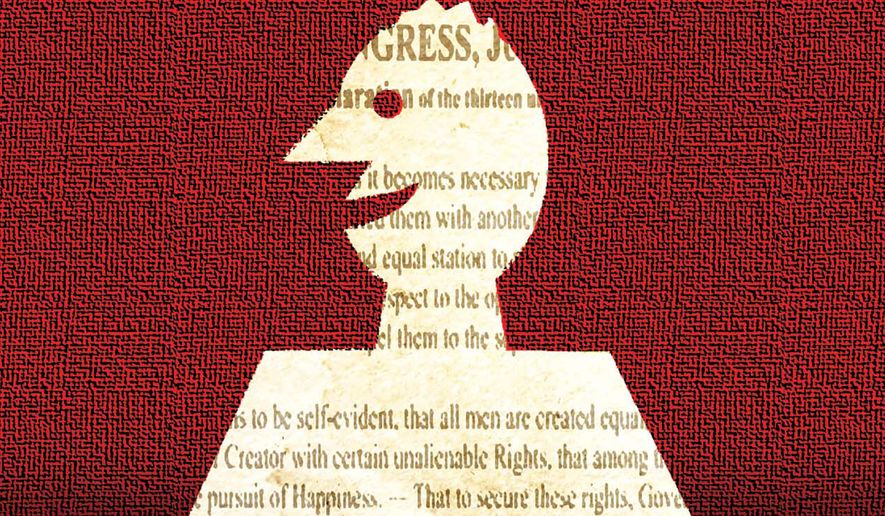
Jefferson’s greatest achievement was transforming the philosophical idea of natural rights into a political reality. The Declaration proclaimed that all men “are endowed … with certain unalienable Rights” and that governments are instituted to secure those rights, not grant them.
That revolutionary principle became the cornerstone of American political legitimacy. From it flowed freedom of speech and religion, economic liberty and our prosperity and strength.
The 20th century brought the greatest challenge to that idea. Soviet communism and German Nazism rejected the notion that individuals possess rights independent of the state. Marxist doctrine dismissed civil liberties while promising prosperity through social and economic guarantees.
History delivered the opposite verdict. America achieved unprecedented prosperity by protecting liberty, while communist societies produced, at best, equality in poverty.
Political and civil rights proved not to be luxuries but rather the precondition for a flourishing society.
The modern revival of human rights came from Soviet and Eastern European dissidents. They fought heroically for human rights in societies that denied those rights and harshly punished anyone who defended them.
As members of the Moscow Helsinki Group, we demanded that the Soviet government obey the human rights commitments it had accepted in the Helsinki Accords.
That simple demand exposed the moral bankruptcy of the Soviet regime. Human rights became the banner of a movement stretching from Moscow to Prague.
The Cold War revealed something Jefferson himself could not have foreseen: Human rights became the most powerful political weapon against totalitarianism. Totalitarian ideology cannot coexist with the idea that every individual possesses rights beyond the reach of the state. To demand those rights is to challenge the regime at its core.
That struggle did not remain behind the Iron Curtain. It was embraced by President Reagan and other democratic leaders, all of whom insisted that human rights were not an “internal matter” for the Soviet Union or any other dictatorship.
Together, dissidents and democratic governments destroyed the Soviet system’s legitimacy and helped bring down the most powerful communist regime in history.
The battle over human rights did not end with the fall of the Soviet Union. In recent decades, the concept has again been challenged — not only by totalitarian states but, increasingly, in Western democracies too.
Once again, natural rights are downgraded while social and economic claims are elevated. Attempts are made to replace equality with equity. Freedom of speech becomes the target of political correctness, social media censorship and government campaigns against “misinformation.”
At the same time, the meaning of human rights has been perverted. Instead of equal rights for all, we increasingly hear of special “rights” for particular groups: Black rights, transgender rights and numerous others. However, rights are not group privileges.
The original civil rights movement sought not a separate system of rights for Black Americans, nor did the women’s movement seek distinct rights for women. Both demanded the equal application of the universal rights proclaimed in the Declaration.
Today’s language of group and identity rights represents a significant departure from that principle. Rights belong equally to every human being.
Many conservatives, understandably repelled by the left’s misuse of rights, have too often abandoned human rights altogether. That is a profound mistake.
Human rights are not a progressive slogan to be surrendered because the left has distorted them. They are the central political values of the American republic. Nor can they be replaced by family values, religious values or patriotism. Those may be important, but they do not fundamentally distinguish a free society from a totalitarian one.
Nazi Germany glorified family values, as does Iran today. Vladimir Putin’s Russia invokes Orthodox Christianity. What those regimes lack are freedom of speech, freedom of religion and equal rights under law. That is the real dividing line.
As we celebrate the 250th anniversary of the Declaration, we should return to the central truth it proclaimed. The heart of the American experiment is not equity, identity privilege or state-managed fairness. It is the principle that all human beings possess equal rights, which government exists to protect.
That was Jefferson’s greatest political gift to America — and America’s greatest political gift to the world. At a time when the meaning of rights is again under assault, we must restore human rights to the place Jefferson gave them at the birth of the American republic: at the center of American public life.
• Yuri Yarim-Agaev is president of the Center for the Study of Totalitarian Ideology and a member of the Moscow Helsinki Group.

Please read our comment policy before commenting.