



1. What did scientists discover on the floor of the Indian Ocean?
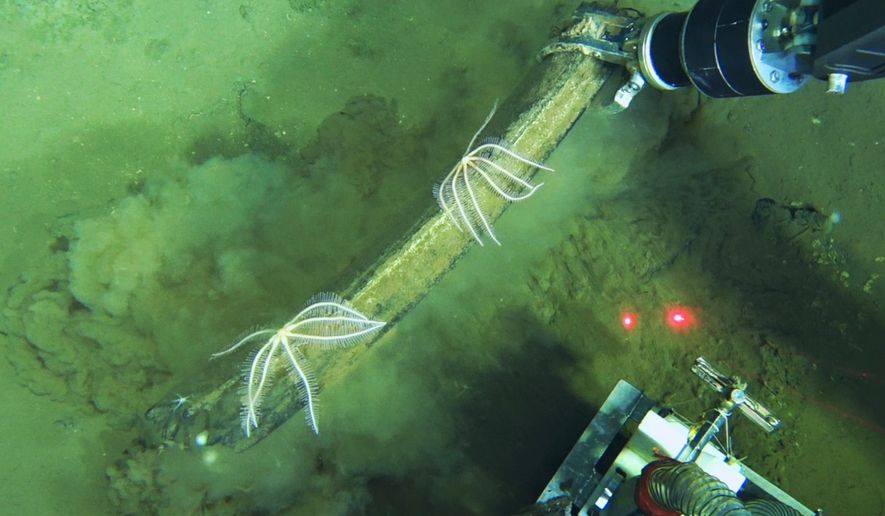
Researchers found a millions-year-old whale graveyard hosting thriving communities of marine life, including jellyfish, tubeworms, brittle stars, sea cucumbers, squat lobsters and saltwater clams. Located up to 23,000 feet below the surface of the southeastern Indian Ocean, it is the largest, deepest and oldest whale graveyard ever found.
2. How old is this graveyard, and what did scientists find there?
People were interested in these podcasts
During multiple deep-sea submersible expeditions in 2023, researchers mapped five carcass sites and fossils — including skulls from beaked and baleen whales — with the oldest bones dating back 5.3 million years. Many of the creatures feeding on the remains are likely species that have never been documented before.
3. Why have these bones survived for millions of years without decomposing?
Several factors helped preserve the bones: They are dense enough to resist bone-eating worms, deep enough to avoid being buried by drifting particles, and coated with a protective mineral layer from surrounding seawater. Together, these conditions created a rare environment where ancient remains could endure intact.
4. Why did so many whales end up in this specific location?
Scientists aren’t certain, but several explanations are possible. The whales may have lived in the area and died of natural causes, some may have died from exhaustion or illness related to deep-sea diving, and the V-shaped geography of the seafloor may have funneled carcasses toward the same resting spot.
5. Why does a whale graveyard matter to scientists?
Whale graveyards reveal how complex ecosystems can flourish in some of Earth’s most extreme environments — with no light, little oxygen and crushing pressure. Studying them helps scientists understand how life adapts to remote, hostile conditions, offering broader insights into the boundaries of life on Earth.
For more on this report, read “Scientists discover a deep whale graveyard that is teeming with life” from The Associated Press, published on The Washington Times.
This article was constructed with the assistance of artificial intelligence and published by a member of The Washington Times' AI News Desk team. The contents of this report are based solely on The Washington Times' original reporting, wire services, and/or other sources cited within the report. For more information, please read our AI policy or contact Steve Fink, Director of Artificial Intelligence, at sfink@washingtontimes.com
The Washington Times AI Ethics Newsroom Committee can be reached at aispotlight@washingtontimes.com.

Please read our comment policy before commenting.