


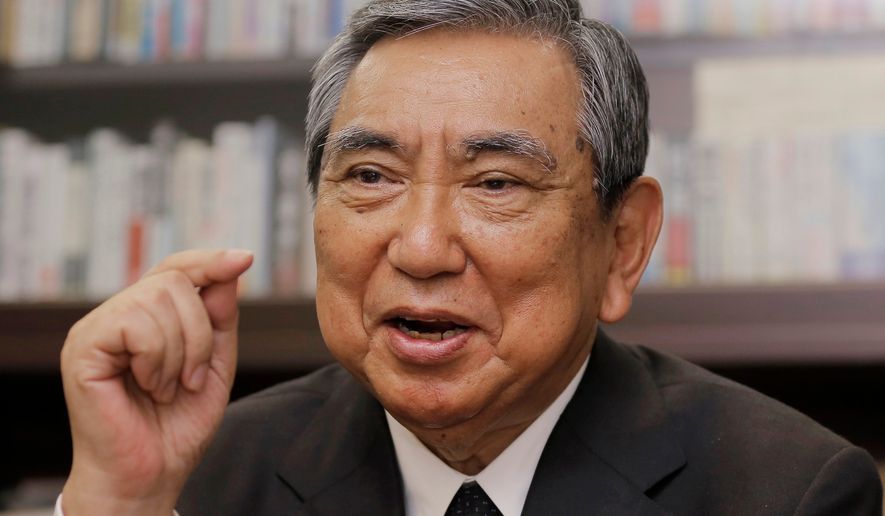

TOKYO — Yohei Kono, a veteran Japanese politician who as top government spokesperson offered a historic apology to Asian women over sexual abuses by Japan’s wartime military, has died, officials said. He was 89.
Kono had placed great importance on promoting friendly ties with China, South Korea and other Asian countries that suffered Japanese atrocities before and during World War II. He died of old age Monday, according to the office of his son, former Foreign Minister Taro Kono.
As chief Cabinet secretary in 1993, Yohei Kono apologized to tens of thousands of so-called “comfort women,” acknowledging Japanese military involvement in forcing them into work at frontline brothels. He spoke following a government investigation.
People were interested in these podcasts
His statement led to Japan’s broader apology over its wartime atrocities in a 1995 statement by then-Prime Minister Tomiichi Murayama.
Both statements were regarded internationally as signs that Japan had come to terms with its wartime past, and they helped to improve relations with its Asian neighbors. But the statements have become unpopular among Japanese conservatives who say Japan should stop focusing on negative history to restore national pride.
Kono faced growing criticism and attempts to overwrite his 1993 apology especially during nationalist former Prime Minister Shinzo Abe ’s leadership.
Kono warned that any attempt to whitewash historical facts “hurts the Japanese people’s reputation.”
Born in January 1937, Kono entered politics in 1967 after his father, Ichiro Kono, also a prominent lawmaker with the governing Liberal Democratic Party, died. Yohei Kono served in key political posts including speaker of the lower house, the more powerful of Japan’s two-chamber parliament, and LDP president until he retired in 2009.
Kono remained active in politics even in recent years and visited China almost every year with a political and business delegation, helping to stabilize sensitive ties between the countries.
Earlier this year he was still considering a trip to China when Tokyo’s relations with Beijing plunged to their lowest in years after Prime Minister Sanae Takaichi infuriated Beijing in November by saying a hypothetical Chinese military action against Taiwan would justify Japanese troop engagement.

Please read our comment policy before commenting.