




OPINION:
It has been said that the best predictor of future behavior is past behavior. If you want to know what someone is going to do tomorrow, all you have to do is look at what they did yesterday, last week, last month or years ago.
In the words of Confucius, “Study the past if you would define the future,” or in those of Ecclesiastes, “There is nothing new under the sun.”
This is why we rightly distrust people who have lied to us in the past, and why we are more diligent about locking our doors if our neighborhood has been hit with a string of robberies. This is why the Russian proverb “Trust, but verify” continues to resonate centuries after it was written. This is why we do not go back to a restaurant after getting poor service the first time, why we would never invest money with someone who has already embezzled from us.
People were interested in these podcasts
Would it not be wise to apply the same common sense to things that are arguably much more important, such as politics, government and religion? Should we not consider the track records of the worldviews our leaders say they embrace as they presume to lead us?
Take, for example, the worldview of Islam and its political, legal and religious assumptions. Less than two weeks ago, millions of Americans went to the polls and elected 97 Muslim newcomers to public office at the federal, state and local levels, bringing the total elected to serve in the incoming Congress to seven confirmed seats — one U.S. Senate seat and six U.S. House seats, with a potential eighth seat in California’s 14th Congressional District pending final certification — and to more than 255 nationwide before preliminary midterm victories.
Should we not be just a little bit curious about this worldview’s historical track record in other countries that were Christian but now are not?
Here is a short list to consider.
Before the Ottoman Empire, Tunisia, Algeria, Morocco and Libya were all Christian. During the fifth century, the Council of Carthage cited 470 Catholic bishoprics and approximately 700 sees across North Africa. By A.D. 700, only 41 remained. By the 13th century, there were none.
Today, each of these countries reports having fewer than 1% of its population being Christians. Why did this dramatic shift take place? Nearly all historians agree that it was the direct result of forced mass conversions, where millions died rather than recant their faith in Christ.
Egypt is another example. It was also a majority Christian country well into the medieval period, from the 10th to the 12th centuries. It was the see of one of the great ancient churches. Today, the Christian community in Egypt has been reduced to about 8% to 10% of the nation’s population. A 2013 Pew Research Center survey, “The World’s Muslims: Religion, Politics and Society,” published April 30, 2013, indicated that more than 80% of Egyptian Muslims believe the death penalty should be imposed for leaving Islam.
Then we have the nations of the Levant. Did you know that all of them were once Christian? Iraq, Syria, Lebanon, Jordan and even the West Bank and the Gaza Strip were once thriving church communities. Today, all these nations serve as staging grounds for Muslim terrorist groups, such as Hamas and Hezbollah, to wage war against Christianity, Israel, Europe and the West.
Next there are the Balkan states of Kosovo, Bosnia-Herzegovina and Albania. These too were once Christian nations but now, because of being Islamized under Ottoman rule, are majority Muslim.
Perhaps the quintessential example is Turkey, formerly known as Anatolia. This land once served as the center of the Byzantine Church. For more than 1,000 years, it rivaled Rome in influence. Muslims, however, conquered it in the 11th century through the Turkish wars. They desecrated the magnificent Hagia Sophia cathedral, turning it into a mosque.
In Muslim-orchestrated Armenian and Assyrian genocides of the early 1900s, hundreds of thousands of Christians were butchered in the streets — historians estimate the Armenian genocide alone claimed 600,000 to 1.5 million lives. The result of the 1923 Greek-Turkish population exchange was that about 1.5 million Greek Christians who were fortunate enough not to have been killed were forced to leave the country. Today, only about 0.03% of the Turkish population is Christian.
What is life like for non-Muslims in these countries today? Well, unless you have been living under a rock, you know the answer. Many of these nations have “apostasy” or “blasphemy” laws, the breaking of which can result in anything from loss of property to prison time or even death.
Women in Muslim countries are generally second-class citizens. These countries have no freedom of expression, freedom of religion, freedom of association or freedom of the press. Writing a piece such as this one could bring serious harm to you and your family.
In summary, Christian countries that were once free are no longer either.
In the days ahead, we would all do well to remember the words of Spanish-born American philosopher George Santayana: “Those who cannot remember the past are condemned to repeat it.” Fourteen hundred years of Muslim history do not lie.
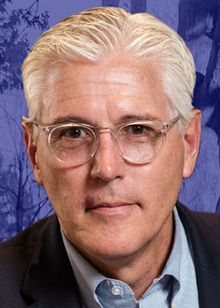
• Everett Piper (dreverettpiper.com, @dreverettpiper), a columnist for The Washington Times, is a former university president and radio host. He is the author of “Not a Day Care: The Devastating Consequences of Abandoning Truth” (Regnery). He can be reached at epiper@dreverettpiper.com.
Follow the author

Please read our comment policy before commenting.