



A version of this story appeared in the daily Threat Status newsletter from The Washington Times. Click here to receive Threat Status delivered directly to your inbox each weekday.
China is engaged in a covert influence campaign to prevent the development of U.S. data centers needed for artificial intelligence capabilities, according to the chairman of the Senate Select Committee on Intelligence.
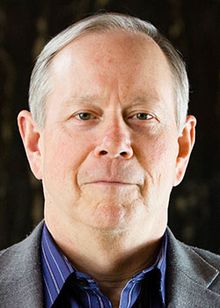
Sen. Tom Cotton, Arkansas Republican and the panel chairman, disclosed the Chinese effort in a letter to acting Attorney General Todd Blanche seeking a federal investigation into the issue.
“Alarming reports indicate that a network of foreign actors, led by the Chinese Communist Party (CCP), is attempting to manipulate U.S. policy and public opinion on data centers,” Mr. Cotton said in the letter sent Wednesday.
People were interested in these podcasts
“Maintaining America’s AI advantage is vital to American economic strength, diplomacy, national security and military power,” he stated.
Mr. Cotton told The Washington Times he believes China is attempting to skew U.S. policy and public opinion on data centers as part of the AI race.
“Once again, Communist China is lying and cheating to get ahead,” he said. “I’m encouraging the Department of Justice to investigate.”
Separately, the AI company OpenAI, which runs the chatbot ChatGPT, issued a report on Wednesday stating that Chinese-linked influence operations are targeting the American public in the debate over AI, including seeking to create opposition to data centers.
The report identified two clusters of ChatGPT accounts that appeared to originate in China that were banned.
The accounts were blocked for supporting an apparent covert-influence operation that spread narratives seeking to manipulate policies on AI and other technology approaches.
One group produced social media comments and images claiming AI data centers are increasing electricity prices for average families.
A second cluster promoted comments and images criticizing U.S. tariffs as American efforts to dominate technology competition.
This effort specified in prompts that content should not include Chinese President Xi Jinping in results and instead only criticize President Trump.
“The targeting of OpenAI and U.S. data center buildouts is significant not because the operation appears to have shifted public opinion, but because it shows PRC-origin influence operators testing narratives against AI infrastructure — a foundation of U.S. technological leadership, economic growth and the broader democratic AI ecosystem,” the report said.
Mr. Cotton noted in the letter that there are valid concerns among Americans over the growth of data centers, which fuel AI training but also consume large amounts of electricity and water, potentially straining natural resources.
More than 4,000 data centers reportedly are already operating, mainly in Virginia, Texas and California with another 3,000 slated for construction.
The infrastructure is a key element in the race by the United States to remain the most advanced AI power in the face of China’s growing development of the technology.
Mr. Cotton said he supports common-sense regulation and legislation to protect communities from any adverse effects of the centers.
“But we can’t allow any effort by foreign adversaries to extort these fears and undermine our technological development,” he said.
The senator based the letter in part on a recent report by the Bitcoin Policy Institute that revealed Chinese state media outlets — CGTN, China Daily, and Global Times — together with Russia’s RT, all have launched propaganda campaigns directly targeting U.S. AI data centers and U.S. export controls.
The report also said the CCP-linked network headed by Mr. Singham has collaborated with Chinese official state media organs and for five years has produced content in the United States opposing AI infrastructure, labs, and export controls.
China and the United States are locked in a major technology battle to maintain dominance in AI. U.S. companies lead in advanced computing power, but China is said to be ahead in data collection used in training AI.
The topic of guardrails on the use of AI was discussed at the recent summit in Beijing between Mr. Trump and Mr. Xi.
Mr. Cotton, who as committee chairman has access to the most sensitive U.S. intelligence, said published reports have identified a multiyear campaign involving foreign influence that has sought to sow opposition to the data centers.
The campaign includes a network of U.S. nonprofits funded by Shanghai-based expatriate Neville Roy Singham, who congressional investigators have said had close ties to the Chinese Communist Party.
“For years, Singham’s network has been producing content opposing the development of American AI infrastructure, and various investigations have found that the Chinese government is the network’s ultimate paymaster,” Mr. Cotton said.
The New York Times also reported that Mr. Singham is involved in a global web of Chinese propaganda operations.
At the same time, the Chinese government is promoting its domestic AI ambitions.
Mr. Cotton said foreign-funded charitable groups have funneled more than $2 billion into American advocacy groups, with a significant portion supplied to groups promoting opposition to U.S. data centers.
Sen. Bernie Sanders, a self-described Democratic socialist, in April hosted a public panel on what was billed as the “existential threat” of AI and the “need for foreign cooperation.”
The four panelists included two Chinese people: Tsinghua University professor Xue Lan, and Zeng Yi, from the Beijing Institute of AI Safety and Governance and an adviser to the Chinese Ministry of Science and Technology.
Mr. Cotton stated in his letter that Tsinghua University is a key element of Beijing’s military-civil fusion strategy and host of multiple defense-research laboratories.
The senator said several of the issues are the target of congressional investigations.
“Yet no entity in the network has been charged under the Foreign Agents Registration Act (FARA). I therefore request that the DOJ launch a full investigation into these matters,” he said.
Contact the author

Please read our comment policy before commenting.