



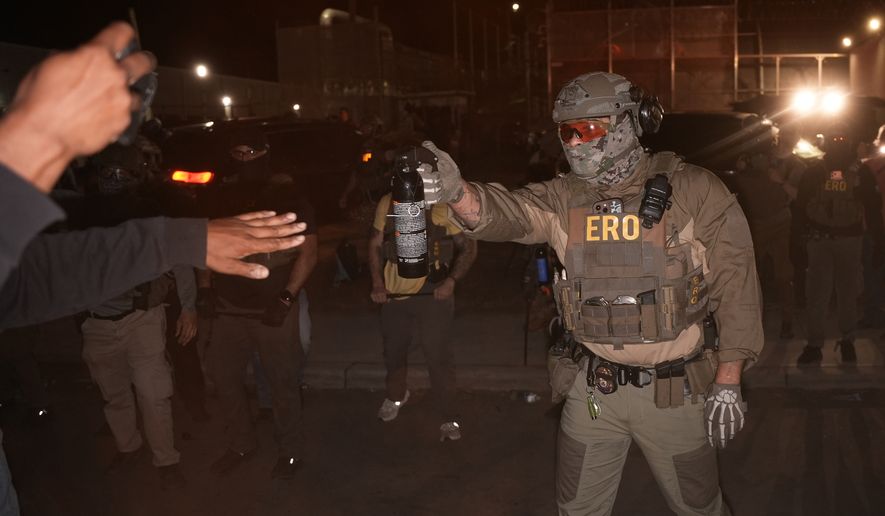
Democrats are set to lose their leverage for reining in President Trump’s deportation force as Republicans prepare to send him a bill this week funding immigration enforcement agencies through the remainder of his term.
The House will vote on the Senate-passed $70 billion package as early as Tuesday.
Republicans are united in supporting multiyear funding for U.S. Immigration and Customs Enforcement and Customs and Border Protection after Democrats declined to support annual appropriations for the agencies earlier this year.
People were interested in these podcasts
Senate Democrats filibustered the annual Homeland Security Department appropriations bill, which led to a record 76-day partial shutdown.
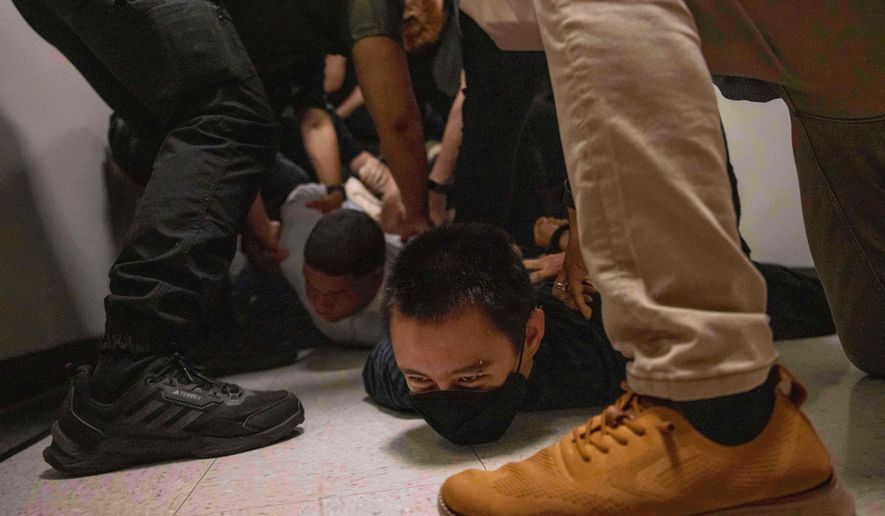
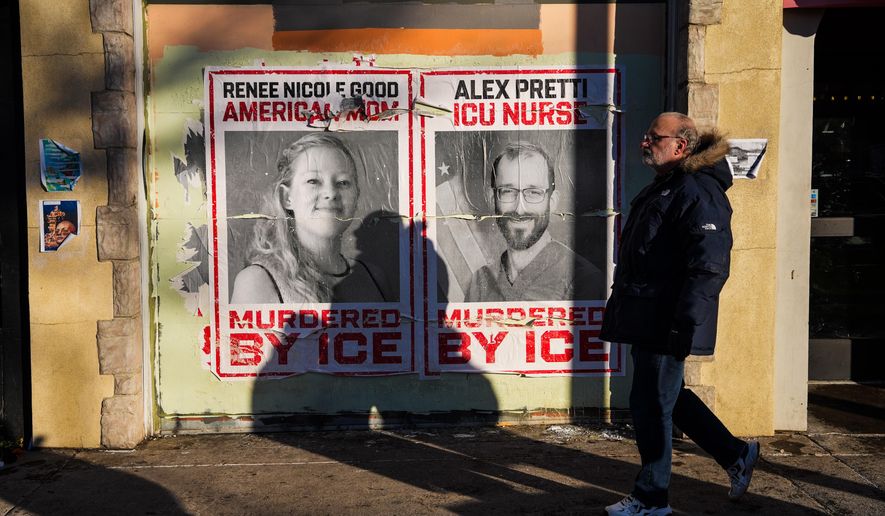
They said they would not fund ICE and CBP without sweeping new guardrails after agents killed two U.S. citizens protesting immigration enforcement actions in Minnesota.
Sen. James Lankford, Oklahoma Republican, said Democrats just wanted an excuse not to fund the enforcement of immigration law.
“This is their latest ’defund the police’ type movement,” he said on “Fox News Sunday.”
Democrats have few leverage points as the minority in both chambers. The annual appropriations process is their main avenue to secure legislative changes.
The Republicans’ $70 billion bill, the Secure America Act, removes that leverage by using the filibuster-proof budget reconciliation process to fund ICE and CBP without needing Democratic votes.
The measure passed the Senate on Friday by a 52-47 vote. One Republican, Sen. Lisa Murkowski of Alaska, joined all Democrats in opposition.

The bill includes $38.6 billion for ICE, $26 billion for CBP and another $5 billion for the Department of Homeland Security to use for immigration enforcement as it sees fit. The money is available to spend immediately after the bill is signed into law and remains available through fiscal 2029.
Mr. Lankford said Republicans’ funding of ICE and CBP for the next three years takes the issue off the table so Democrats “can’t shut down the government again and have this long delay trying to be able to get aid to federal law enforcement.”
Democrats said the vote showed misplaced Republican priorities.
“Instead of working to lower the cost of gas or groceries, housing or healthcare, Senate Republicans have just jammed through another bill to spend taxpayer money on out-of-control and unaccountable immigration enforcement while shielding them from popular, commonsense reforms that would have brought them in line with law enforcement agencies around the country,” said Sen. Christopher A. Coons, Delaware Democrat.
Ms. Murkowski, a senior member of the Senate Appropriations Committee, said she supports funding ICE and CBP but is concerned that multiyear, mandatory funding sets a bad precedent and could make lawmakers less inclined to resolve partisan differences over annual appropriations bills.
“My fear is we have entered down a slope that is so slippery we’re never going to be able to crawl our way back out of it, and I don’t like it,” Ms. Murkowski said.
The House should be able to pass the $70 billion package, as no Republican defections are expected.
Some House Republicans had concerns about the bill when it was first released because of a provision to give the Secret Service $1 billion, of which $220 million was for securing the White House ballroom and broader East Wing Modernization Project.
The Senate dropped the provision after it drew intense scrutiny from a handful of Republicans and faced procedural challenges.
Without the ballroom funding, House Republican leaders’ main issue will be ensuring they have enough members in Washington to pass the bill.
They punted on a planned vote last week because they had too many absences to form a majority.
The House will likely close the bill to amendments so it can be sent quickly to the president’s desk.
The Senate did not have that option, as the budget reconciliation process allows for unlimited motions or amendments on the bill in the upper chamber.
The “vote-a-rama,” as the process is known in Washington, began Thursday morning and turned into an all-nighter, lasting roughly 19 hours before the Senate passed the bill.
The extended floor action included several politically charged votes, including failed proposals to legislatively nix the Justice Department’s nearly $1.8 billion Anti-Weaponization Fund, block the new White House ballroom, remove William J. Pulte as acting director of national intelligence, and redirect funds toward affordable housing programs.
In the end, no changes to the measure were adopted, except for a substitute amendment containing minor technical tweaks.
Consideration of the immigration enforcement funding bill was derailed for two weeks by the announcement of the Anti-Weaponization Fund.
The cash pool was part of a Justice Department settlement with Mr. Trump over his lawsuit against the IRS for leaking his tax returns.
Republicans did not have the votes at the time to squash Democratic amendments to kill or place guardrails on the fund.
Last week, acting Attorney General Todd Blanche sought to help the situation by announcing that the Justice Department would no longer move forward with the fund.
Still, he declined to commit to that in writing or to drop the Justice Department’s opposition to lawsuits challenging the legality of the fund.
Mr. Trump also has publicly equivocated on whether the fund was truly dead.
Thus, the fund was still the subject of multiple Democratic and even a few Republican amendments to the bill.
“Even though Attorney General Blanche says that the Anti-Weaponization Fund will not be used, it is still part of an active settlement and absolutely can be used,” said Sen. Bill Cassidy, Louisiana Republican.
Mr. Cassidy was the primary reason the vote-a-rama lasted as long as it did. He tried to draft an amendment to kill the Anti-Weaponization Fund that could pass with a simple majority.
Yet he could not come up with language that the Senate parliamentarian considered in compliance with the budget reconciliation rules, meaning he would need 60 votes to waive the rules to adopt his amendment.
Mr. Cassidy’s ultimate offering was a companion proposal to an amendment from Mr. Coons to prohibit the Justice Department from making any settlement payments to those convicted of assaulting law enforcement officers at the Capitol on Jan. 6, 2021.
The Cassidy addition would have authorized settlement payments of up to $1 million each to law enforcement officers who were assaulted.
Both amendments drew support from a handful of Republicans but fell short of the 60 votes needed.
Another failed amendment came from Sen. Thom Tillis, a North Carolina Republican who has announced he will not seek reelection. His proposal would have banned the Anti-Weaponization Fund and given the Justice Department roughly the same amount, $1.7 billion, to spend on fraud prevention and enforcement.
Mr. Tillis said he would not support the immigration enforcement funding bill if language curtailing the fund was not added. It was not, but he still voted for the measure.
Mr. Trump said on NBC’s “Meet the Press” that he does not know what will happen to the Anti-Weaponization Fund, but he still supports providing payouts to people whom the Biden administration targeted.
“If it was up to me, I’d pay them the kind of money that they deserve. People have been destroyed,” he said.
“So me, personally, I think the weaponization fund is a great idea, and so do many other Republicans,” the president said. “You have to get it approved. If they get it approved, that’s great. If they don’t get it approved, I’d be disappointed.”
Contact the author


Please read our comment policy before commenting.