


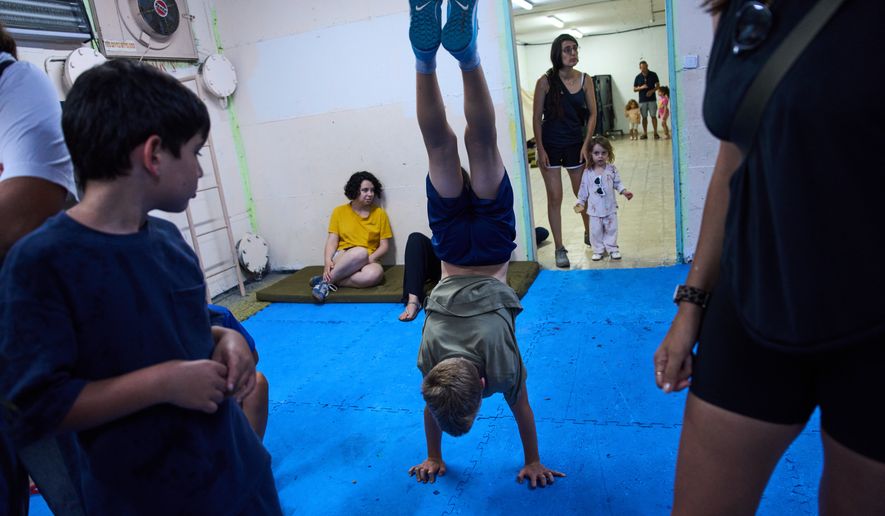

TEL AVIV, Israel — As Israel and Iran traded fire on Monday in the most serious escalation since a shaky ceasefire in April, war-weary Israelis fell back on familiar routines from the last round of war with a sense of resignation and apathy. In the morning, they ran for shelter as missile alerts blared. Afterward, some stayed home and while others ran errands or took their kids to the park, seeking to maintain some normalcy.
In Tel Aviv, Israel’s commercial and cultural hub, the usually bustling streets were more subdued than normal, with fewer customers at shops and other businesses than regular weekdays. The muted atmosphere stood in contrast to the festive, rainbow-colored decorations that adorned the city ahead of its annual Pride parade, scheduled for June 12.
Hours earlier, missiles were launched from both Yemen and Iran toward Israel. They came after Israel over the weekend struck Beirut’s southern suburbs, where it said Hezbollah, an ally of Tehran, had military infrastructure.
People were interested in these podcasts
“We’re not normalizing it,” Liron Eldad, a mother of two, said of the conflict, as she joined other parents at a playground in Tel Aviv, next to a public bomb shelter. But, she said, “we can’t just sit there and be bitter.”
It was an almost ordinary pattern after the Hamas attacks on Oct. 7, 2023, triggered conflicts in Gaza, Lebanon and Iran. The fighting, air raid sirens and disruptions to daily life have left many people in Israel weary and hopeless.
Eldad said she had lost faith in the country’s leadership and is hoping for political change following elections in October. “It’s clearly not working, what we’re doing, and instead we’re getting deeper and deeper into wars,” she said.
PHOTOS: After morning of sirens, Israelis fall back into well-worn war routines
Across Israel on Monday, schools were closed and hospitals paused all non-urgent procedures, moving some patients underground as Israeli air defense systems intercepted missiles overhead.
After Iran said it would halt offensive operations against Israel, those restrictions were lifted and school was set to resume on Tuesday. By Monday evening, Israeli Prime Minister Benjamin Netanyahu also suggested that Israel’s military raids had stopped, but said the country would respond “with force” to any future Iranian attack.
Still, the brief return to war put Israelis on edge. “I feel like I’m stuck in a place where you have no control over your life,” said Rana Raslan, a doctor and mother who was also at the Tel Aviv playground.
Many here also blamed Netanyahu and his allies in government for reigniting the conflict. After Israel struck Beirut over the weekend, Iran warned it would retaliate for the attack, which Israel launched in defiance of Washington’s request to stand down from major strikes near the Lebanese capital.
“The behavior of the government and the prime minister, and the way he’s brought us into unending wars and his constant lies to his infantile base, don’t help me sleep well at night,” said Moshe Regev, 63, a retired economist who was visiting the beach in Tel Aviv.
The war began on Oct. 7, 2023, with a Hamas-led attack on southern Israel that killed 1,200 people and kidnapped 251. More than 72,700 people have been killed in the Israeli offensive in Gaza since then, according to the Gaza Health Ministry, part of the Hamas-run government whose numbers are generally considered reliable by the international community.
Several blocks from the shore, 75-year-old Shlomi Yakobi, a fruit and vegetable seller, praised Netanyahu’s performance as prime minister over the past three years. It was a tumultuous period that would have caused a lesser leader to crack, said Yakobi, who has owned his own stall in Tel Aviv’s Carmel market for half a century.
“People are hiding at home instead of going out,” he said, as he sold apricots to a handful of tourists. His business has suffered because of the war, Yakobi said, adding that the country had no choice. Sometimes he ends up with a surplus of produce, which he donates to the synagogue next door.
“For two years now, you never know what’s going to happen in the next five minutes,” he said.

Please read our comment policy before commenting.