



OPINION:
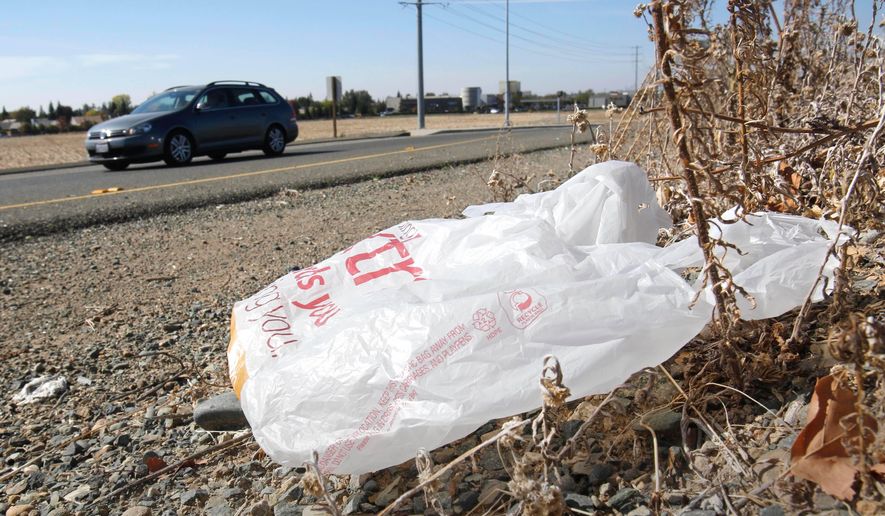
Across the country, a wave of new environmental legislation is quietly moving from state capitals to the grocery aisle.
With sweeping packaging regulations and mandates in places such as the European Union, California and Maine, the goal is clear: Reduce plastic waste.
Although these initiatives are rooted in valid environmental concerns, they are often designed without a clear understanding of the industrial and economic fallout.
People were interested in these podcasts
New research suggests that by focusing solely on what happens to a package after it is thrown away, we are ignoring a massive, hidden price tag that will fundamentally change the cost of living for American families.
The results of a recent study at the Circular Innovation Hub show that a mandated transition away from plastic packaging is not just a minor adjustment for manufacturers; it is a major financial shock for consumers. By analyzing a “Master Basket” of 49 essential household items — such as milk, bacon, laundry detergent and toilet paper — the data reveals a projected price increase of 21.6%.
For the average household, that means an extra $60.75 every time they visit the grocery store. Over the course of a year, that adds up to $1,382 in additional costs for the exact same goods.
This price hike is not driven by corporate greed or temporary inflation. It is dictated by the laws of physics. To understand why, we have to look at how things are made.
Plastics are highly efficient to produce because they require relatively low heat. In contrast, alternative materials such as glass require temperatures six times higher to manufacture. This “thermodynamic tax” creates a permanent increase in energy costs that cannot be optimized away.
Furthermore, existing factories are built specifically for the production of lightweight plastics. Replacing those production lines with the heavy machinery needed for glass or metal production requires a multibillion-dollar investment that will inevitably be passed down to consumers.
Once these products leave the factory, the problem gets heavier. For liquids such as milk, orange juice or soda, switching to glass increases the packaging weight by more than 2,000%. Our modern shipping network is optimized for the lightness of plastic. When you drastically increase the weight of every pallet, trucks reach their legal weight limits while they are still half empty.
This means we would need 30% to 50% more trucks on the road just to deliver the same amount of food. More trucks mean more fuel, more labor and more traffic, all of which drive up the final price on the shelf.
Perhaps the most troubling finding is that this “transition surcharge” is deeply regressive. It hits hardest the people who can least afford it. It is a simple economic reality that the lower a household’s income, the larger the share of its budget it spends on groceries.
According to data from the Department of Agriculture, the lowest-income households in the U.S. already spend more than 3% of their after-tax income on food, a share nearly four times that of the wealthiest households. In regions such as the South and Midwest, where incomes are often lower and more sensitive to price spikes, an extra $1,300 a year on basic staples amounts to a permanent tax on the kitchen table.
We also have to consider the quality of the food itself. Plastic is not just a convenience; it provides a unique barrier against moisture and air that other materials struggle to replicate. When that barrier is removed, food spoils faster.
Even household staples such as toilet paper are at risk. Without a plastic wrap, paper products absorb moisture and odors during transit, often becoming unsellable before they even reach the shelf. To cover the increased waste, retailers will have no choice but to raise prices even further.
The intent behind these environmental mandates is noble, but pursuing them in an informational vacuum is dangerous. If we prioritize visible waste reduction while ignoring the energy required to make alternative packaging and the extra fuel required to move it, we risk an environmental paradox: a policy that could inadvertently increase total energy consumption while making life significantly more expensive for those most at risk.
To create a truly sustainable future, our policies must be grounded in the hard data of the supply chain. We need a circular economy that is both ecologically responsible and socially equitable.
If we fail to account for the real-world costs of a non-plastic economy, then we are not protecting the environment. We are pricing the average family out of the grocery store.
• Calvin Lakhan is project director at the Circular Innovation Hub and co-investigator of the “Waste Wiki” project at York University, Faculty of Environmental and Urban Change.

Please read our comment policy before commenting.