



OPINION:
The narrative around the departure of Food and Drug Administration Commissioner Marty Makary is being actively (mis)shaped by White House opponents trying to paint a picture that the Trump administration’s health policies are driven by politics and cozy relationships with donors, not science.
Still, a more fact-based narrative is not being reported.
The New York Times reported that Mr. Makary resigned “over concerns about the administration’s decision to authorize fruit-flavored e-cigarettes, an action he opposed.” The Times said, “Dr. Makary told those close to him that he could not in good conscience approve flavored vapes.”
People were interested in these podcasts
Yet The New York Times omitted the most relevant fact, one that The Wall Street Journal reported weeks earlier: Mr. Makary had overruled his own agency’s scientists, who recommended authorizing certain age-gated flavored e-cigarettes.
Mr. Makary rejected the written recommendations of his agency’s scientific reviewers. The president pressured him to reconsider. He refused, and now he is out.
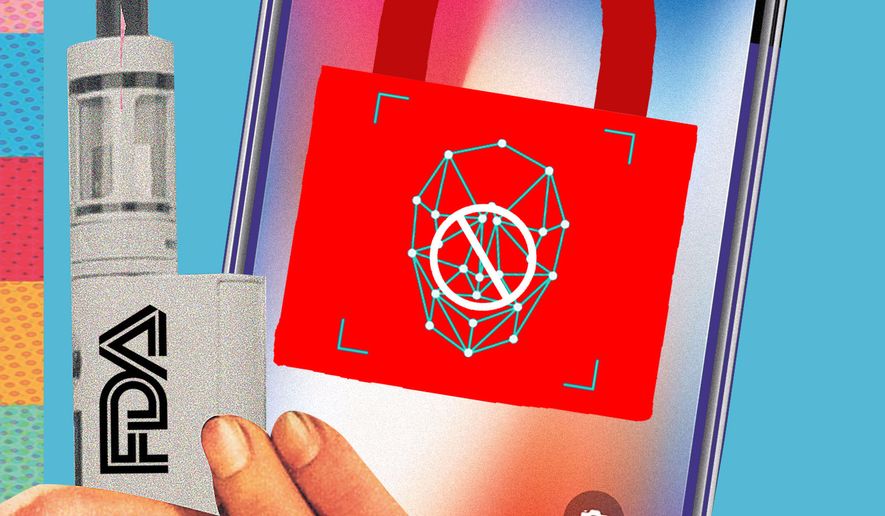
In 2021, Glas Inc., a small e-cigarette company, submitted a premarket tobacco application to the FDA to authorize various tobacco- and nontobacco-flavored e-cigarettes that use technology requiring users to verify their age via a smartphone. The FDA’s Office of Science found that the products met the congressionally mandated standard for being “appropriate for the protection of public health.”
Yet this spring, Mr. Makary blocked authorization of the non-tobacco flavored vapes, defying not only President Trump’s campaign promise to “save vaping” but also the advice of his own agency’s top tobacco scientists.
Mr. Makary’s 2024 book, “Blind Spots,” was a key element of his rise to prominence, but it turns out he has a blind spot of his own. It is called harm reduction.
Mr. Makary failed to recognize that Mr. Trump is the harm-reduction president.
Harm reduction simply means supporting a lower-risk (but not completely “safe”) alternative to a risky product or behavior, especially when eliminating the risk completely is not universally achievable.
When some conservatives opposed harm reduction, such as clean needle exchange, public health advocates chastised them for opposing a cornerstone of mainstream public health policy.
Now, public health groups, blinded by their political opposition to Mr. Trump, are calling foul for his application of that same principle.
What gives? It is not just that Mr. Trump made a campaign promise to save vaping — which he did — or that he is beholden to the tobacco industry, as The New York Times and others would have you believe.
On marijuana, e-cigarettes and kratom-derived natural 7-OH, which some consumers use as an alternative to more dangerous substances, the White House is applying the harm-reduction framework. The president’s consistent use of the policy is grounded in science and is a pillar of public health policy.
Yet none of this means that any of these products is risk-free or appropriate for minors.
Assertions that the president was somehow “bought off” by Big Tobacco — by backing FDA scientists over the commissioner — or by Big Weed for supporting rescheduling, venture into the sort of paranoia and hallucinations that some experience from excessive marijuana use.
Who could have predicted that a Republican president would expedite the rescheduling of marijuana, recognizing potential medical benefits and the untenable societal costs of the war on drugs?
The president’s bold move acknowledges that scientific research should be permitted to evaluate potential medical benefits rather than the failed prohibitionist approach. Doing so does not assert that marijuana is completely safe or that children should use it. Yet it does recognize potential benefits when appropriately regulated.
Similarly, on natural 7-OH, the president announced a pivot from the prohibitionist policy pushed by Mr. Makary. At a recent White House press event attended by top administration health officials except for Mr. Makary, the president announced, “We’re looking very seriously at natural 7‑OH and getting that approved.”
The debate exposes the weakness of the “industry influence” narrative. Some of the strongest opposition comes from a kratom trade organization whose members do not sell the more concentrated natural 7-OH, which many consumers report using in place of more dangerous illicit alternatives.
The controversy is largely an intraindustry fight. Mr. Trump is right not to referee industry turf battles disguised as public health advocacy. Instead, he appears committed to a more coherent harm-reduction framework: to regulate products based on relative risk, impose safeguards, establish product standards and prevent youth access, rather than reverting to prohibitionist policies that cannot achieve the desired outcomes.
To my friends in the public health community and the journalists covering them: I respect your political opposition to the president. Yet when his policies are consistent with the science and long-established public health approaches, you owe it to your profession — and to the public whose health you are entrusted to protect — to put aside politics and acknowledge when the administration is applying long-standing public health principles appropriately.
• Jeff Stier is an adviser to the Heartland Institute.

Please read our comment policy before commenting.