


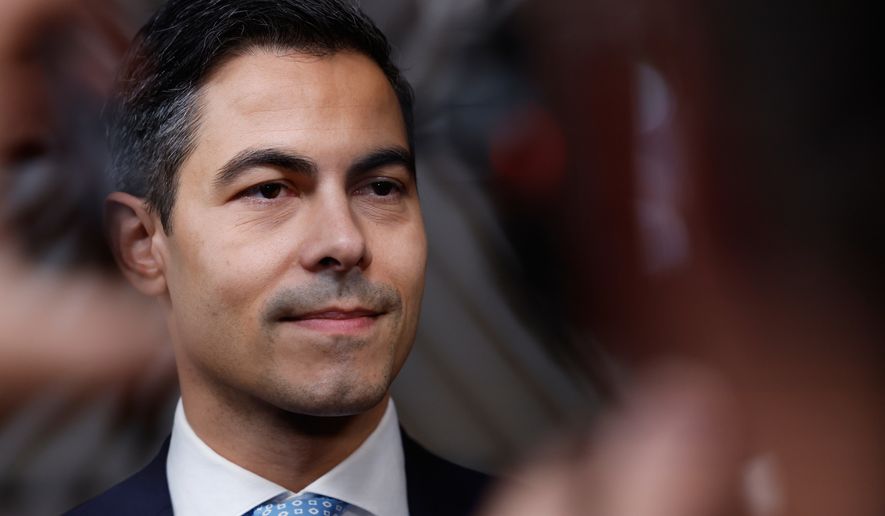

THE HAGUE, Netherlands — The ruling Dutch three-party minority coalition led by Prime Minister Rob Jetten appeared close to collapse Thursday, less than nine months into its four-year term, as a deal to support a tax plan for next year angered one of the coalition parties.
Jetten’s centrist D66 party and the center-right Christian Democrats reached the deal Wednesday with two center-left opposition parties to get the tax package - a crucial part of the annual government budget - through the Dutch parliament.
But fellow coalition member the right-wing People’s Party for Freedom and Democracy, or VVD, slammed it as a bad deal for the Netherlands and a breach of the coalition agreement the three parties hammered out in weeks of negotiations.
People were interested in these podcasts
Jetten skipped a European Union leaders’ summit in Ireland to attend a debate in parliament about the tax measures.
The parties that agreed the deal say it raises tax on the wealthy and cuts taxes for people with low incomes. PRO called that aspect of the deal a “millionaire’s tax.”
After a meeting Wednesday night, VVD leader Dilan Yeşilgöz-Zegerius, who is also the Dutch defense minister, said her party was ambushed “by the fact that our coalition partners struck a deal with an opposition party.”
She called it “a poor proposal. Furthermore, it runs counter to the coalition agreement.”
She said that if the other coalition partners voted for the deal after the parliamentary debate Thursday, “we will at least need a fundamental reset.”
Ruben Brekelmans, the leader of the VVD’s bloc in the lower house, said that a “very fundamental discussion has to take place within the coalition regarding the way forward.”
“I am not pushing for any specific outcome, nor am I ruling out any options in advance,” he said, adding that it could lead to interim coalition-building talks or even D66 and the Christian Democrats continuing in a minority coalition with PRO.
Christian Democrat leader Henri Bontenbal told national broadcaster NOS before the debate started that he wanted the coalition to survive and serve its full four-year term. “Preferably eight years,” he added.
If the government were to fall, it would likely pave the way for fresh elections next year, the fifth general election in less than a decade in the politically splintered Netherlands.
The crisis echoes a similar impasse in neighboring Belgium, where Prime Minister Bart De Wever tendered his resignation to the king following a protracted crisis over the country’s budget. King Philippe last Friday rejected the resignation and asked De Wever’s coalition to resume negotiations.
Jetten’s government was a risky political experiment from day one, holding only 66 of the lower house of parliament’s 150 seats. Jetten was sworn in in February as the Netherlands’ youngest and first openly gay prime minister.
He narrowly won an election in late October last year, securing the same number of seats as anti-Islam lawmaker Geert Wilders’ Party for Freedom, but with slightly more votes. The result was decided by a count of postal ballots.
Jetten said when he took office that he wanted to usher in a new era of consensus politics in parliament after years of bickering between parties. But that has largely failed to materialize, with his coalition unable even to avoid internal divisions over its plans and opposition parties making tough demands in return for supporting legislation.
That culminated in the deal Jetten’s D66 party and the Christian Democrats struck with the center left parties PRO and Volt, enraging the VVD.

Please read our comment policy before commenting.