



House Democrats are eyeing changes to how the chamber operates when their colossal majority takes control next Congress.
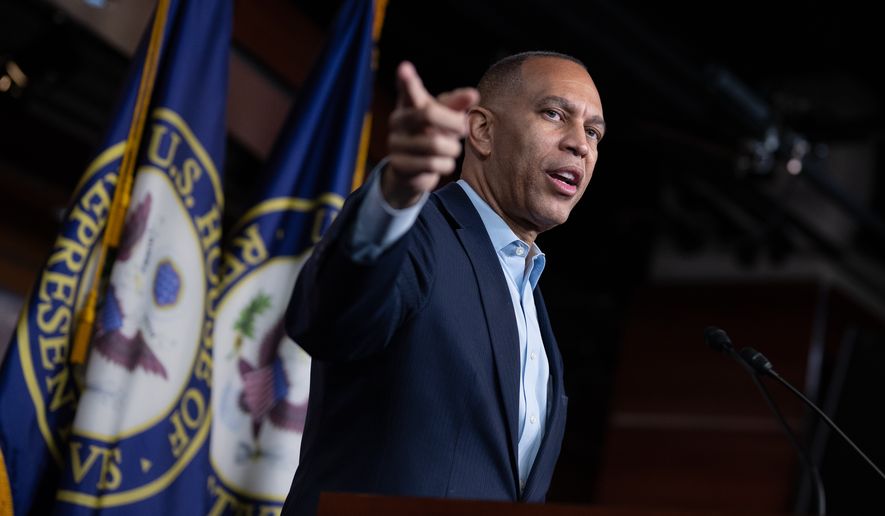
On Thursday, House Minority Leader Hakeem Jeffries said he supports allowing proxy voting next Congress, which would eliminate the need for certain members to vote in person.
“I certainly will continue to support … proxy voting for expectant mothers and for new parents,” the New York Democrat said when asked if he backed proxy voting in a rewrite of House rules in January, when he’ll likely be speaker.
People were interested in these podcasts
Whenever a new Congress is sworn in, the House passes a new rules package dictating how the chamber will operate.
The package usually passes along party lines.
In 2025, House Speaker Mike Johnson, Louisiana Republian, rejected a push to introduce proxy voting.
A bipartisan group of female lawmakers led the effort to allow pregnant women and new parents to designate a fellow member to vote on their behalf.
Mr. Johnson argued then that letting absent members vote would set a bad precedent.
“I believe it violates more than two centuries of tradition and institution. And I think that it opens a Pandora’s box, where ultimately, maybe no one is here,” he said.
During the coronavirus pandemic, Democrats allowed proxy voting on the House floor for the first time to avoid the virus spreading among members. Republicans eliminated the practice when they retook the majority.
Rep. James McGovern of Massachusetts, the top Democrat on the Rules Committee, told The Washington Times that proxy voting was a “good idea.”
“We got a gazillion suggestions for us to consider, and we’re going through all of them methodically,” he said of the Democrats’ rules package.
Rep. Teresa Leger Fernandez, a New Mexico Democrat on the committee, floated a new House rule banning lawmakers from having sexual relationships with staffers, regardless of whether they work together. She proposed penalties for violations.
On other matters, Mr. Jeffries indicated he will keep some rules as they are.
For example, individual members can currently introduce an impeachment resolution, and because of its “privileged status,” the chamber has to vote on whether to advance it.
Because several incoming freshman Democrats have already pledged to support impeaching the president, the rule could create headaches for Democratic leaders who have expressed doubts about whether impeachment is worth the time.
Still, Mr. Jeffries said there is no plan to limit members’ power to force impeachment votes.
“With respect to the privilege that currently exists, in the conversations that I’ve had with Jim McGovern and others, there’s no expectation that that will change,” he said.

Please read our comment policy before commenting.