



The Senate majority leader race is on. Or is it?
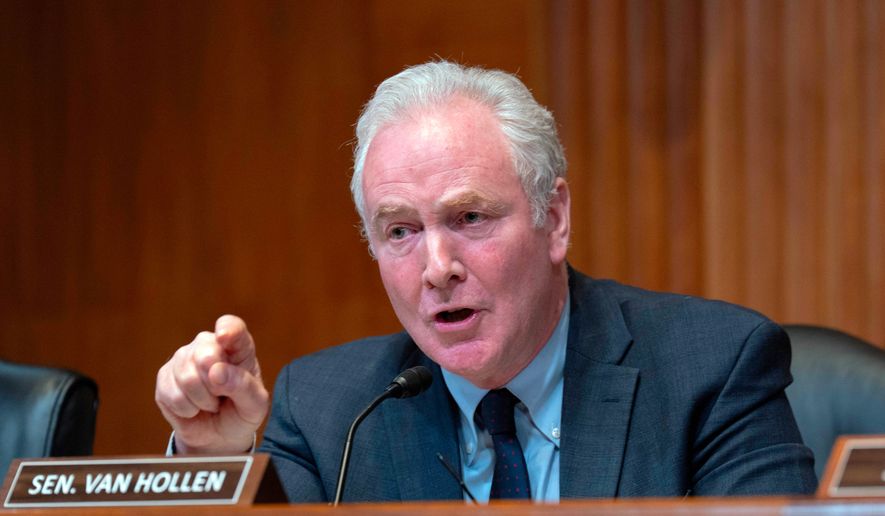
Sen. Chris Van Hollen of Maryland is answering the calls of his Democratic colleagues who want new leadership when they take back control of Congress next year and is offering himself as an alternative to Sen. Charles E. Schumer.
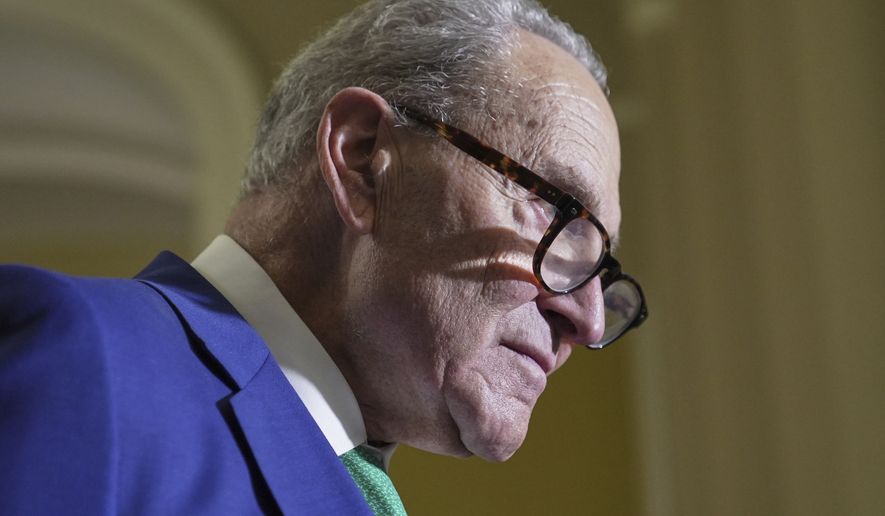
Mr. Schumer of New York, who has served as the top Senate Democrat for the past decade, said he welcomes the debate about the direction of the caucus but has already locked down the votes needed to be elected majority leader.
People were interested in these podcasts
The internal election will be held the first week of December.
The winner only needs to earn support from a majority of Senate Democrats who will be serving in the next Congress.
That would be at least 29 votes from what is expected to be a 56-member caucus if the Alaska Senate race is ultimately called for Democrat Mary Peltola.
More than a dozen Democrats were publicly backing Mr. Schumer as of early Friday morning, compared to just two who had come out in support of Mr. Van Hollen.
For a true contest to emerge, Mr. Van Hollen would have to sway the Democrats who have publicly or privately committed backing to Mr. Schumer to change their minds.
The vote is conducted by secret ballot, so the chances of that happening are not zero, but it is also not high.
Mr. Van Hollen announced his bid for majority leader late Thursday after the Senate had adjourned for the week.
“In this election, Americans called on us to unrig an economy rigged against working people & fueled by political corruption,” he said on social media. “To deliver, we need new leadership. This isn’t about any one person – it’s about answering that call.”
Mr. Schumer quickly put out a statement in response, saying he welcomes “any discussion about the future of our caucus and the important work ahead.”
But he also shut down the notion that there is any real debate about who will lead Senate Democrats next Congress.
“I have the votes to continue serving as Democratic Leader,” Mr. Schumer said. “I look forward to leading our new Democratic majority and delivering for the American people.”
Mr. Van Hollen said on MS NOW that more than 10 Democrats have privately pledged to support him and he views the race as “very much in flux.”
“Am I the underdog? Yes,” he said. “You’re talking about an incumbent who uses the power of incumbency to provide deals to people. I think that’s part of the problem. I mean, I think the American people want to see a little bit more democracy in the Senate Democratic Caucus.”
Some Democrats have called for a new generation of leaders, but this race does not reflect that. Both majority leader candidates are baby boomers who have served in Congress for more than two decades. Mr. Schumer is 75, and Mr. Van Hollen is 67.
One of the main differences between Mr. Schumer and Mr. Van Hollen is their views on Israel, which has become a major point of division across the Democratic Party.
Mr. Schumer, the highest-ranking Jewish Democrat, has continued to support military aid to Israel, while Mr. Van Hollen has led efforts to cut it off.
Mr. Van Hollen initially said after the election he would not run for Senate leadership because he was considering a 2028 presidential bid.
When asked in the MS NOW interview why he changed his mind, he said, “With 56 seats, that is an opportunity to shape the direction of the country. It is an opportunity to shape the direction of the Democratic Party.”
Mr. Schumer’s supporters are touting his efforts in recruiting, fundraising and campaigning on behalf of candidates who helped the party take back the Senate with a better-than-expected margin.
“He did the work to deliver what will soon be a 56-seat Senate majority against all odds, and I know he has the experience and the fight to continue leading our diverse caucus at this crucial moment,” said Sen. Jacky Rosen, Nevada Democrat.
Mr. Van Hollen’s two champions are leading voices on the left: Sen. Bernard Sanders of Vermont, a registered independent but self-identified Democratic socialist; and Sen.-elect Abdul El-Sayed of Michigan.
“I called on Sen. @ChrisVanHollen to lead our caucus as a candidate back in April because he leads with courage and experience,” Mr. El-Sayed said on social media. “We need both right now. Which is why I’m proud to stand with him in his bid to lead our Senate majority.”
At least five other newly elected Democrats said during campaigns they would not support Mr. Schumer or wanted to see new leadership, but have yet to publicly declare support for Mr. Van Hollen.
Mr. Sanders said he is supporting Mr. Van Hollen because the American people voted for change.
“They want a Democratic Party that will stand up to powerful special interests, take on the billionaire class and fight for working families,” he said.
Sen. Elissa Slotkin, Michigan Democrat, met with Mr. Van Hollen this week as he mulled whether to run for majority leader.
She said she wants to see new leadership but is not committed to supporting any candidate until hearing their strategy for governing and communicating differently and their plan for Democrats’ first 100 days in the majority.
Mr. Schumer has begun developing such a plan in consultation with the caucus, but neither he nor Mr. Van Hollen has publicly detailed an agenda that goes beyond the broad legislative ideas Democrats campaigned on.
Mr. Van Hollen did offer one concrete example of how he would lead differently than Mr. Schumer. He said he would not take sides in open Democratic primaries.
Mr. Schumer endorsed Reps. Haley Stevens and Angie Craig in Michigan and Minnesota, respectively, who lost their Senate primaries to Mr. El-Sayed and Peggy Flanagan. He also recruited Gov. Janet Mills to run in Maine, but she dropped out before the primary.
Contact the author


Please read our comment policy before commenting.