



Incoming Democratic governors and state lawmakers are targeting Republican-backed school voucher programs after winning legislative seats and governorships in many states.
As of last week, 31 states have opted into the federal Education Freedom Tax Credit, which launches on Jan. 1, 2027.
The program was established last year as part of President Trump’s One Big Beautiful Bill Act and enables taxpayers to claim up to $1,700 annually or $3,400 for joint filers, if they contribute to nonprofit scholarship-granting organizations, known as SGOs.
People were interested in these podcasts
These organizations, chosen by a state governor, will then allocate funds to private, charter, and public schools for resources including tuition, tutoring and after-school programs.
But Democrats’ recent capturing of governorships and state legislatures has them seeking to roll back the program.
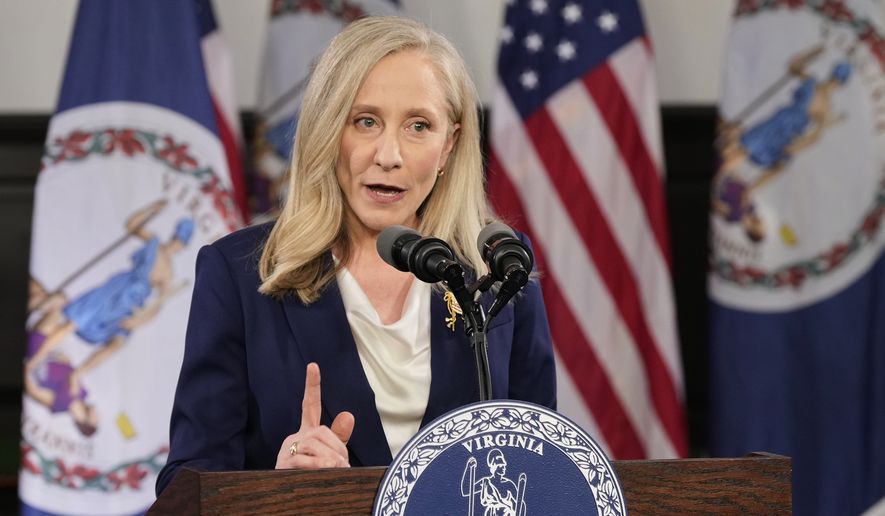
For example, Virginia Gov. Abigail Spanberger is backing out of the federal school scholarship tax credit, joining 18 other states and Washington in opting out of the program.
According to Whiteboard Advisors, the midterm elections put new Democratic governors in charge of six other states that have already opted into the federal program. They are Colorado’s Phil Weiser, Georgia’s Keisha Lance Bottoms, Iowa’s Rob Sand, Nevada’s Aaron Ford, Ohio’s Amy Acton, and Texas’ Gina Hinojosa.
Mr. Weiser, the current state attorney general, campaigned and governed on a platform of opposing school vouchers, private/parochial school funding and privatization, while Mr. Ford has expressed concerns about the program and said he is reviewing the legality of Nevada’s participation.
Mr. Weiser would only change his mind to opt in, Mr. Weiser’s spokesman told The Washington Times, if he sees “real data demonstrating that this federal tax credit provides a significant benefit to K-12 schools. …
“Unless the governor-elect is shown real data demonstrating that this federal tax credit provides a significant benefit to K-12 schools, especially rural schools, and doesn’t serve as a backdoor to vouchers, his position on opting out from the program in 2028 remains unchanged,” he said.
The other governors-elect have not clearly stated positions on the federal tax credit. But several, including Mr. Sand, Ms. Hinojosa and Ms. Acton, have criticized their states’ existing private school choice programs.
The states that have opted in as of last Monday are Alabama, Alaska, Arkansas, Colorado, Florida, Georgia, Idaho, Indiana, Iowa, Kansas, Kentucky, Louisiana, Mississippi, Missouri, Montana, Nebraska, Nevada, New Hampshire, New Mexico, New York, North Carolina, North Dakota, Ohio, Oklahoma, South Carolina, South Dakota, Tennessee, Texas, Utah, West Virginia, Wyoming.
The first step in the program is filling out a one-page tax form to opt in, which essentially means checking a box stating that the state executive is authorized to complete the opt-in and has chosen to do so.
The ability to do that opened on Jan. 1 of this year. Governors must then submit a list of qualified SGOs in their states, a process that opened on Oct. 1.
Ms. Spanberger recently joined Democratic governors in Minnesota and Oregon in declining to participate in the federal scholarship tax credit program.
Former Virginia Gov. Glenn Youngkin, a Republican, submitted the opt-in while he was in office but could not submit the SGO list, and that responsibility fell to Ms. Spanberger.
Ms. Spanberger said she was not going to do it, but U.S. Treasury Secretary Scott Bessent has said she is required by law to do so or could put the state at legal risk if a qualified SGO decides to file a lawsuit.
Mr. Bessent criticized Ms. Spanberger’s decision, saying it would prevent Virginia families from federal scholarship funding for a range of educational services, including resources for public school students.
In a social media post, he wrote, “Governor Spanberger is slamming the door on education scholarships for Virginia children, including students in PUBLIC schools,” and urged her to “certify the scholarship organizations” rather than “play politics with children’s futures.”
The Washington Times reached out to Ms. Spanberger’s office for comment.
Darla Romfo, president of the Children’s Scholarship Fund, an SGO, said Ms. Spanberger’s decision is “the wrong thing to do” because Virginia taxpayers can still claim the credit by giving to scholarship groups in other states, sending the money out of Virginia.
“If they would just think about what’s in the best interest of children and think about the fact that Virginia taxpayers are still going to make contributions to scholarship granting organizations,” Ms. Romfo told The Washington Times.
“There are a lot of people in Virginia that have a $1,700 or $3,400 tax liability, and that money is going to leave the state and go to some other state where a governor opted in, and that money is going to not be spent on Virginia children.”
She asserted, “It’s money that is completely added on to everything else that gets spent in the state. Not one cent is getting taken out of any Virginia line-item budget.”
Contact the author


Please read our comment policy before commenting.